Rubio calls global summit against far-left terror; India among 67 nations
Synopsis
Marco Rubio used a 67-nation State Department ministerial on 16 July to argue that the global counterterrorism establishment has a dangerous blind spot: organised far-left political violence. With four groups already designated as foreign terrorist organisations and National Security Presidential Memorandum Number Seven in force, Washington is moving from rhetoric to enforcement — and wants its allies, including India, to follow.
Key Takeaways
US Secretary of State Marco Rubio convened a counterterrorism ministerial on 16 July , attended by representatives from 67 countries , including India .
Rubio argued that far-left political terrorism represents a neglected 'blind spot' in global counterterrorism doctrine.
The Trump administration has adopted National Security Presidential Memorandum Number Seven to investigate Antifa-linked networks.
The State Department has designated four far-left extremist groups as foreign terrorist organisations and announced financial rewards for disrupting their funding.
Treasury Secretary Scott Bessent pledged continued use of sanctions to cut off terrorist financing networks.
India's participation reflects the enduring importance of counterterrorism as a pillar of the India-US strategic partnership .
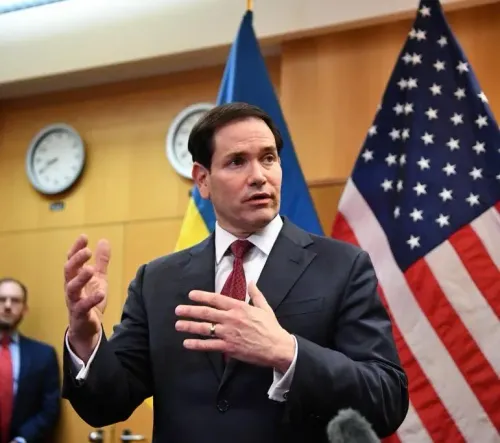
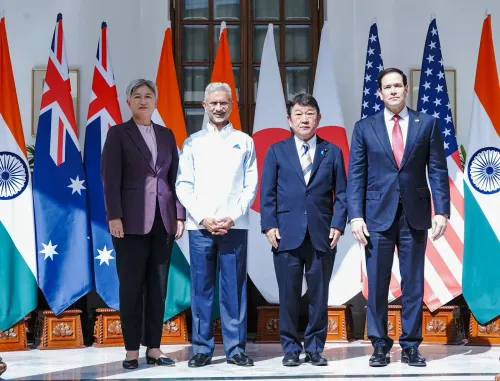
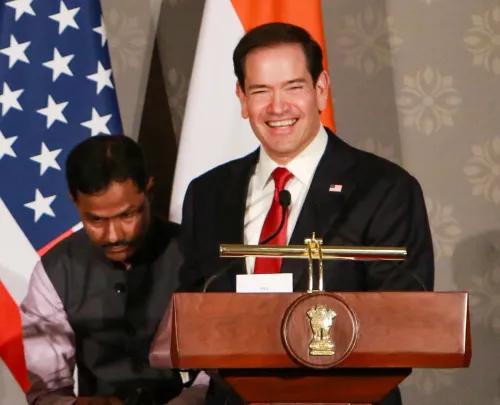
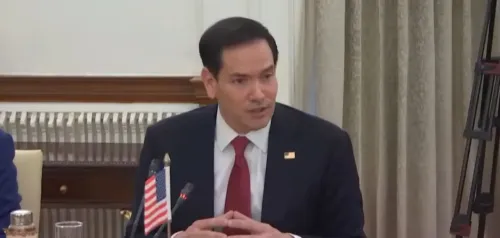
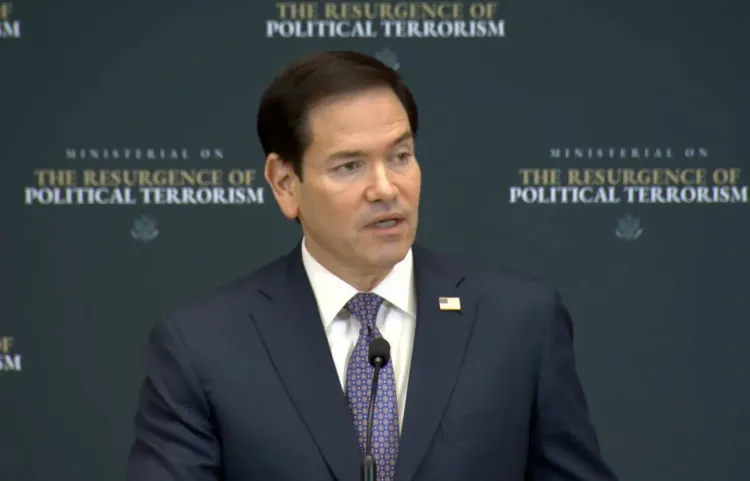
US Secretary of State Marco Rubio on Wednesday, 16 July convened a high-stakes State Department ministerial, urging more than 67 countries — including India — to launch a coordinated international campaign against what he described as a resurgence of far-left political terrorism. The gathering, attended by political leaders, law enforcement officials and security experts, marked one of Washington's most explicit efforts to reframe counterterrorism doctrine beyond Islamist extremism.
Key Developments at the Ministerial
Representatives from 67 countries attended the State Department session, spanning Australia, Japan, Israel, the United Kingdom, France, Germany, Italy, Canada, Indonesia, Malaysia, the Philippines, South Korea, and several European and Latin American nations, according to a State Department spokesperson. The breadth of participation signals growing multilateral interest in addressing political violence that cuts across ideological lines.
Deputy White House Chief of Staff Stephen Miller and Treasury Secretary Scott Bessent also addressed the ministerial. Bessent said the Treasury Department would continue deploying sanctions and financial tools to disrupt funding networks linked to terrorist organisations, while Miller called for closer intelligence cooperation and coordinated action against groups accused of supporting political violence.
What Rubio Said
Addressing the gathering, Rubio argued that while international cooperation following the September 11, 2001 attacks had successfully dismantled the ISIS caliphate and sharply reduced jihadist attacks in the United States and Europe, governments had failed to adequately confront violence from the far left.
'For far too long, however, our counterterrorism doctrine has had a blind spot, a blind spot when it comes to extremist violence from the political left,' Rubio said. 'Even today, the very idea that far-left terrorism could be a serious threat is treated as a right-wing fever dream, or worse, as a dangerous fascist conspiracy.'
He described the threat as transnational in nature. 'They coordinate, they communicate, they travel, they train, and they act together, sharing the same infrastructure, sharing the same enemies, sharing the same mission,' Rubio said, urging a unified response: 'It is time for the people of the civilised world to defend themselves.'
US Policy Moves Already Underway
Rubio said the Trump administration had adopted National Security Presidential Memorandum Number Seven to investigate and disrupt what he described as Antifa-linked terror networks. The State Department has also designated four violent far-left extremist groups as foreign terrorist organisations, announced financial rewards for information disrupting their funding, and launched new international law enforcement initiatives.
'Through intelligence and information sharing, through coordinated law enforcement strategy, through financial targeting and disruption, we will dismantle these networks brick by brick,' Rubio said.
India's Role and the Broader Partnership
India's participation in the ministerial underscores the continuing centrality of counterterrorism cooperation within the broader India-US strategic partnership. The two countries have steadily expanded intelligence sharing, homeland security cooperation and law enforcement engagement since the 2001 terrorist attacks, working through bilateral and multilateral forums to combat terrorism.
Counterterrorism has remained a consistent pillar of India-US ties across successive governments in both countries, with both sides regularly reaffirming commitments to information sharing, capacity building and the disruption of terrorist financing. India's presence at the 16 July ministerial reinforces that alignment at a moment when Washington is actively seeking to broaden the global counterterrorism consensus.
How the international community responds to Rubio's call — particularly whether it leads to formal multilateral frameworks or remains a US-led initiative — will shape the next phase of global counterterrorism cooperation.
Point of View
But the harder question is whether US allies, many of whom have their own complex domestic politics around left-wing protest movements, will operationalise cooperation or offer polite diplomatic attendance without follow-through. India's presence is strategically sensible — New Delhi has long pushed for broader definitions of terrorism in multilateral forums — but the real test of this initiative is whether it produces binding intelligence-sharing frameworks or remains a declaratory exercise. The comparison to post-9/11 coalition-building is ambitious; that coalition had a single, catastrophic event as its catalyst. This one does not.
NationPress
15 Oct 2026
Frequently Asked Questions
What was the State Department ministerial on far-left terrorism about?
The ministerial, held on 16 July in Washington, was convened by US Secretary of State Marco Rubio to build international consensus around treating far-left political violence as a serious and transnational terrorist threat. Representatives from 67 countries attended to discuss emerging trends in political violence, cross-border cooperation, and intelligence sharing.
Which countries attended the Rubio counterterrorism ministerial?
According to a State Department spokesperson, 67 countries were represented, including India, Australia, Japan, Israel, the United Kingdom, France, Germany, Italy, Canada, Indonesia, Malaysia, the Philippines, South Korea, and several European and Latin American nations.
What actions has the US already taken against far-left extremist groups?
The Trump administration has adopted National Security Presidential Memorandum Number Seven to investigate Antifa-linked networks. The State Department has also designated four violent far-left extremist groups as foreign terrorist organisations, announced financial rewards for information disrupting their funding, and launched new international law enforcement initiatives.
Why did India participate in the far-left terrorism ministerial?
India's participation reflects the broader India-US strategic partnership, in which counterterrorism cooperation has been a central pillar since the 2001 attacks. The two countries have expanded intelligence sharing, homeland security cooperation and law enforcement engagement across successive governments, making multilateral counterterrorism forums a natural area of engagement.
What did Treasury Secretary Scott Bessent say at the ministerial?
Bessent said the Treasury Department would continue using sanctions and financial tools to disrupt funding networks linked to terrorist organisations. He joined Deputy White House Chief of Staff Stephen Miller in calling for closer intelligence cooperation and coordinated action against groups accused of supporting political violence.