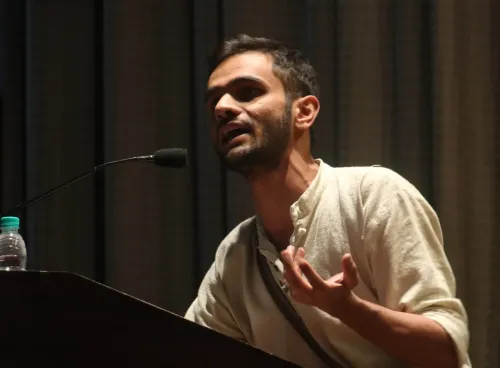
Sharjeel Imam moves Delhi HC for bail in 2020 riots conspiracy case

Synopsis
Nearly six years into pre-trial custody, Sharjeel Imam is taking his bail fight to the Delhi High Court after the trial court ruled it was bound by the Supreme Court's January 2026 order. With a larger Bench yet to settle whether prolonged UAPA detention can override statutory bail bars, Friday's hearing could set a significant precedent for the remaining accused in the 2020 riots conspiracy case.
Key Takeaways
Sharjeel Imam has filed a bail plea before the Delhi High Court , listed for hearing on Friday, 18 July 2025 .
The matter will be heard by a Division Bench of Justice Prathiba M.
Singh and Justice Vikas Mahajan .
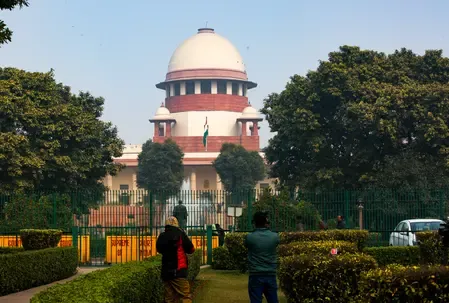
The Karkardooma Court earlier dismissed his bail plea, citing the Supreme Court's 5 January 2026 order declining bail to Imam and co-accused Umar Khalid .
Imam has been in custody for nearly six years , with charges yet to be framed in the UAPA case.
The Supreme Court granted bail to five co-accused and extended six months' interim bail to Tasleem Ahmed and Khalid Saifi , while referring the broader UAPA bail question to a larger Bench.
Jailed student activist Sharjeel Imam has approached the Delhi High Court seeking bail in the 2020 northeast Delhi riots 'larger conspiracy' case, with his appeal listed for hearing on Friday, 18 July 2025. The matter is scheduled before a Division Bench of Justice Prathiba M. Singh and Justice Vikas Mahajan, as per the court's official cause list.
Background of the Bail Plea
Imam has challenged the order of the Karkardooma Court that refused him regular bail in the case registered under the Unlawful Activities (Prevention) Act (UAPA) and other penal provisions. Earlier this month, Additional Sessions Judge (ASJ) Sameer Bajpai dismissed the regular bail pleas of both Imam and co-accused Umar Khalid, holding that the trial court was bound by the Supreme Court's order dated 5 January 2026, which had declined them bail.
The trial court held that the apex court had made it clear that the two accused could renew their bail prayer only after the examination of protected witnesses relied upon by the prosecution, or on the expiry of one year from the 5 January 2026 order — whichever was earlier. 'The Court has no option but to follow the judgment dated January 5, 2026, as passed by the Supreme Court, whereby the petitions of both the applicants were dismissed,' the trial court stated.
Imam's Contentions Before the Trial Court
During proceedings before the trial court, Imam had argued that there had been a change in circumstances since the Supreme Court's January order. He contended that despite the passage of more than six months, no meaningful progress had been made in the trial — with arguments on framing of charges still ongoing — while he had remained in custody for nearly six years.
Imam also cited subsequent Supreme Court developments, including the judgment in Syed Iftikhar Andrabi vs National Investigation Agency and the interim bail granted to co-accused Tasleem Ahmed and Khalid Saifi, to argue that prolonged incarceration warranted a reconsideration of his bail. The prosecution opposed the plea, maintaining that no substantial change in circumstances had occurred since the Supreme Court's rejection.
The Supreme Court's Divergent Orders
The trial court accepted the prosecution's submissions, holding that the question arising from divergent Supreme Court judgments had already been referred to a larger Bench, and that until the issue was settled, the fresh bail applications could not be entertained.
Earlier in 2026, the Supreme Court dismissed the bail pleas of both Imam and Khalid, finding that the prosecution material disclosed prima facie grounds attracting the statutory embargo on bail under Section 43D(5) of the UAPA. In the same period, the apex court granted bail to five co-accused — Gulfisha Fatima, Meeran Haider, Shifa Ur Rehman, Mohd Saleem Khan, and Shadab Ahmed. More recently, the Supreme Court granted six months' interim bail to co-accused Tasleem Ahmed and Khalid Saifi, while referring to a larger Bench the question of whether prolonged incarceration and trial delay can justify bail despite UAPA restrictions.
About the Case
The case pertains to the alleged larger conspiracy behind the communal violence that erupted in northeast Delhi in February 2020, leaving dozens dead and hundreds injured. Imam is among several accused booked under the UAPA and other penal provisions. His continued detention — approaching the six-year mark — has drawn attention from civil liberties groups who argue that prolonged pre-trial custody raises serious due process concerns.
What Happens Next
The Delhi High Court's Division Bench will hear Imam's bail appeal on Friday. The outcome could have implications for other co-accused still awaiting trial, particularly given the Supreme Court's pending larger Bench reference on whether UAPA's bail restrictions can be overridden by the right against indefinite pre-trial detention.
Point of View
But stops short of resolving it. With the trial stalled at the charge-framing stage after nearly six years, the procedural clock is running against the state's implicit argument that detention is justified by the gravity of the alleged offence. The Delhi High Court's Friday hearing will be closely watched as a signal of whether the judiciary is ready to impose a time-limit logic on UAPA custody.
NationPress
17 Jul 2026
Frequently Asked Questions
Why has Sharjeel Imam approached the Delhi High Court for bail?
Imam has challenged the Karkardooma Court's refusal to grant him regular bail in the 2020 northeast Delhi riots 'larger conspiracy' case under the UAPA. The trial court held it was bound by the Supreme Court's January 2026 order declining bail, prompting Imam to escalate the matter to the High Court.
How long has Sharjeel Imam been in custody?
Imam has been in custody for nearly six years in connection with the 2020 northeast Delhi riots case. Despite this, the trial has not progressed beyond the charge-framing stage, with arguments on charges still ongoing.
What did the Supreme Court previously rule on Imam's bail?
The Supreme Court on 5 January 2026 dismissed Imam's bail plea, finding that prosecution material disclosed prima facie grounds attracting the statutory bar on bail under Section 43D(5) of the UAPA. It allowed him to renew his bail plea only after protected witnesses were examined or after one year, whichever came first.
Why were some co-accused granted bail while Imam was not?
The Supreme Court granted bail to five co-accused — Gulfisha Fatima, Meeran Haider, Shifa Ur Rehman, Mohd Saleem Khan, and Shadab Ahmed — and later extended six months' interim bail to Tasleem Ahmed and Khalid Saifi. The court simultaneously referred to a larger Bench the question of whether prolonged incarceration and trial delay can justify bail despite UAPA's restrictions, a question that directly bears on Imam's case.
What is the 2020 northeast Delhi riots 'larger conspiracy' case?
The case relates to the alleged larger conspiracy behind the communal violence that broke out in northeast Delhi in February 2020. Multiple accused, including Sharjeel Imam and Umar Khalid, were charged under the UAPA and other penal provisions for allegedly orchestrating the riots.