Will the Supreme Court Rule on Bail Pleas for Accused in Delhi Riots 'Larger Conspiracy' Case Today?
Synopsis
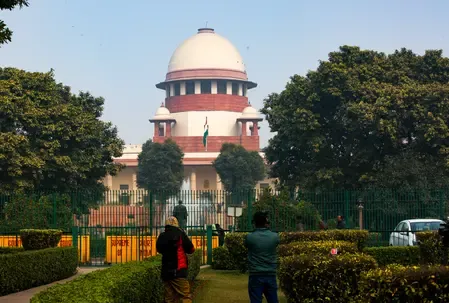
The Supreme Court is expected to announce a pivotal ruling today regarding the bail pleas of seven accused in the controversial 'larger conspiracy' case linked to the 2020 Delhi riots. This decision could significantly impact the ongoing legal proceedings and the individuals involved.
Key Takeaways
Supreme Court's decision today is pivotal for the accused.
The case involves significant political and societal implications.
Accused activists face charges under the strict UAPA.
Previous bail applications were denied by the Delhi High Court.
Legal proceedings reflect broader societal tensions.
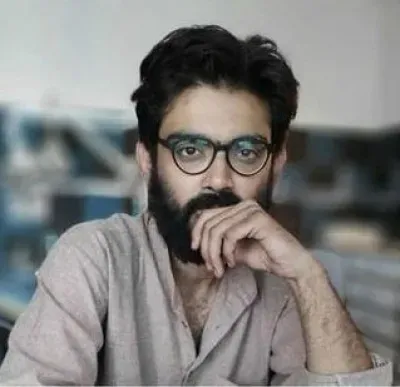
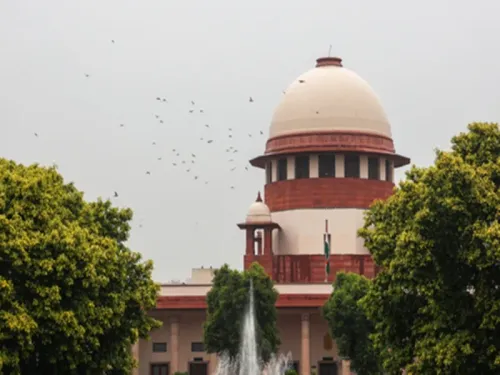
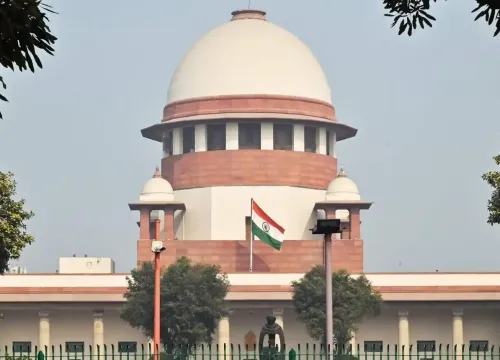
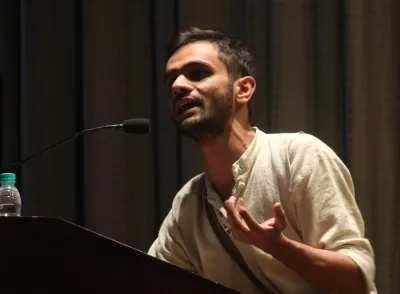
New Delhi, Jan 5 (NationPress) The Supreme Court is set to announce its ruling regarding the bail pleas of seven individuals, including student activists Umar Khalid and Sharjeel Imam, related to the alleged 'larger conspiracy' case associated with the 2020 Delhi riots on Monday.
The bail applications have been submitted by Umar Khalid, Sharjeel Imam, Gulfisha Fatima, Meeran Haider, Shifa-ur-Rehman, Shadab Ahmed, and Mohd.
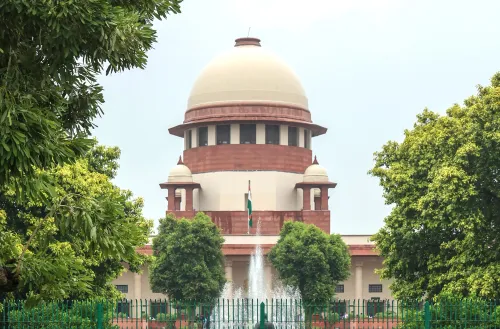
According to the cause list released on the Supreme Court's website, a Bench led by Justices Aravind Kumar and Prasanna B. Varale will deliver the verdict on Monday.
Saleem Khan, who faces charges under the strict Unlawful Activities (Prevention) Act (UAPA), has been in detention for over five years.
Previously, on December 10, the Supreme Court had reserved its judgment on a series of special leave petitions (SLPs) that challenged the Delhi High Court's decision to deny bail to the accused in the 'larger conspiracy' case tied to the 2020 riots.
After evaluating arguments from both sides, the Justice Kumar-led Bench instructed the petitioners and the prosecution to submit any further documentation supporting their claims by December 18.
Opposing the bail requests, Solicitor General Tushar Mehta, representing the Delhi Police, argued that the unrest was not a spontaneous communal clash, but rather a 'well-designed, orchestrated, and premeditated' assault on the nation's sovereignty.
He asserted, 'This was not a spontaneous act of violence; this was an attack against the sovereignty of the nation.' He based this argument on speeches, WhatsApp messages, and other evidence that indicated a clear effort to create divisions within society along communal lines.
Furthermore, he claimed that any delays in the trial were due to the accused's lack of cooperation, stating that they had each prolonged their arguments against framing charges for 4-5 days.
'In cases where it is challenging to defend based on facts, the tactic is to delay the trial instead of addressing the merits and simply requesting bail. This has become a recurring pattern,' SG Mehta expressed.
Earlier, on September 2 of last year, the Delhi High Court had rejected the bail applications of Khalid, Imam, and several others involved in the case, noting that a prima facie case under the UAPA had been established against them.
Point of View
It's essential to observe that the legal proceedings surrounding the Delhi riots' 'larger conspiracy' case reflect broader societal tensions and the intricate balance between law enforcement and civil liberties. The Supreme Court's decision today will not only affect the accused but will also send a significant message about justice and accountability in sensitive political contexts.
NationPress
27 Sept 2026
Frequently Asked Questions
What is the 'larger conspiracy' case related to?
The 'larger conspiracy' case is tied to the 2020 Delhi riots, where several activists are accused of orchestrating violence under the guise of protests.
Who are the key figures involved in the bail pleas?
The bail pleas involve seven accused, including prominent student activists Umar Khalid and Sharjeel Imam.
What are the charges against the accused?
The accused face serious charges under the Unlawful Activities (Prevention) Act (UAPA) for their alleged roles in the riots.
What was the outcome of previous bail applications?
Previous bail applications were denied by the Delhi High Court, which held that a prima facie case under the UAPA was established.
What are the potential consequences of the Supreme Court's ruling?
The ruling could significantly impact the legal standing of the accused and the perception of justice in cases involving political dissent.