Delhi Court Approves Interim Bail for Sharjeel Imam Amid Controversy

Synopsis
In a significant legal development, a Delhi court has approved interim bail for Sharjeel Imam, a student activist facing serious charges under the UAPA. This bail is granted to allow him to attend family events while highlighting the ongoing tensions surrounding the 2020 North-East Delhi riots allegations.
Key Takeaways
Interim Bail Granted: Sharjeel Imam receives interim bail for family commitments.
Allegations Under UAPA: Facing serious charges related to the North-East Delhi riots.
Supreme Court's Decision: Earlier bail pleas dismissed due to strong prosecution evidence.
Conspiracy Clarification: Physical presence at the riots not necessary for conspiracy liability.
Trial Delays: Concerns raised over the speed of legal proceedings.
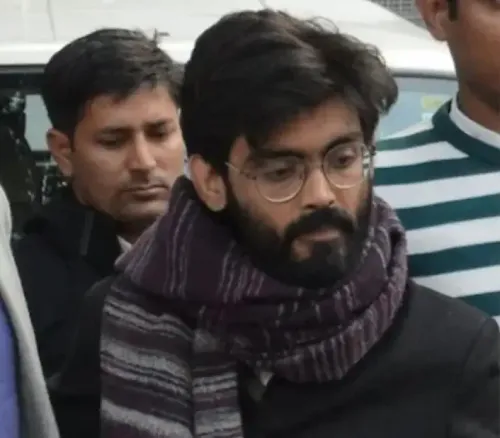
New Delhi, March 9 (NationPress) A Delhi court has granted interim bail to student activist Sharjeel Imam on Monday. He is currently facing allegations under the Unlawful Activities (Prevention) Act (UAPA) concerning the alleged conspiracy related to the 2020 North-East Delhi riots, classified as a “larger conspiracy” case. This bail allows him to attend his brother’s wedding and tend to his ailing mother.
Additional Sessions Judge (ASJ) Sameer Bajpai from the Karkardooma Courts approved Imam’s request, permitting him bail for a duration of 10 days, specifically from March 20 to March 30.
Imam has been in custody for several years, and he is accused of orchestrating protests against the Citizenship Amendment Act (CAA) during 2019–2020, which allegedly led to the riots that occurred in North-East Delhi in late February 2020.
The Delhi Police asserts that the violence was not an impulsive event but rather a culmination of a pre-planned conspiracy involving mobilization, road blockades, and organized protests aimed at disrupting normalcy while drawing international attention during then US President Donald Trump’s visit.
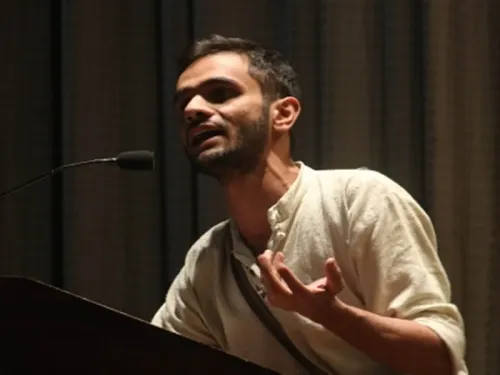
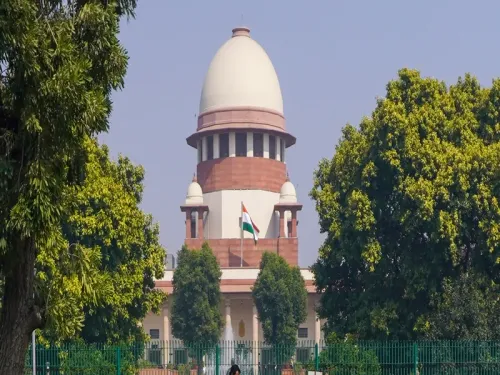
This year, the Supreme Court rejected bail requests from both Imam and Umar Khalid in the “larger conspiracy” case, indicating that the prosecution's evidence, when taken cumulatively and at face value, provided reasonable grounds to believe that the charges against them were prima facie credible. This led to the enforcement of a statutory ban on bail under Section 43D(5) of the UAPA.
A bench led by Justice Aravind Kumar stated that at the bail stage under this stringent anti-terror legislation, the court must only assess whether the prosecution’s narrative is prima facie plausible without weighing conflicting interpretations of evidence as would occur in a trial.
The apex court remarked, “The inquiry is limited to determining whether, based on the prosecution material as it stands and at face value, there are reasonable grounds for believing that the accusations against the appellant hold prima facie truth.”
Additionally, the Supreme Court rejected the suggestion that Imam was being prosecuted solely due to his speeches and protest actions. They noted that the prosecution evidence positioned him as a pivotal figure in the initial stages of a mobilization strategy that led to the February 2020 violence.
The Supreme Court clarified that physical presence at the riot scene is not a prerequisite to establish conspiracy liability. They stated, “The prosecution's position is that the appellant’s involvement is foundational, functioning at the mobilization, organization, and strategy levels, and that physical presence at the site of the ultimate violence is not a condition precedent.”
While acknowledging the delays in the trial process, the apex court emphasized that the suitable remedy is to expedite proceedings rather than to grant bail where a statutory prohibition under the UAPA exists.
Point of View
It's crucial to emphasize the complexities surrounding Sharjeel Imam’s case. The court's decision highlights a delicate balance between individual rights and national security concerns, reflecting broader societal tensions. The case raises important questions about the intersection of activism and law in contemporary India.
NationPress
22 Sept 2026
Frequently Asked Questions
Why was Sharjeel Imam granted bail?
Sharjeel Imam was granted interim bail to attend his brother's wedding and care for his ailing mother, despite facing serious charges under the UAPA.
What are the charges against Sharjeel Imam?
He faces allegations of conspiracy related to the 2020 North-East Delhi riots, which the prosecution claims was a preplanned event involving student activists.
What does the UAPA entail?
The Unlawful Activities (Prevention) Act is a legislative measure in India aimed at preventing unlawful activities and associations, particularly related to terrorism.
What was the Supreme Court's stance on Imam's bail plea?
The Supreme Court dismissed Imam's bail plea earlier this year, stating that the prosecution's evidence disclosed reasonable grounds for believing the accusations were prima facie true.
Is physical presence required to prove conspiracy under UAPA?
No, the Supreme Court clarified that physical presence at the riot site is not necessary to establish conspiracy liability.