Has India's Zero-Tolerance Approach Shifted the Fight Against Terrorism?

Synopsis
India's shift away from strategic restraint in terror responses is significant. Analysts suggest that this change reflects a new doctrine that prioritizes a robust counterterrorism approach, targeting not just acts of violence but the entire network supporting terrorism. Dive into the implications of this evolving security paradigm.
Key Takeaways
India is moving away from strategic restraint in its counterterrorism efforts.
The zero-tolerance policy encompasses both terrorist acts and their enabling networks.
India's new security doctrine emphasizes proactive measures against threats.
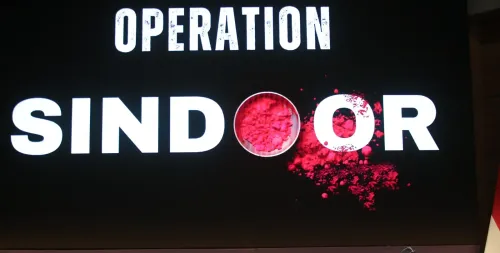
Operation Sindoor illustrates a decisive shift in India's military strategy.
The approach aims to deter not only Pakistan but also send signals to China.
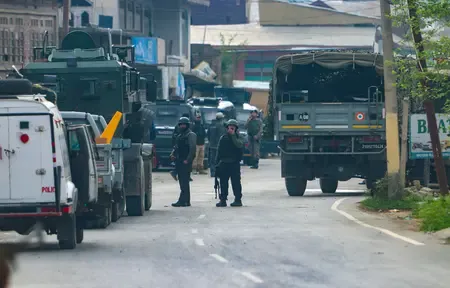
Washington, Nov 22 (NationPress) For almost a decade, India has been progressively moving away from the rhetoric of strategic restraint, as evidenced by its responses to significant terrorist incidents linked to Pakistan, such as the Uri attack in 2016, Balakot airstrike in 2019, and Pahalgam incident in 2025. Esteemed international analysts made this observation on Saturday.
John Spencer, the Executive Director of the US-based Urban Warfare Institute, alongside Lauren Dagan Amoss, a recognized academic specializing in India's foreign and security policy, asserted that the limited and predictable retaliatory actions against cross-border terrorism have failed to dissuade such attacks; instead, they have inadvertently facilitated them.
The analysts contended that the previously assumed stabilizing effect of restraint has transitioned into a strategic liability; its predictability has allowed militant factions to orchestrate subsequent attacks, dismantling the notion that terrorism could be contained beneath the threshold of interstate conflict.
“In light of the planning, execution, and consequences of Operation Sindoor, it is evident that India has transcended a doctrinal boundary. It is no longer a nation that merely responds to terrorism with measured warnings or awaits validation from international allies. Rather, it is establishing a new operational framework rooted in coercive clarity and a readiness to act preemptively when its citizens are endangered. Operation Sindoor did not instigate this transformation; it unveiled it,” stated Spencer and Amoss in their article titled 'The End of Old Assumptions: What India’s New Security Paradigm Actually Looks Like,' which Spencer shared on X.
“The principle of strategic restraint aimed to avert escalation with Pakistan. However, in practice, it produced the opposite effect. Terrorist organizations supported by Pakistan’s military exploited the divide between terrorism and state aggression, presuming India would steer clear of decisive retaliation or cross-border operations. Limited responses fostered predictable patterns. This predictability invited further violence,” the article elaborated.
The experts noted that India’s counterterrorism strategy has matured, viewing proxy entities as tools of state policy. They highlighted that India’s zero-tolerance framework now encompasses not just terrorist acts but also the networks that facilitate them, with the broader ecosystem surrounding terrorist factions deemed as valid targets.
“An often-overlooked aspect is that China serves as a silent secondary audience for India’s decisions. Signals directed towards Pakistan carry an implicit message for Beijing. India’s interception of Chinese-origin PL-15 air-to-air missiles and its successful neutralization of Pakistan’s Chinese-supplied air defense systems during Operation Sindoor provided insightful intelligence regarding Chinese weapon design and vulnerabilities. India’s new deterrence strategy is crafted for a two-front scenario where actions in one direction impact the other,” the analysts indicated.
“What emerges is a narrative of a nation evolving under pressure. India is not becoming reckless; rather, it is developing coherence. It is synchronizing doctrine, public expectations, defense industrial capabilities, and geopolitical messaging around a singular principle: Security must be self-ensured, not reliant on external mediation or constrained by outdated beliefs,” they further asserted.
Point of View
India's evolving counterterrorism strategy reflects a necessary adaptation to a complex geopolitical landscape. The nation's commitment to a zero-tolerance policy and proactive measures illustrates a strategic pivot that prioritizes national security. As a national editor, I firmly believe that India must continue to align its defense posture with the realities of modern threats.
NationPress
29 Sept 2026
Frequently Asked Questions
What is India's zero-tolerance policy?
India's zero-tolerance policy refers to its commitment to aggressively combat terrorism and the networks that support it, moving away from previous strategies of strategic restraint.
How has India's approach to terrorism changed?
India's approach has shifted from limited and predictable retaliations to a more proactive and decisive strategy, aimed at disrupting the entire ecosystem of terrorism.
What impact does Operation Sindoor have on India's security policy?
Operation Sindoor marked a significant shift in India's security doctrine, showcasing its willingness to act decisively against threats without waiting for international validation.
What does the new security paradigm mean for Pakistan?
The new security paradigm signals a tougher stance against Pakistan-based terrorist groups, suggesting that India will no longer tolerate cross-border terrorism without significant consequences.
How does this affect India's relations with China?
India's strategic moves also serve as a message to China, indicating that actions in one front will have implications on the other, particularly regarding military capabilities.