MEA: Lipulekh Pass route for Kailash Manasarovar Yatra unchanged since 1954
Synopsis
India's MEA has pushed back sharply against Nepal's claim that the Kailash Manasarovar Yatra passes through Nepali territory, calling Nepal's expanding assertions over Lipulekh, Kalapani, and Limpiyadhura 'untenable' and 'unilateral'. With the pilgrimage season approaching, the decades-old territorial dispute is back in diplomatic focus — and remains unresolved.
Key Takeaways
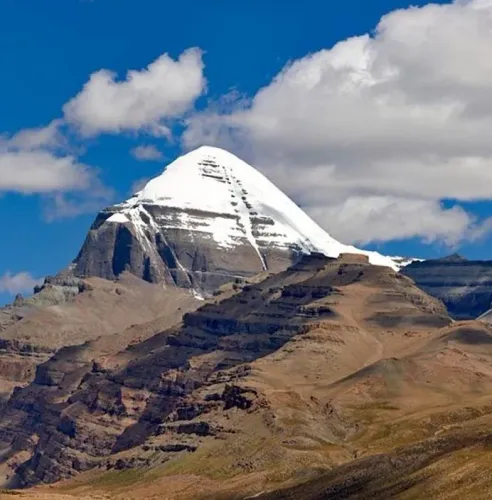
MEA Spokesperson Randhir Jaiswal stated on 3 May that Lipulekh Pass has been a Kailash Manasarovar Yatra route since 1954 .
India called Nepal's territorial claims over Lipulekh, Kalapani , and Limpiyadhura "untenable" and not based on historical facts.
Nepal's Foreign Ministry asserted the three areas are "integral parts of Nepal" under the Sugauli Treaty of 1816 .
Nepal conveyed concerns to both India and China through diplomatic channels over the Yatra route.
India said it remains open to "constructive interaction" with Nepal to resolve outstanding boundary issues through dialogue.
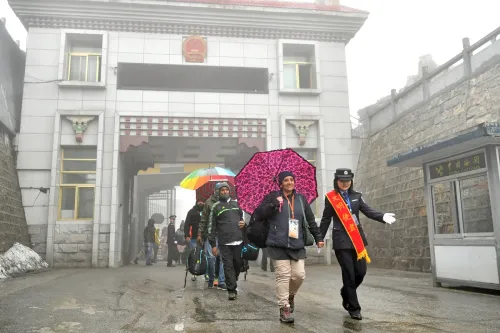
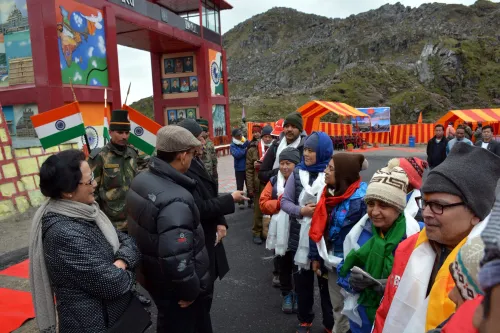
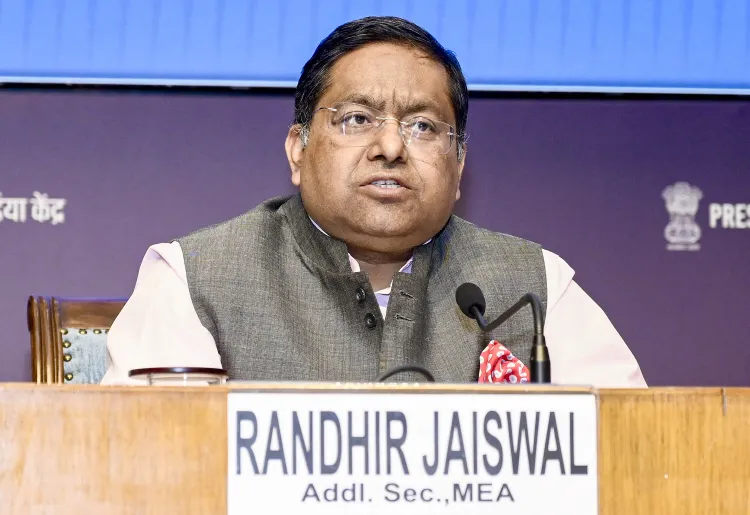
India's Ministry of External Affairs (MEA) on Sunday, 3 May firmly stated that Lipulekh Pass has served as a route for the Kailash Manasarovar Yatra since 1954, pushing back against Nepal's claim that the pilgrimage passes through Nepali territory. The MEA called Nepal's expanding territorial assertions "untenable" and reiterated India's willingness to resolve boundary disputes through dialogue.
India's Position on Lipulekh
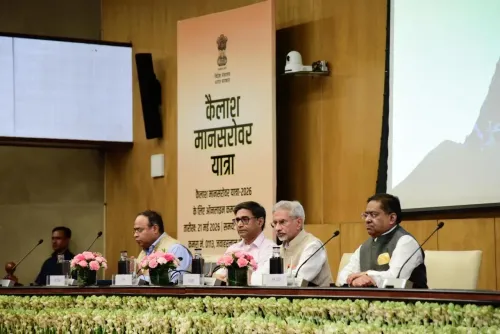
MEA Official Spokesperson Randhir Jaiswal addressed media questions in response to a statement issued earlier the same day by Nepal's Foreign Ministry regarding the Kailash Manasarovar Yatra route. "Lipulekh Pass has been a long-standing route for the Kailash Manasarovar Yatra since 1954, and the Yatra through this route has been going on for decades. This is not a new development," Jaiswal stated.
On Nepal's territorial claims over the region, Jaiswal said India has "consistently maintained that such claims are neither justified nor based on historical facts and evidence." He further added, "Such unilateral artificial enlargement of territorial claims is untenable."
Nepal's Counterclaim
Earlier on Sunday, Nepal's Ministry of External Affairs released a statement asserting that Limpiyadhura, Lipulekh, and Kalapani — areas lying east of the Mahakali River — are "integral parts of Nepal since the Sugauli Treaty of 1816." Nepal also conveyed its concerns to both India and China through diplomatic channels, objecting to the Kailash Manasarovar Yatra being organised via what it described as "Nepali territory, Lipulekh."
Nepal's statement added that its government "is always committed to resolving the border issue through diplomatic means, in line with the spirit of the close and friendly relations between Nepal and India, on the basis of historical treaties and agreements, facts, maps and evidence."
India's Diplomatic Stance
The MEA emphasised that India remains open to "constructive interaction" with Nepal on all bilateral issues, including the resolution of agreed outstanding boundary disputes through dialogue and diplomacy. Notably, this is not the first time the Lipulekh-Kalapani-Limpiyadhura triangle has stoked tensions — Nepal formally updated its official map in 2020 to include the three areas, a move India rejected as "artificial enlargement" of claims at the time as well.
Background: A Longstanding Dispute
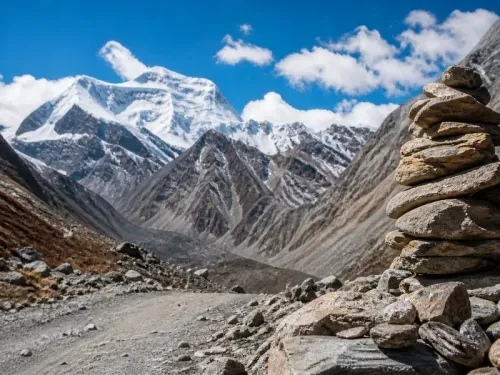
The Lipulekh Pass, situated at an altitude of approximately 5,334 metres in the Pithoragarh district of Uttarakhand, is one of the key routes used by Indian pilgrims undertaking the Kailash Manasarovar Yatra to Tibet. India maintains the pass falls within its territory, while Nepal has long contested this. The dispute sharpened in May 2020 when India inaugurated a road linking Dharchula to Lipulekh, prompting Kathmandu to release a revised political map. Both sides have since called for diplomatic resolution, though no formal boundary talks have produced a settlement.
What Comes Next
With the Kailash Manasarovar Yatra season approaching, the renewed diplomatic exchange signals that the border question remains unresolved. Both governments have signalled preference for dialogue over confrontation, but the absence of a formal bilateral boundary mechanism means tensions are likely to resurface periodically.
Point of View
Grounding India's claim in a pre-Sugauli-revisionism timeline. What mainstream coverage underplays is the cyclical nature of this dispute: it flares around the Yatra season and around infrastructure announcements, then subsides without resolution. Nepal's 2020 map revision was never formally addressed through a bilateral mechanism, and neither side has proposed one since. Until a structured boundary dialogue is institutionalised, this will remain a recurring flashpoint dressed up as a diplomatic exchange.
NationPress
16 Oct 2026
Frequently Asked Questions
Why is India asserting that Lipulekh Pass is not new for the Kailash Manasarovar Yatra?
India's MEA stated that Lipulekh Pass has been an established route for the Kailash Manasarovar Yatra since 1954, making it a decades-long practice rather than a recent development. The clarification came in direct response to Nepal's objection that the Yatra passes through what it considers Nepali territory.
What is Nepal's claim over Lipulekh, Kalapani, and Limpiyadhura?
Nepal asserts that Lipulekh, Kalapani, and Limpiyadhura — located east of the Mahakali River — are integral parts of its territory under the Sugauli Treaty of 1816. Nepal formally included these areas in its revised official map in 2020, a move India rejected at the time.
How has India responded to Nepal's territorial claims?
India has consistently stated that Nepal's claims over these areas are neither justified nor based on historical facts and evidence. MEA Spokesperson Randhir Jaiswal called such 'unilateral artificial enlargement of territorial claims' untenable on 3 May 2025.
Is India open to talks with Nepal on the border dispute?
Yes. The MEA stated that India remains open to constructive interaction with Nepal on all bilateral issues, including resolving agreed outstanding boundary disputes through dialogue and diplomacy.
What triggered the latest exchange between India and Nepal?
Nepal's Foreign Ministry released a statement on 3 May asserting its claim over Lipulekh and conveying concerns to India and China about the Kailash Manasarovar Yatra being routed through the disputed area. India's MEA responded the same day, reaffirming its position on the long-standing route.