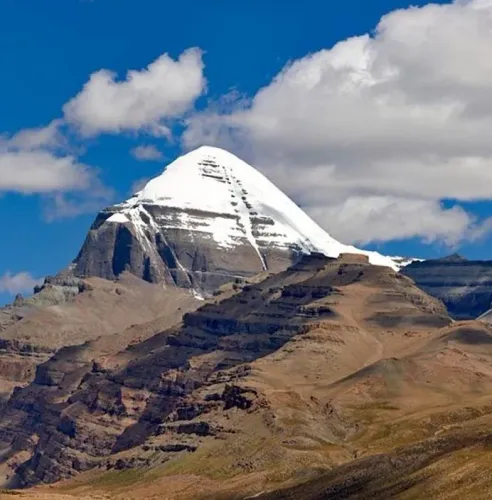
Nepal raises Lipulekh sovereignty claim over Kailash Mansarovar route
Synopsis
Nepal's formal diplomatic protest over the India-China Kailash Mansarovar Yatra route has reignited one of South Asia's most persistent bilateral fault lines. By invoking the 1816 Treaty of Sugauli and notifying both India and China, Kathmandu is signalling it will not allow the Lipulekh dispute to be resolved by default through bilateral arrangements that exclude it.
Key Takeaways
Nepal's Ministry of Foreign Affairs on 3 May 2025 raised concerns with both India and China over use of Lipulekh Pass for the Kailash Mansarovar Yatra.
China announced it would facilitate 1,000 Indian pilgrims for the Kailash Mansarovar Yatra 2026 , resuming a long-paused religious exchange.
India's MEA confirmed 10 batches of 50 pilgrims each via Lipulekh Pass and Nathu La Pass between June and August 2026 .
Nepal cites the 1816 Treaty of Sugauli to claim Limpiyadhura , Lipulekh , and Kalapani as its own territory.
In 2020 , Nepal incorporated the three territories into its official political map through a constitutional amendment .
Nepal has urged India to halt all activities in the area, including road construction, border trade, and pilgrimage operations.
Nepal's Ministry of Foreign Affairs on Sunday, 3 May 2025, formally reiterated its sovereignty claim over Lipulekh Pass, raising concerns with both India and China through diplomatic channels over the proposed use of the disputed territory as a route for the Kailash Mansarovar Yatra 2026. Kathmandu has maintained that neither New Delhi nor Beijing can decide on the use of the Lipulekh area without Nepal's consent.
The Pilgrimage Trigger
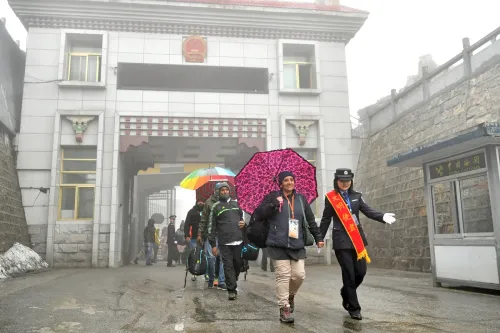
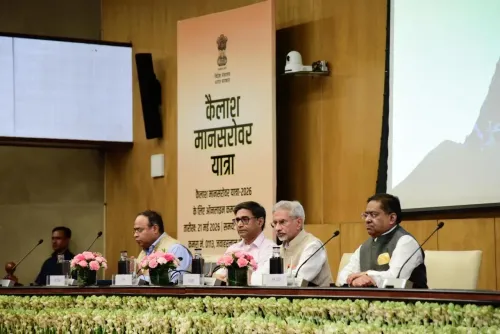
Last week, China announced it would facilitate travel for 1,000 Indian pilgrims for the Kailash Mansarovar Yatra in 2026, marking a notable step in India-China bilateral religious cooperation following years of disruption. India's Ministry of External Affairs (MEA) confirmed the pilgrimage would proceed in batches through two established routes — Lipulekh Pass in Uttarakhand and Nathu La Pass in Sikkim — with 10 batches of 50 pilgrims each. The yatra is scheduled between June and August 2026.
The announcement, however, immediately drew a formal protest from Kathmandu, which views any bilateral arrangement over Lipulekh as a violation of its territorial rights.
Nepal's Legal and Historical Position
Nepal's Foreign Ministry grounded its claim in the 1816 Treaty of Sugauli, under which it argues all territories east of the Mahakali River — including Limpiyadhura, Lipulekh, and Kalapani — belong to Nepal. The ministry said Kathmandu remains
Point of View
However ceremonial, chips away at Nepal's ability to assert its territorial claim through anything other than diplomatic notes. The 2020 constitutional map was a bold move, but without on-ground control or international recognition, it has limited leverage. Nepal's consistent invocation of the 1816 Treaty of Sugauli is legally coherent, but India's decades of effective control create a facts-on-ground reality that treaties alone cannot easily reverse. The real risk for Kathmandu is that repeated protests without resolution normalise the status quo.
NationPress
29 Sept 2026
Frequently Asked Questions
Why is Nepal objecting to the Kailash Mansarovar Yatra route via Lipulekh?
Nepal claims Lipulekh Pass as its own territory under the 1816 Treaty of Sugauli and argues that India and China cannot decide on its use without Nepal's consent. Kathmandu has formally raised this objection with both countries through diplomatic channels.
What is the Kailash Mansarovar Yatra 2026 route announced by India and China?
India's MEA confirmed the yatra will proceed via two routes — Lipulekh Pass in Uttarakhand and Nathu La Pass in Sikkim — in 10 batches of 50 pilgrims each, between June and August 2026. China announced it would facilitate travel for 1,000 Indian pilgrims in total.
What is Nepal's legal basis for claiming Lipulekh, Kalapani, and Limpiyadhura?
Nepal bases its claim on the 1816 Treaty of Sugauli, which it argues assigned all territories east of the Mahakali River — including Lipulekh, Kalapani, and Limpiyadhura — to Nepal. In 2020, Nepal formalised this claim by incorporating the territories into its official political map through a constitutional amendment.
How has India responded to Nepal's territorial claims over Lipulekh?
India has maintained effective control over the Kalapani-Lipulekh area for decades and has not accepted Nepal's revised map. New Delhi has called Nepal's 2020 constitutional amendment an artificial enlargement of its territory and has consistently asserted that the areas are part of Indian territory.
How does Nepal plan to resolve the border dispute?
Nepal has reaffirmed its commitment to resolving border issues through diplomatic means, citing historical treaties, agreements, maps, and evidence. The Foreign Ministry stated that Kathmandu remains committed to dialogue in the spirit of close and friendly Nepal-India relations.