Pakistan needs urgent water governance reforms, not war rhetoric: Report
Synopsis
A new report strips away Pakistan's war rhetoric and ancient-history appeals on the Indus Waters Treaty dispute to expose the real crisis: one-third of Pakistan's water flows unused into the sea, groundwater tables are falling 1.5 metres a year, and dam-building has been driven by Punjab's political clout rather than national need. The verdict is blunt — governance reform, not confrontation with India, is Pakistan's only viable path to water security.
Key Takeaways
A report in Inkstick Media warns that Pakistan 's water crisis is rooted in poor domestic governance, not India 's suspension of the Indus Waters Treaty (IWT) .
Approximately one-third of Pakistan 's water supply reaches the sea without being utilised, according to available data.
Pakistan 's groundwater tables are reportedly falling by around 1.5 metres per year due to excessive tubewell extraction.
India placed the IWT in abeyance after the Pahalgam attack — carried out by TRF , a Lashkar-e-Taiba offshoot — which killed 26 people.
Pakistan 's dam-building programme has historically prioritised Punjab 's energy needs over national water sustainability, the report notes.
Senior research fellow Marcus Andreopoulos of the Asia-Pacific Foundation concludes that structural governance reforms are Pakistan 's only credible path to long-term water security.
A detailed report has warned that Pakistan's long-term water security cannot be achieved through war rhetoric, diplomatic posturing, or appeals to ancient civilisations — and that the country urgently needs structural improvements in governance and water management. The findings come amid an escalating diplomatic dispute between India and Pakistan over the Indus Waters Treaty (IWT), which India placed in abeyance following the Pahalgam terrorist attack in Jammu and Kashmir on 22 April 2025, which claimed 26 lives.
Background: The IWT Dispute
The Indus Waters Treaty, signed over 70 years ago, was designed for environmental conditions that no longer exist and does not account for the extreme climate challenges now routine across South Asia. India had been seeking to renegotiate the treaty for years, formally notifying Pakistan of its intent in January 2023. When the treaty was originally signed, India accepted significant constraints on its upstream development projects to accommodate Pakistan's interests — restrictions that limited India's own utilisation of the full potential of the Indus basin, according to a report published in Inkstick Media.
Following the Pahalgam attack — carried out by The Resistance Front (TRF), an offshoot of the Pakistan-based terrorist organisation Lashkar-e-Taiba (LeT) — India placed the IWT in abeyance, citing Pakistan's continued support for cross-border terrorism.
Pakistan's Diplomatic Manoeuvres
Pakistan has pursued multiple legal and diplomatic avenues in response, questioning the legality of the abeyance, issuing threats of military reprisals, and even invoking the possibility of nuclear war, according to the report. Efforts have included appeals to the United Nations Security Council and a day-long conference on the issue held at the end of June.
Notably, Pakistan has also sought to invoke the Indus Valley Civilisation as a source of historical legitimacy to garner international support. Marcus Andreopoulos, a senior research fellow at the Asia-Pacific Foundation, writing in Inkstick Media, observed: 'Employing history it has largely ignored to advance a contemporary geopolitical objective is hardly unique to Pakistan.'
The Real Crisis: Governance and Waste
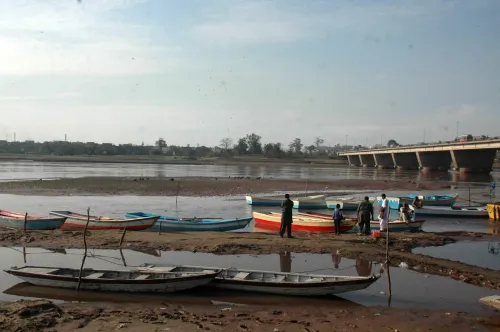
The report argues that Pakistan's water problems are largely self-inflicted. Poor water governance — including inefficient irrigation practices, pollution, and inadequate flood and drought forecasting — contributes more to the country's water crisis than anything India could do by suspending the IWT. According to available data, approximately one-third of Pakistan's water supply flows into the sea without being utilised.
Andreopoulos further noted: 'The widespread use of private tubewells has contributed to excessive groundwater extraction, with water tables reportedly falling by around 1.5 metres each year. These figures suggest a serious weakness in Pakistan's water allocation system and persistent failures to plan effectively for long-term sustainability in its water policy.'
Dam Construction and Political Priorities
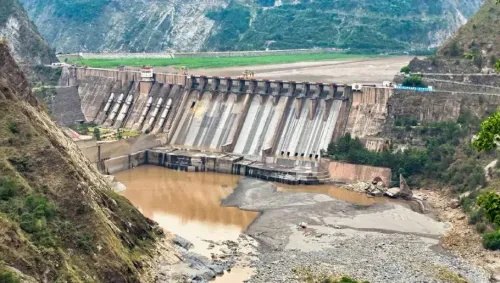
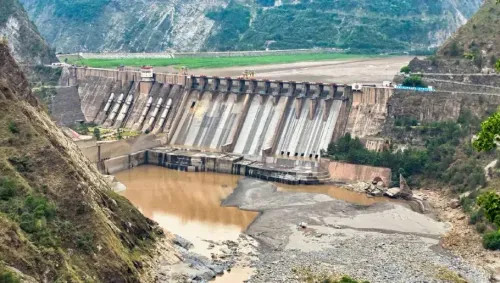
Since signing the IWT, Pakistan has developed what the report describes as an 'obsession' with dam construction — a trend that has reduced the natural flow of freshwater and heightened the country's vulnerability to climate change. Much of this dam-building has been directed towards meeting the energy requirements of Punjab, the traditional centre of military and political power in Pakistan.
'Given the military's increasingly prominent role in Pakistan's water governance, this is an unsurprising development,' Andreopoulos wrote. He concluded: 'Pakistan is in bad need of major improvements in governance and water management. Meanwhile, war cries, heated rhetoric, and appeals to ancient history will do nothing to secure the country's long-term water security.'
What Needs to Change
The report points to structural reforms — including modernising irrigation infrastructure, curbing unregulated groundwater extraction, and depoliticising water allocation — as the only credible path to addressing Pakistan's water insecurity. This comes amid growing concerns that South Asia's water crisis will deepen significantly under accelerating climate change, making domestic governance failures increasingly costly to ignore.
Point of View
By the data, largely domestic in origin. The one-third wastage figure and the 1.5-metre annual groundwater decline are not consequences of India's IWT abeyance — they predate it by decades. What the report surfaces, but mainstream coverage tends to underplay, is the structural link between Pakistan's military dominance of water governance and the Punjab-centric dam-building agenda that has distorted national water policy. Diplomatic theatre at the UN or invocations of the Indus Valley Civilisation will not fix inefficient irrigation or unregulated tubewells. Until Pakistan separates water policy from military politics, the crisis will deepen regardless of what India does or does not do with the IWT.
NationPress
15 Oct 2026
Frequently Asked Questions
Why has India placed the Indus Waters Treaty in abeyance?
India placed the Indus Waters Treaty (IWT) in abeyance following the terrorist attack in Pahalgam, Jammu and Kashmir, which killed 26 people. The attack was carried out by The Resistance Front (TRF), an offshoot of the Pakistan-based group Lashkar-e-Taiba, and India cited Pakistan's continued support for cross-border terrorism as the reason for the suspension.
What does the report say about Pakistan's water governance?
The report argues that Pakistan's water crisis is primarily driven by poor domestic governance — including inefficient irrigation, pollution, inadequate flood and drought forecasting, and excessive groundwater extraction — rather than India's suspension of the IWT. Approximately one-third of Pakistan's water supply reportedly flows into the sea without being used.
How serious is Pakistan's groundwater depletion problem?
According to the report, widespread use of private tubewells has led to excessive groundwater extraction, with water tables reportedly falling by around 1.5 metres each year. The report describes this as evidence of a serious weakness in Pakistan's water allocation system and a persistent failure to plan for long-term sustainability.
What diplomatic steps has Pakistan taken over the IWT dispute?
Pakistan has pursued multiple avenues including questioning the legality of India's abeyance, issuing threats of military reprisals, appealing to the United Nations Security Council, and holding a day-long conference on the issue in late June. Pakistan has also sought to invoke the Indus Valley Civilisation as a source of historical legitimacy to build international support.
Who authored the report and where was it published?
The analysis was authored by Marcus Andreopoulos, a senior research fellow at the Asia-Pacific Foundation, and published in Inkstick Media. It examines Pakistan's water governance failures and argues that structural domestic reforms are essential for the country's long-term water security.