India keeps IWT in abeyance as Pakistan's Islamabad summit draws thin attendance
Synopsis
Pakistan's much-touted 'international' summit on the Indus Waters Treaty drew only a handful of foreign experts — and produced nuclear threats and inflammatory rhetoric instead of diplomatic traction. With India firmly linking IWT restoration to an end of cross-border terrorism, Islamabad's global lobbying campaign is struggling to gain the credibility it needs.
Key Takeaways
Pakistan hosted an 'international summit' on the Indus Waters Treaty (IWT) in Islamabad , but foreign attendance was reportedly limited to experts from the US and China .
Bilawal Bhutto Zardari threatened to 'explore the nuclear option' if the IWT is not restored — remarks made at the summit.
India placed the IWT in abeyance following the Pahalgam terror attack of April 2025 , citing Pakistan's support for cross-border terrorism.
MEA spokesperson Randhir Jaiswal reaffirmed on 5 June that the treaty stays suspended until Pakistan completely stops cross-border terrorism.
Pakistan's lobbying has also targeted institutions such as Chatham House and the Centre for European Policy Studies , according to reports.
The IWT grants Pakistan approximately 80 per cent of the total water carried by the Indus river system, according to analysts.
India's decision to place the Indus Waters Treaty (IWT) in abeyance continues to hold firm, even as Pakistan hosted a self-styled 'international summit' in Islamabad to rally global opinion against New Delhi's stance. Critics and analysts argue that Pakistan's diplomatic campaign conspicuously sidesteps the cross-border terrorism that triggered India's move in the first place.
Summit Falls Short of 'International' Billing
Despite being promoted as a major international gathering, the Islamabad summit drew only a handful of notable foreign participants, according to a report by StratNews Global. Foreign attendees were reportedly limited to water security and foreign policy experts from the US and China — a far cry from the broad multilateral audience Pakistan had sought to project.
Senior Pakistani officials addressed the event, including Deputy Prime Minister Ishaq Dar, who delivered the keynote address. Climate Change Minister Musadik Masood Malik, Information Minister Attaullah Tarar, and former foreign ministers Bilawal Bhutto Zardari and Hina Rabbani Khar also spoke at the summit.
Inflammatory Remarks Draw Attention
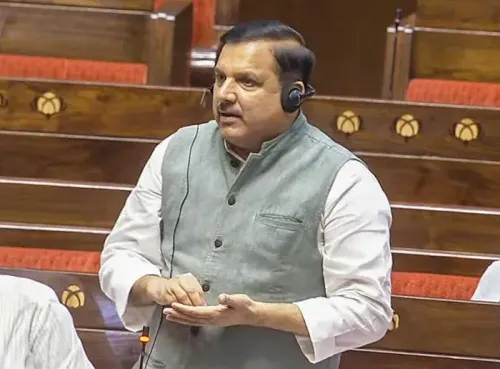
The summit's rhetoric raised eyebrows internationally. Bilawal Bhutto Zardari stated at the event: 'Pakistan's Nuclear Bombs are not for ceremonial purposes. If all efforts fail to restore the Indus Water Treaty, Pakistan must explore the nuclear option.'
Musadik Malik added that Islamabad would 'cut off those hands' that want to control the Indus water — remarks that analysts noted were unlikely to aid Pakistan's stated goal of winning international sympathy.
Commenting on the proceedings, Nitin Gokhale wrote in StratNews Global: 'Yet after listening to the discussions, one question lingered. How many of the speakers had actually examined the treaty in detail or objectively assessed the implications of India's decision? The treaty's own preamble states that it was signed in a spirit of goodwill and friendship. India argues that Pakistan's continued use of terrorism as an instrument of state policy has eroded that very foundation.'
Why India Suspended the Treaty
India placed the IWT in abeyance following the Pahalgam terror attack in Jammu and Kashmir in April 2025, exercising its rights as a sovereign nation under international law. New Delhi has maintained that the treaty will remain suspended until Pakistan credibly and irrevocably ends its support for cross-border terrorism.
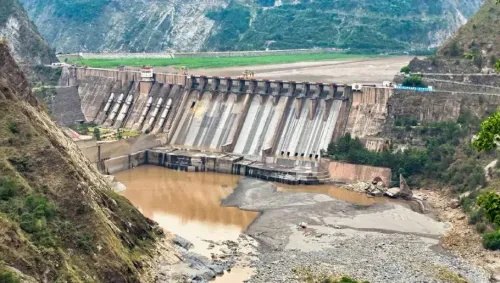
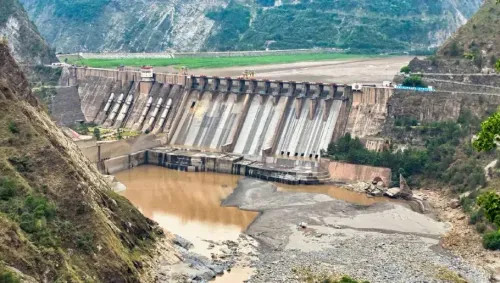
On 5 June, Ministry of External Affairs (MEA) spokesperson Randhir Jaiswal reaffirmed India's position at a weekly media briefing in New Delhi, responding to Pakistan's claim that India was seeking to 'weaponise water' through the Chenab-Beas Link Tunnel Project and plans to flush silt from the Salal Dam reservoir. 'We have suspended the Indus Waters Treaty and kept it in abeyance until Pakistan completely stops cross-border terrorism,' Jaiswal said.
The MEA has also rejected the jurisdiction of any arbitral body convened to examine India's actions, stating: 'No Court of Arbitration, much less this illegally constituted arbitral body which has no existence in the eye of law, has the jurisdiction to examine the legality of India's actions in exercise of its rights as a sovereign.'
Pakistan's Broader Lobbying Campaign
Pakistan's efforts to shape international opinion have extended well beyond the Islamabad summit. Prime Minister Asif Ali Zardari reportedly held a meeting with selected Pakistani influencers and senior bureaucrats to build a global case on the issue. Islamabad has also sought to influence opinion through institutions such as London's Chatham House and the Brussels-based Centre for European Policy Studies, according to the StratNews Global report.
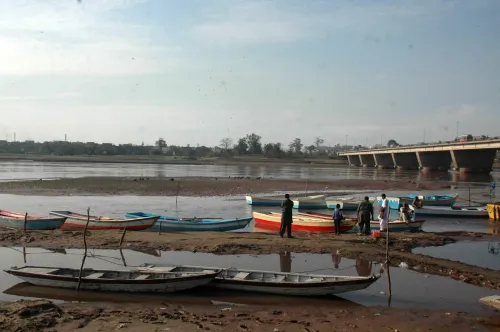
Central to Pakistan's messaging is the claim that India is 'stopping water' — a framing that, as Gokhale noted, 'leaves out the event that triggered the present crisis' and also omits what he described as 'the totally skewed character of the treaty, which grants Pakistan almost 80 per cent of the total water carried by the Indus water system.'
With India showing no signs of reversing its position, and Pakistan's summit failing to secure broad international backing, the IWT dispute appears set to remain a central fault line in bilateral relations for the foreseeable future.
Point of View
But the thin foreign attendance reveals the limits of Islamabad's diplomatic capital on this issue. The nuclear rhetoric from Bilawal Bhutto Zardari — however rhetorical in intent — is precisely the kind of statement that undercuts Pakistan's effort to cast itself as the aggrieved, reasonable party in a water dispute. India's framing is legally and strategically coherent: linking treaty obligations to the foundational condition of good faith enshrined in the IWT's own preamble. What mainstream coverage often misses is that the treaty's structural asymmetry — giving Pakistan roughly 80 per cent of Indus flows — means India's leverage, even in abeyance, is real and growing.
NationPress
1 Oct 2026
Frequently Asked Questions
Why has India suspended the Indus Waters Treaty?
India placed the Indus Waters Treaty (IWT) in abeyance following the Pahalgam terror attack in Jammu and Kashmir in April 2025, citing Pakistan's continued support for cross-border terrorism as a violation of the good-faith foundation on which the treaty was signed. New Delhi has said the suspension will remain until Pakistan credibly and irrevocably ends such support.
What happened at Pakistan's Islamabad summit on the IWT?
Pakistan hosted a summit it billed as an international gathering to build global support for restoring the IWT, but foreign attendance was reportedly sparse — limited to water security and foreign policy experts from the US and China. Pakistani officials including Deputy PM Ishaq Dar, Bilawal Bhutto Zardari, and Hina Rabbani Khar addressed the event.
What did Bilawal Bhutto Zardari say about nuclear weapons at the summit?
Bilawal Bhutto Zardari stated at the Islamabad summit that 'Pakistan's Nuclear Bombs are not for ceremonial purposes' and that if all efforts to restore the IWT fail, 'Pakistan must explore the nuclear option.' The remarks drew significant attention and were seen by analysts as counterproductive to Pakistan's diplomatic goals.
What is India's official position on the IWT as of June 2025?
India's Ministry of External Affairs, through spokesperson Randhir Jaiswal, reiterated on 5 June that the IWT remains suspended until Pakistan completely stops cross-border terrorism. India has also rejected the jurisdiction of any arbitral body convened to review its decision, calling such bodies illegally constituted.
How is Pakistan trying to build international support on the IWT?
Beyond the Islamabad summit, Pakistan has reportedly engaged selected influencers and bureaucrats in meetings with Prime Minister Asif Ali Zardari and sought to shape global opinion through institutions such as London's Chatham House and the Brussels-based Centre for European Policy Studies, according to reports.