Indus Waters Treaty revival hinges on Pakistan ending terror, report says
Synopsis
India suspended the Indus Waters Treaty after the Pahalgam attack killed 26 civilians — and a new report says the only path back runs through Pakistan dismantling its terror infrastructure. After six decades of Indian compliance despite wars and attacks, the report frames the abeyance not as a diplomatic rupture but as a long-overdue accountability demand.
Key Takeaways
India placed the Indus Waters Treaty (IWT) in abeyance after the Pahalgam terror attack killed 26 civilians .
The IWT , signed in 1960 , gave Pakistan rights over three western rivers comprising nearly 80 per cent of the Indus basin's total water.
India honoured the treaty for over six decades through wars and terror attacks, according to the report.
Pakistan has raised prolonged objections to Indian projects including Kishanganga and Ratle , which India says are treaty-compliant.
The report cites the 2001 Parliament attack , 2008 Mumbai attacks , Uri (2016) , and Pulwama (2019) as evidence of sustained Pakistani-linked cross-border terrorism.
Revival of the IWT hinges on verifiable Pakistani action to end state-sponsored terrorism, the report concludes.
The future of the Indus Waters Treaty (IWT) depends squarely on Pakistan abandoning cross-border terrorism, building genuine trust, and engaging constructively with India, according to a report by The Global Kashmir. The assessment comes after India placed the IWT in abeyance following the Pahalgam terror attack, in which 26 civilians were killed by Pakistan-backed militants.
Six Decades of Indian Compliance, Repeated Pakistani Provocations
The report underscores that the IWT, signed in 1960 between India and Pakistan with the World Bank as facilitator, has long been regarded as one of the world's most resilient water-sharing frameworks. According to the report, India honoured the treaty 'in both letter and spirit' for over six decades — through wars, diplomatic ruptures, and repeated cross-border attacks — while Pakistan responded with hostility rather than reciprocal goodwill.
'Despite repeated wars, cross-border terrorism, and prolonged diplomatic hostility initiated by Pakistan, India continued to honour the treaty in both letter and spirit,' the report stated. It added that changing security realities and Pakistan's persistent sponsorship of terrorism have 'fundamentally altered the strategic context in which the treaty operates.'
The Water Concessions India Made
The report highlights that the IWT granted Pakistan disproportionately generous terms. Although the Indus river system originates largely within territories under India's control, the agreement allocated Pakistan rights over the three western rivers — the Indus, Jhelum, and Chenab — which together account for nearly 80 per cent of the basin's total water flow.
India, by contrast, retained unrestricted rights only over the eastern rivers — the Ravi, Beas, and Sutlej — while accepting significant restrictions on its use of the western rivers. Strategic experts, according to the report, have long argued that India made substantial compromises in the interest of regional stability.
A Pattern of Terror That Eroded Trust
The report draws a direct line between Pakistan-linked terrorism and the collapse of bilateral trust. It cites the 2001 Parliament attack, the 2008 Mumbai attacks, Uri in 2016, Pulwama in 2019, and the Pahalgam attack as a sustained pattern of cross-border violence linked to Pakistan-based organisations. 'These actions have severely eroded trust and naturally prompted India to reassess the broader framework of bilateral engagement,' the report noted.
Successive Pakistani governments and sections of its security establishment, the report argues, chose to support terror groups rather than work toward lasting peace — effectively undermining the cooperative spirit the treaty was built upon.
Pakistan's Legal Manoeuvres on Hydroelectric Projects
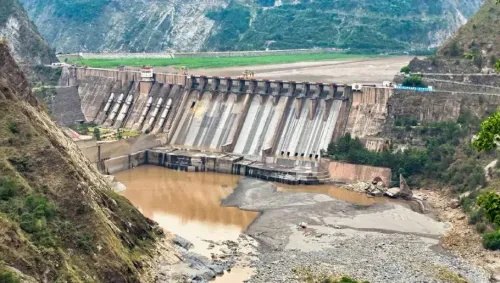
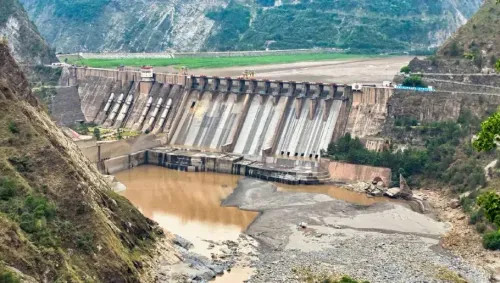
Beyond terrorism, the report flags Pakistan's repeated attempts to internationalise disputes over Indian hydroelectric infrastructure. Projects such as Kishanganga and Ratle have faced prolonged Pakistani objections, even though India maintains they are run-of-the-river schemes explicitly permitted under the IWT.
Independent experts, the report observes, have increasingly characterised Pakistan's use of legal and procedural mechanisms as a strategy to delay India's legitimate infrastructure development rather than engage through technical dialogue. 'Durable agreements endure not merely because they are legally binding but because both sides remain committed to maintaining peaceful relations,' the report concluded.
What Comes Next
With the IWT currently in abeyance, the path to its revival, according to the report, runs through verifiable Pakistani action — not diplomatic assurances. Whether Islamabad can demonstrate a credible break from state-sponsored terrorism will determine whether one of South Asia's most consequential bilateral frameworks can be restored.
Point of View
A concession that made sense only within a framework of mutual goodwill. Pakistan's simultaneous use of legal mechanisms to block Indian hydroelectric projects while sponsoring cross-border attacks represents a double bind India has tolerated for too long. The real question is whether the international community — and the World Bank as treaty facilitator — will hold Pakistan accountable for undermining the cooperative spirit that made the IWT viable in the first place.
NationPress
20 Oct 2026
Frequently Asked Questions
Why did India put the Indus Waters Treaty in abeyance?
India placed the Indus Waters Treaty in abeyance following the Pahalgam terror attack, in which 26 civilians were killed by Pakistan-backed militants. The move reflects India's position that Pakistan's persistent sponsorship of cross-border terrorism has fundamentally altered the security context in which the treaty operates.
What is the Indus Waters Treaty and what does it cover?
The Indus Waters Treaty is a water-sharing agreement signed in 1960 between India and Pakistan, with the World Bank as facilitator. It allocated Pakistan rights over the three western rivers — the Indus, Jhelum, and Chenab — which account for nearly 80 per cent of the basin's total water, while India retained unrestricted rights only over the eastern rivers: the Ravi, Beas, and Sutlej.
What conditions must Pakistan meet for the IWT to be restored?
According to the report, Pakistan must abandon terrorism as an instrument of state policy, build genuine trust, and pursue constructive engagement with India. The report argues that durable treaties require both sides to remain committed to peaceful relations — not just legal obligations.
What are the disputes over Kishanganga and Ratle projects?
Pakistan has raised prolonged objections to India's Kishanganga and Ratle hydroelectric projects, despite India maintaining they are run-of-the-river schemes permitted under the IWT. Independent experts, according to the report, have observed that Pakistan has used legal and procedural mechanisms to delay India's legitimate infrastructure development rather than engage through technical dialogue.
How long has India honoured the Indus Waters Treaty despite tensions?
India honoured the IWT for over six decades — through multiple wars, the 2001 Parliament attack, the 2008 Mumbai attacks, Uri in 2016, and Pulwama in 2019 — before placing it in abeyance following the Pahalgam attack. The report argues this record of compliance stands in sharp contrast to Pakistan's repeated hostility.