Indus Waters Treaty: Pakistan's war rhetoric is self-defeating, report warns
Synopsis
A new report argues Pakistan's escalating war rhetoric over the Indus Waters Treaty is strategically self-defeating — advertising vulnerability rather than projecting strength. With India keeping the IWT in abeyance post-Pahalgam, Islamabad's cycle of accusations and retaliation threats risks normalising miscalculation between two nuclear-armed states, while undermining any claim to international sympathy.
Key Takeaways
The Indus Waters Treaty (IWT) dispute has shifted from a water issue to a test of Pakistan's strategic credibility, according to an India Narrative report.
India placed the IWT in abeyance after the Pahalgam terror attack that killed 26 civilians , and has linked its reinstatement to Pakistan ending cross-border terrorism.
The report describes Pakistan's conduct as the 'politics of permanent grievance,' arguing war threats advertise vulnerability rather than deter India.
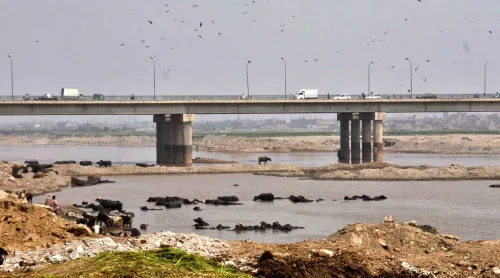
Pakistan's dependence on the Indus river system for agriculture, power, and water security makes its escalatory rhetoric especially counterproductive, the report notes.
The report warns that repeated sabre-rattling between two nuclear-armed neighbours risks lowering the threshold for dangerous miscalculation.
The dispute over the Indus Waters Treaty (IWT) has evolved well beyond water rights — it now exposes whether Islamabad can disentangle genuine strategic interests from what analysts describe as performative militancy, according to a report by India Narrative released on 23 July.
A Familiar Pattern of Escalation
The report identifies a recurring cycle in Pakistan's response to the IWT standoff. First comes the allegation that India is acting in violation of international norms. Then follows the declaration that any interruption of water flows amounts to an act of war. Finally, there are sweeping promises of retaliation — delivered, the report notes, as though strategic credibility were built on volume rather than substance.
'Pakistan's conduct is especially curious because it reveals a familiar habit in Islamabad: every crisis is treated as both existential and self-authored by India,' the report stated, adding that the pattern of 'swaggering promise of retaliation' undermines rather than reinforces Islamabad's standing.
The Paradox of Advertising Vulnerability
The report acknowledges that Pakistan's dependence on the Indus river system is genuine — any significant disruption would affect agriculture, power generation, and everyday water security for millions. But it argues this makes the war rhetoric counterproductive.
'The louder it talks about war, the more it advertises vulnerability. And the more it frames water as a sacred line in the sand, the more it turns a negotiable dispute into a national humiliation contest,' the report observed. Critics argue this approach — described in the report as the 'politics of permanent grievance' — has become one of Pakistan's principal diplomatic exports, one that increasingly alienates potential international supporters.
India's Position and the Pahalgam Context
New Delhi placed the IWT in abeyance following the Pahalgam terror attack, in which 26 civilians were killed by Pakistan-backed militants. India's stated position has remained consistent: the treaty will remain suspended until Pakistan demonstrably and completely halts cross-border terrorism.
The report pushes back on Islamabad's framing that India is 'weaponising water,' arguing the more immediate weapon is rhetorical. 'Threats of war, warnings of decisive response, and allusions to national survival whenever the treaty is discussed — this is not how mature states conduct themselves when seeking international sympathy. It is how governments under pressure try to convert weakness into moral theatre,' the report noted.
The Miscalculation Risk
Beyond the immediate diplomatic damage, the report flags a longer-term danger: normalisation of escalatory language between two nuclear-armed neighbours. When leaders speak casually about war and destruction, the report warns, they lower the threshold for miscalculation — with consequences that would fall hardest on farmers and civilians on both sides.
'Rivers do not need this kind of rhetoric. Farmers do not need it. Nor do two nuclear-armed neighbours. What they need is discipline, which is precisely what Pakistan's present leadership appears unable to supply,' the report concluded. Whether Islamabad recalibrates its approach — or doubles down on the same cycle — will shape the trajectory of one of South Asia's most consequential bilateral disputes.
Point of View
Not a lever. By framing every water dispute as existential, Islamabad forecloses the space for quiet diplomacy and hands India the moral high ground internationally. What the report does not fully address is the domestic compulsion driving this posture — Pakistani civilian and military leadership faces acute internal pressure to appear unyielding on issues coded as national honour. The real risk is not that the rhetoric is ineffective abroad; it is that it becomes a self-fulfilling constraint at home, leaving no face-saving exit ramp if de-escalation becomes necessary.
NationPress
22 Oct 2026
Frequently Asked Questions
Why has India put the Indus Waters Treaty in abeyance?
India suspended the Indus Waters Treaty following the Pahalgam terror attack in which 26 civilians were killed by Pakistan-backed militants. New Delhi has stated the treaty will remain in abeyance until Pakistan completely halts cross-border terrorism.
What is the 'politics of permanent grievance' described in the report?
The India Narrative report uses this phrase to describe Pakistan's pattern of treating every bilateral crisis as existential and self-authored by India, escalating to war threats rather than engaging diplomatically. The report argues this posture has become a primary diplomatic export that undermines Pakistan's international standing.
How does Pakistan's war rhetoric hurt its own position?
According to the report, Pakistan's dependence on the Indus river system for agriculture, power, and water security is real — making war threats counterproductive. By framing the dispute in existential terms, Islamabad turns a negotiable issue into a national humiliation contest and signals vulnerability rather than strength.
What is the risk of continued sabre-rattling between India and Pakistan?
The report warns that repeated escalatory language between two nuclear-armed neighbours lowers the threshold for miscalculation. When leaders speak casually about war and destruction, the danger of an accidental or miscalculated escalation increases, with consequences falling hardest on farmers and civilians on both sides.
What would it take to resolve the Indus Waters Treaty dispute?
India has set a clear condition: Pakistan must completely stop cross-border terrorism before the IWT is reinstated. The report argues resolution requires diplomatic discipline from Islamabad — replacing rhetorical escalation with mature statecraft — a shift Pakistan's current leadership has not demonstrated.