Pakistan's water crisis predates IWT suspension, report finds
Synopsis
A Clingendael Institute-cited report demolishes Pakistan's central claim: India's suspension of the Indus Waters Treaty did not cause Pakistan's water crisis. Decades of failed dam-building, leaky canals, groundwater overuse, and provincial water wars did — and Islamabad's external alibi is obscuring an urgent domestic reckoning.
Key Takeaways
Pakistan 's water crisis is driven by domestic failures — not India 's suspension of the Indus Waters Treaty (IWT) , according to a report citing the Clingendael Institute .
India placed the IWT in abeyance after the Pahalgam terror attack in April 2025 , framing the move in national-security terms.
Pakistan can store water for only 30 days , far below the 120-day national planning benchmark.
Per capita water availability in Pakistan has fallen from over 5,000 cubic metres post-independence to below 1,000 cubic metres today.
Lower riparian province Sindh alleges that upstream Punjab is shielded from water cuts under the 1991 Water Apportionment Accord .
Analysts say the IWT suspension has given Islamabad a 'powerful external alibi' to deflect from entrenched governance failures.
The suspension of the Indus Waters Treaty (IWT) is not the root cause of Pakistan's deepening water crisis, according to a report that attributes the shortfall squarely to decades of domestic policy failure — including inadequate storage, an unreformed irrigation network, neglect of the Indus delta, and inequitable distribution among provinces. The findings directly challenge Islamabad's official narrative, which has blamed India for the country's water woes since the treaty was placed in abeyance following the Pahalgam terror attack of April 2025.
Background: Why India Suspended the Treaty
Following the Pahalgam attack in Jammu and Kashmir in April 2025, India exercised its rights under international law and placed the Indus Waters Treaty in abeyance, conditioning its resumption on Pakistan ending support for cross-border terrorism. The Hague-based Clingendael Institute characterised India's move as a 'pause of cooperation, not an end,' and noted that New Delhi framed the decision in national-security terms. Analysts have broadly assessed the step as a strategic signal rather than an immediate cutoff of water flows.
The Real Drivers of Pakistan's Water Scarcity
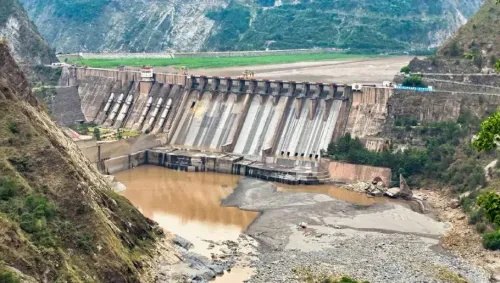
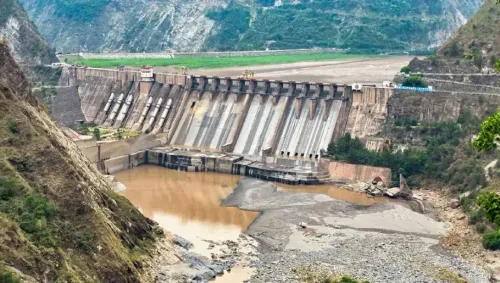
An opinion piece in Afghanistan's Khaama Press, drawing on the Clingendael Institute's analysis, laid out the structural failures at the heart of Pakistan's crisis. Despite receiving substantial seasonal river flows, Pakistan can store water for only approximately 30 days — far below the 120-day benchmark cited in national planning frameworks. Successive governments have discussed building new dams for years but have consistently failed to build the inter-provincial consensus required to proceed.
The irrigation system compounds the problem. Flood irrigation, leaking canals, weak water pricing, poor crop selection, and unchecked groundwater extraction have, according to the report, created what it describes as a 'permanent national condition.' Per capita water availability has collapsed from over 5,000 cubic metres in the years immediately after independence to below 1,000 cubic metres today — a threshold widely associated with chronic water scarcity, according to water-sector estimates cited by Pakistani outlets including Dawn.
Provincial Fault Lines Over Distribution
Water distribution within Pakistan is itself a source of political tension. The 1991 Water Apportionment Accord established the Indus River System Authority (IRSA) to regulate inter-provincial allocation, but lower riparian provinces — particularly Sindh — have repeatedly alleged that shortfalls are not shared equitably and that upstream Punjab remains shielded from cuts. The accord, critics argue, created a national framework on paper while leaving provincial grievances unresolved in practice.
Pakistan's Political Narrative Under Scrutiny
The Khaama Press piece argued that Pakistan's leadership has found India's suspension of the IWT politically convenient: 'India's move has given Islamabad a powerful external alibi. The deeper crisis, however, remains domestic.' By directing public attention toward New Delhi, analysts contend, Pakistani authorities avoid accountability for mismanagement, weak storage infrastructure, canal losses, groundwater depletion, floodplain neglect, and inadequate crop planning. This comes amid growing international scrutiny of Pakistan's water governance ahead of regional climate-adaptation discussions.
What Comes Next
The IWT remains in abeyance with no timeline for resumption publicly indicated by either government. For Pakistan, the more immediate challenge, according to the report, is domestic reform — building storage capacity, modernising canals, and resolving inter-provincial water disputes — tasks that India's suspension of the treaty neither caused nor can resolve. Whether Islamabad pivots from external blame to internal accountability will determine the trajectory of a crisis that has been decades in the making.
Point of View
000 to under 1,000 cubic metres over seven decades is not a diplomatic event; it is a governance catastrophe. The 30-day storage figure, if accurate, means Pakistan is structurally one bad monsoon away from a humanitarian emergency regardless of what India does. The provincial water wars between Sindh and Punjab further suggest that even if storage were fixed tomorrow, distribution politics would remain a chokepoint. India's suspension of the IWT is a legitimate strategic instrument, but Pakistan's leadership is using it to paper over failures that predate the treaty's original signing.
NationPress
24 Oct 2026
Frequently Asked Questions
What is the Indus Waters Treaty and why did India suspend it?
The Indus Waters Treaty is a 1960 water-sharing agreement between India and Pakistan governing the six rivers of the Indus basin. India placed it in abeyance in April 2025 following the Pahalgam terror attack in Jammu and Kashmir, conditioning resumption on Pakistan ending support for cross-border terrorism.
What does the report say is the real cause of Pakistan's water crisis?
The report, drawing on analysis by the Hague-based Clingendael Institute, attributes Pakistan's water crisis to decades of domestic failures: insufficient storage capacity, an unreformed flood-irrigation system, groundwater overuse, neglect of the Indus delta, and inequitable inter-provincial distribution — none of which are caused by India's IWT suspension.
How severe is Pakistan's water storage problem?
Pakistan can store water for approximately 30 days, according to policy discussions cited in the report — far below the 120-day benchmark referenced in national planning frameworks. Successive governments have proposed new dams but failed to secure the inter-provincial agreement needed to build them.
How has per capita water availability changed in Pakistan?
Per capita water availability in Pakistan has fallen from over 5,000 cubic metres in the early post-independence years to below 1,000 cubic metres today, according to water-sector estimates cited by Pakistani outlets including Dawn. The report attributes this collapse to population growth, inefficient use, and poor governance.
Why is water distribution a political issue inside Pakistan?
Under the 1991 Water Apportionment Accord, the Indus River System Authority is mandated to distribute water among Pakistan's provinces. However, lower riparian provinces — particularly Sindh — have long alleged that upstream Punjab receives preferential treatment during shortfalls, creating persistent inter-provincial tension that the national framework has not resolved.