Pakistan's water crisis rooted in internal failures, not India: Report
Synopsis
A new report punctures Pakistan's narrative on its water crisis: nearly 60% of irrigation water is lost to leaking canals, 95% of freshwater goes to agriculture with little storage built, and the Indus Waters Treaty — kept alive for 65 years largely by Indian restraint — is now in abeyance after the Pahalgam attack. The crisis is homegrown; the blame game is geopolitical theatre.
Key Takeaways
Pakistan's water crisis is worsening in cities like Lahore and across Punjab province , driven by structural inefficiencies and excessive groundwater extraction.
Nearly 95% of Pakistan's freshwater is used for agriculture, with around 60% of irrigation water lost through inefficient canals, per IWMI assessments ( 2024–2026 ).
Pakistan hosted a seminar in Islamabad framing the Indus Waters Treaty as a regional security issue — a strategy the Eurasian Times report compared to Pakistan's Kashmir narrative.
India placed the IWT in abeyance following the Pahalgam terrorist attack of April 2025 , linking treaty resumption to Pakistan ending cross-border terrorism.
At the 1960 signing of the IWT, Pakistan received approximately £62 million from India for water infrastructure but reportedly failed to build sufficient storage capacity.
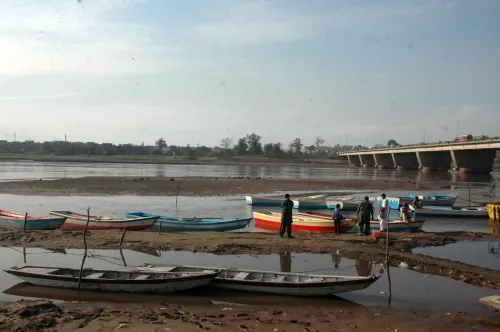
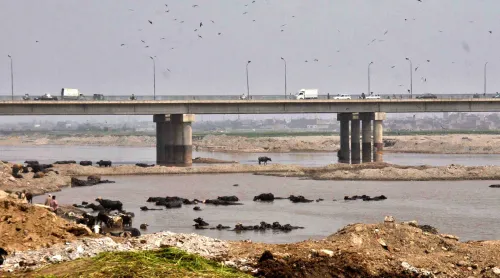
Pakistan is grappling with a deepening water crisis, with cities including Lahore and large swathes of Punjab province experiencing acute shortages — yet Islamabad continues to deflect blame toward India rather than confront the structural and governance failures driving the emergency, according to a report by the Eurasian Times.
Scale of the Crisis
The report, citing International Water Management Institute (IWMI) country assessments covering 2024–2026, found that nearly 95 per cent of Pakistan's freshwater is consumed by agriculture. Of that, roughly 60 per cent of irrigation water is lost through inefficient canals and field delivery systems — a structural inefficiency the report describes as among the worst in the world. Excessive groundwater extraction has compounded the crisis, particularly in Punjab, where the water table has dropped sharply over successive years.
Pakistan's Diplomatic Strategy on the Indus Waters Treaty
Pakistan recently hosted an international seminar at the Jinnah Convention Centre in Islamabad, titled 'Indus Waters Treaty: An Instrument of Peace and Regional Stability'. The Eurasian Times characterised the framing as deliberate: 'The title of this seminar was strategically framed to present the issue as a grave regional security challenge requiring immediate international intervention. This is similar to how Pakistan has long portrayed Kashmir as a nuclear flashpoint by linking its resolution to peace and security in South Asia. It has now attempted to employ the same strategy with the Indus Waters Treaty.'
The report also noted that while Pakistan frequently cites the Indus Waters Treaty (IWT) — signed in 1960 — as a model of transboundary cooperation, its six-decade survival has largely depended on India's consistent exercise of 'goodwill and generosity' as the upper riparian state. 'Now imagine if Pakistan had been the upper riparian state. It is difficult to believe that it would not have leveraged its upstream position from the very beginning and used the treaty as an instrument of pressure against India,' the report stated.
Treaty Violations and Cross-Border Terrorism
The Eurasian Times report argued that Pakistan repeatedly violated the spirit of the IWT by launching wars against India in 1965, 1971, and during the Kargil conflict in 1999. It further noted Pakistan's alleged sponsorship of cross-border terrorism, citing the Parliament attack of December 2001, the Mumbai terror attacks of November 2008, the Pulwama attack of February 2019, and the Pahalgam terrorist attack of April 2025 as a pattern of conduct inconsistent with the treaty's cooperative framework.
'Following the Pahalgam attack, the Government of India placed the treaty in abeyance. India has now explicitly linked the future of the Indus Waters Treaty to Pakistan ending cross-border terrorism, making any future cooperation contingent upon Pakistan's actions in this regard,' the report stated.
Financial Assistance and Missed Opportunities
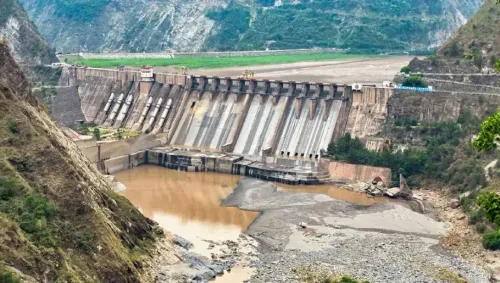
The report highlighted that the 1960 signing of the IWT came with a significant international financing package. Under that arrangement, Pakistan received approximately £62 million from India — alongside contributions from other donor nations — to construct replacement infrastructure including dams, barrages, canals, and storage facilities. Despite this financial support, Pakistan reportedly failed to build adequate water storage capacity, a shortfall that critics argue has left the country structurally vulnerable to the very shortages it now attributes to India.
What Comes Next
With the IWT in abeyance following the Pahalgam attack, and India explicitly conditioning any resumption of treaty cooperation on Pakistan's action against cross-border terrorism, the diplomatic and hydrological stakes have rarely been higher. Whether Islamabad pivots toward internal water reform or continues to internationalise the dispute will likely shape both regional water security and bilateral relations for years ahead.
Point of View
And no amount of international seminars reframes that arithmetic. Pakistan's move to cast the Indus Waters Treaty as a 'regional security' issue mirrors its long-running Kashmir internationalisation strategy — an approach that has historically generated diplomatic noise without producing domestic reform. With the treaty now in abeyance and India conditioning its return on verifiable counter-terrorism action, Islamabad faces a choice it has deferred for decades: fix the pipes or keep litigating the river.
NationPress
7 Oct 2026
Frequently Asked Questions
What is causing Pakistan's water crisis?
According to a Eurasian Times report citing IWMI data, Pakistan's water crisis stems primarily from internal mismanagement — including one of the world's most inefficient irrigation systems, where around 60% of irrigation water is lost to canal leakage, and excessive groundwater extraction. Nearly 95% of Pakistan's freshwater is consumed by agriculture, leaving little for other uses or future storage.
Why has India placed the Indus Waters Treaty in abeyance?
India placed the Indus Waters Treaty in abeyance following the Pahalgam terrorist attack of April 2025. India has explicitly linked any resumption of treaty cooperation to Pakistan taking verifiable action to end cross-border terrorism.
What is the Indus Waters Treaty and when was it signed?
The Indus Waters Treaty is a 1960 bilateral agreement between India and Pakistan governing the use of the Indus river system. At its signing, Pakistan received approximately £62 million from India and funds from other donor nations to build replacement water infrastructure. The treaty has been in force for over six decades, though it is currently in abeyance.
How did Pakistan frame its international seminar on the Indus Waters Treaty?
Pakistan hosted a seminar at the Jinnah Convention Centre in Islamabad titled 'Indus Waters Treaty: An Instrument of Peace and Regional Stability.' The Eurasian Times report argued the framing was a deliberate strategy to present the water dispute as a grave regional security challenge requiring international intervention — analogous to Pakistan's long-standing approach of linking Kashmir to nuclear stability in South Asia.
Which cities in Pakistan are most affected by the water shortage?
Lahore and other urban centres across Punjab province are among the most severely affected by Pakistan's escalating water crisis, according to the report. The combination of inefficient irrigation, groundwater depletion, and inadequate storage infrastructure has made Punjab particularly vulnerable.