Indus Waters Treaty future hinged on Pakistan ending cross-border terrorism
Synopsis
India's suspension of the Indus Waters Treaty isn't about water — it's about accountability. A new report lays bare how Pakistan receives over 80% of Indus waters under a treaty India honoured through three wars, while Islamabad's ministers and a designated terrorist chief openly threaten to 'choke India's breath' if water flows are touched. The abeyance, the report argues, is a pressure lever, not a declaration of war.
Key Takeaways
India has placed the Indus Waters Treaty (IWT) in abeyance following the Pahalgam terror attack , linking its restoration to Pakistan ending cross-border terrorism .
Under the 1960 treaty , Pakistan receives 80.52% of the six-river Indus system's waters; India receives only 19.48% .
Pakistan's Climate Change Minister Musadik Masood Malik and military spokesperson Lt Gen Ahmed Sharif Chaudhry made explicit threats over water access.
Designated terrorist and Lashkar-e-Taiba chief Hafiz Saeed reportedly threatened that blocking water would cause 'blood to flow in the rivers.' The treaty survived wars in 1965 , 1971 , and 1999 (Kargil) because India honoured it in good faith, according to the report.
India has not suspended the treaty permanently — reinstatement remains possible if Islamabad verifiably halts terror sponsorship.
India's decision to place the Indus Waters Treaty (IWT) in abeyance following the Pahalgam terror attack is not aimed at the Pakistani people but is a calculated measure to pressure Islamabad into abandoning its use of terrorism as a state instrument, according to a report by the International Centre for Peace Studies. The report, published amid heightened bilateral tensions, argues that Pakistan's sustained support for cross-border militancy has fundamentally undermined the spirit of the 1960 treaty.
Background: What the Treaty Entails
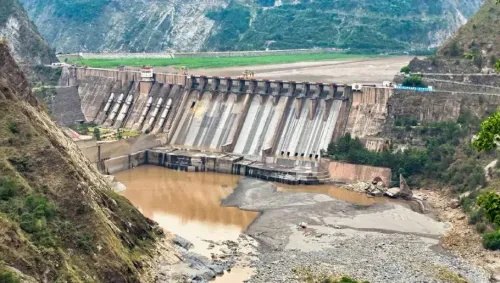
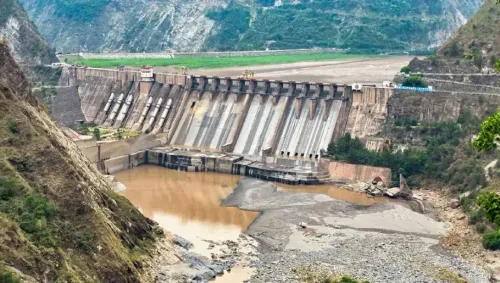
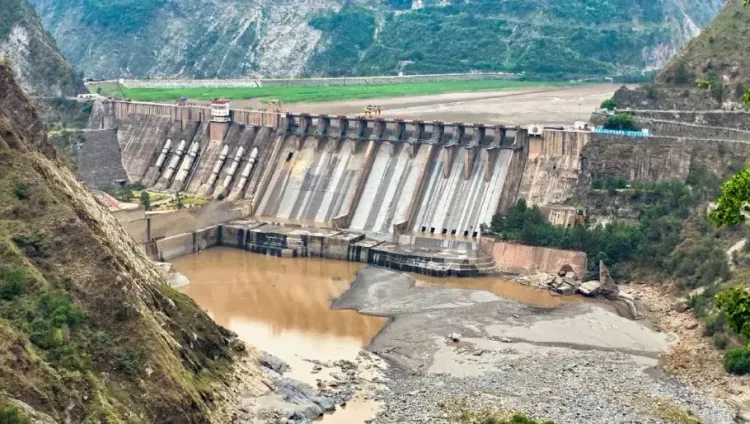
Signed in 1960, the IWT governs the sharing of waters from the six-river Indus system between India and Pakistan. Under its terms, Pakistan receives 80.52% of the total waters, while India — despite being the upper riparian state with a larger basin area — is allocated only 19.48%. The report describes this as 'an exceptional case' of non-reciprocity, with India voluntarily foregoing more than four times the water share that Pakistan receives, while also accepting stringent restrictions on its own usage.
According to the report, India's generosity came at a significant cost — including foregone economic growth, agricultural development, hydropower generation, irrigation expansion, and infrastructure development. The treaty survived wars in 1965, 1971, and 1999 (Kargil), the report notes, solely because India chose to honour it in good faith.
Why India Placed the Treaty in Abeyance
The immediate trigger was the Pahalgam terror attack, carried out by Pakistan-backed militants. India subsequently linked the treaty's future to Islamabad's cessation of cross-border terrorism, making restoration contingent on verifiable action. Crucially, the report clarifies, India has not suspended the IWT outright — it has kept it 'in abeyance', meaning reinstatement remains possible if Pakistan halts its sponsorship of terror.
The report argues that the circumstances under which the treaty was originally signed have 'fundamentally changed', and that Pakistan's actions have 'legitimised terror and undermined the security architecture' across a region stretching from Central Asia to South Asia.
Provocative Statements from Pakistan
The report highlights a series of inflammatory remarks from Pakistani officials and militant leaders in recent months. Pakistan's Climate Change Minister Musadik Masood Malik said at a press conference, 'Whoever touches our water, their hands would be cut off.' Pakistan's military spokesperson, Lieutenant General Ahmed Sharif Chaudhry (DG ISPR), reportedly said, 'If you block our water, we will choke your breath.'
Separately, Hafiz Saeed, designated terrorist and chief of Lashkar-e-Taiba (LeT), reportedly stated, 'If you stop the water, we will stop your breath, and blood shall flow in these rivers.' The report argues that such statements, combined with Islamabad's continued military aggression, have further eroded the diplomatic foundations of the treaty.
What Comes Next
The report frames India's position as a conditional pause rather than a permanent rupture — one that places the onus squarely on Pakistan to demonstrate a credible break from cross-border terrorism. Analysts note that the IWT has long been considered one of the world's most durable water-sharing agreements; its abeyance marks an unprecedented inflection point in India-Pakistan relations. Whether Islamabad moves toward compliance or further escalation will determine the treaty's fate.
Point of View
Receiving no reciprocal concession on security. Placing the treaty in abeyance is less a dramatic rupture than a belated acknowledgment of that imbalance. The harder question is whether 'abeyance' is a credible lever or a diplomatic gesture — without a clear enforcement mechanism or international arbitration pathway, Islamabad has little structural incentive to change course. The statements from Pakistan's own minister and a UN-designated terrorist threatening violence over water access should, by themselves, command far more global scrutiny than they have received.
NationPress
5 Oct 2026
Frequently Asked Questions
What is the Indus Waters Treaty and why has India placed it in abeyance?
The Indus Waters Treaty, signed in 1960, governs the sharing of six Indus system rivers between India and Pakistan, with Pakistan receiving 80.52% of the waters. India placed it in abeyance following the Pahalgam terror attack, linking the treaty's restoration to Pakistan ending its support for cross-border terrorism.
Has India suspended the Indus Waters Treaty permanently?
No. India has kept the treaty 'in abeyance' rather than suspending it outright, meaning it can be reinstated if Pakistan stops sponsoring cross-border terrorism against India. The move is framed as a conditional pause, not a permanent cancellation.
What provocative statements has Pakistan made about the treaty?
Pakistan's Climate Change Minister Musadik Masood Malik said 'Whoever touches our water, their hands would be cut off.' Military spokesperson Lieutenant General Ahmed Sharif Chaudhry reportedly warned 'If you block our water, we will choke your breath.' Lashkar-e-Taiba chief Hafiz Saeed reportedly threatened that stopping water would mean 'blood shall flow in these rivers.'
How much water does India receive under the Indus Waters Treaty?
Despite being the upper riparian state with a larger basin area, India has been allocated only 19.48% of the Indus system's waters under the treaty. Pakistan receives the remaining 80.52%, which the report describes as an act of 'unprecedented goodwill' by India.
What is the International Centre for Peace Studies report about?
The report argues that Pakistan's sustained cross-border terrorism and provocative rhetoric have undermined the spirit of the 1960 IWT, legitimising India's decision to place the treaty in abeyance. It also contends that the changed geopolitical circumstances since 1960 justify revisiting the treaty's terms.