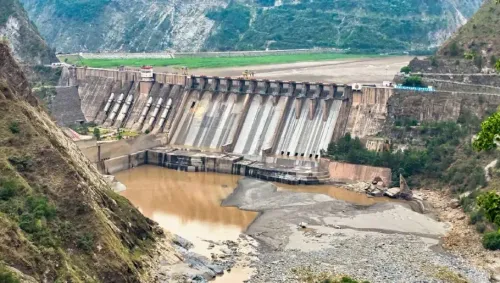
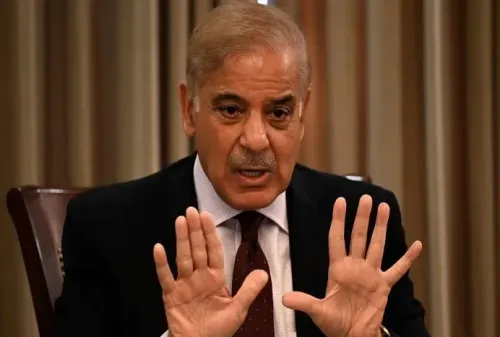
Indus Waters Treaty abeyance signals rising cost of Pakistan's terror links: Report
Synopsis
A European legal analyst argues India's suspension of the 1960 Indus Waters Treaty after the Pahalgam attack is not a breach of international law — it's a proportionate sovereign signal. For the first time, water rights are explicitly tied to Pakistan's terror calculus, and the message, the report says, is irreversible even if the abeyance itself is not.
Key Takeaways
India placed the Indus Waters Treaty (IWT) in abeyance following the 22 April Pahalgam terror attack carried out by a Pakistan-based group.
A European Times report by Greek lawyer Dimitra Staikou argues the move is legally defensible under the Vienna Convention's doctrine of fundamental change of circumstances.
Pakistan declined India's formal requests for treaty renegotiation in 2023 and 2024 , undermining its good-faith standing, the report argues.
The abeyance is described as targeting terror groups Lashkar-e-Taiba and Jaish-e-Mohammad by imposing tangible strategic costs on Pakistan.
Pakistan's framing of the suspension as an "act of war" is rejected; its appeals to The Hague are described as procedurally weak given its refusal to negotiate bilaterally.
India's decision to place the Indus Waters Treaty (IWT) in abeyance following the 22 April Pahalgam terror attack is being read internationally as a deliberate strategic signal to Pakistan — one that brings a critical water-sharing agreement into the cost calculus of cross-border terrorism, according to a report published in Brussels on 9 May.
The analysis, written by Dimitra Staikou, a Greek lawyer, writer, and journalist, for the European Times, argues that Pakistan's military establishment has for decades regarded the sponsorship of terrorism as a "low-cost tool", facing no meaningful accountability. India's move, she contends, has effectively dismantled that insulation.
The Strategic Signal Behind the Abeyance
Staikou frames India's action as a calculated recalibration rather than a punitive act. "The choice is now binary: abandon proxy warfare and restore predictability, or persist and accept that a critical national lifeline is subject to political decisions in New Delhi. The abeyance is reversible; the signal is not," she wrote.
The report notes that by suspending the 1960 Indus Waters Treaty — a landmark agreement brokered by the World Bank — India has introduced a new variable into bilateral relations: the cost of continued reliance on terror groups such as Lashkar-e-Taiba and Jaish-e-Mohammad. For decades, water-sharing and security had been treated as entirely separate domains. That separation, the report argues, is now over.
The Legal Argument India Can Make
From a legal standpoint, Staikou argues that India's position is defensible under international law — specifically under the doctrine of fundamental change of circumstances, known as rebus sic stantibus, enshrined in the Vienna Convention on the Law of Treaties.
"The profound transformation of both the hydrological environment — driven by climate change and accelerated glacial loss — and the geopolitical context — marked by the sustained use of cross-border terrorism — undermines the foundational assumptions upon which the 1960 agreement was built," she stated.
She further noted that Pakistan's refusal to engage meaningfully in negotiations over treaty modification, despite formal notifications by India in 2023 and 2024, erodes the principle of good faith that underpins treaty obligations. Under these conditions, Staikou argues, abeyance — rather than outright termination — "constitutes a proportionate and reversible legal response that preserves the possibility of renegotiation while rebalancing the distribution of rights and obligations between the parties."
Rejecting Pakistan's 'Act of War' Framing
The report directly pushes back against Pakistan's characterisation of the abeyance as an "act of war" or a violation of international law. Staikou describes India's position as a "calibrated exercise of sovereign right" rather than an "arbitrary breach of international commitments".
On Pakistan's appeal to international arbitration, including efforts at The Hague, she is pointed: "Pakistan was offered sustained bilateral engagement on treaty reform and declined. A state that refuses negotiation in periods of stability cannot credibly claim procedural injustice in moments of crisis."
Dual Purpose of the Abeyance
The report identifies a dual purpose behind India's decision. First, it imposes tangible costs on Pakistan's continued use of terror proxies. Second, it creates political space for a future agreement better aligned with contemporary demographic, environmental, and strategic realities — one that the 1960 treaty, negotiated in an entirely different geopolitical era, was never designed to address.
Staikou's core conclusion is stark: water can no longer be treated as an assured entitlement but as a "contingent variable — capable of rewarding compliance, penalising destabilising behaviour, and influencing long-term strategic calculations." Whether Islamabad recalibrates its posture in response remains the central question going forward.
Point of View
But because it reflects how India's framing is landing in European policy circles — and that framing is winning. By anchoring the abeyance in established international law doctrine rather than bilateral grievance, India has shifted the burden of justification onto Pakistan. The real accountability gap here is that Pakistan has faced no meaningful cost for decades of documented proxy warfare; the IWT suspension is the first instrument that changes that arithmetic. Whether it produces a behavioural shift in Rawalpindi is another question — but the precedent that water rights are not insulated from security conduct is now set, and it will not be easy to unset.
NationPress
27 Sept 2026
Frequently Asked Questions
Why did India place the Indus Waters Treaty in abeyance?
India suspended the Indus Waters Treaty following the 22 April Pahalgam terror attack, which was carried out by a Pakistan-based terror group. The move is intended to impose strategic costs on Pakistan's continued sponsorship of cross-border terrorism.
Is India's suspension of the Indus Waters Treaty legal under international law?
A report in the European Times argues it is legally defensible under the doctrine of rebus sic stantibus — fundamental change of circumstances — enshrined in the Vienna Convention on the Law of Treaties. Both the geopolitical context and hydrological environment have changed significantly since the treaty was signed in 1960.
What is Pakistan's response to the IWT abeyance?
Pakistan has described the abeyance as an "act of war" and a violation of international law, and has pursued arbitration including efforts at The Hague. The European Times report rejects this framing, noting Pakistan declined India's formal invitations for bilateral renegotiation in 2023 and 2024.
What is the dual purpose of the Indus Waters Treaty abeyance?
According to the report, the abeyance serves two goals: imposing tangible costs on Pakistan's reliance on terror groups like Lashkar-e-Taiba and Jaish-e-Mohammad, and creating space for a future treaty better suited to current demographic, environmental, and strategic realities.
Can the Indus Waters Treaty abeyance be reversed?
Yes, the abeyance is described as reversible — unlike the strategic signal it sends. The report argues it is a proportionate response that preserves the possibility of renegotiation rather than permanently terminating the 1960 agreement.