CM Sai's Office Celebrates Hareli Tihar With Folk Drums and Gedi Dance
Synopsis
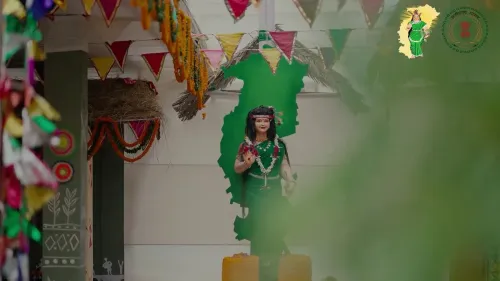
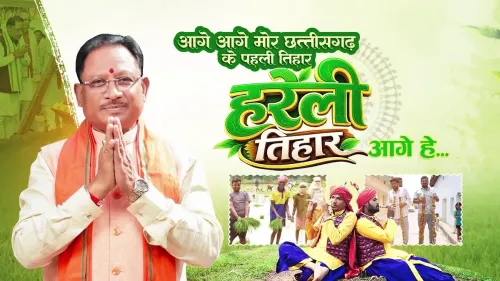
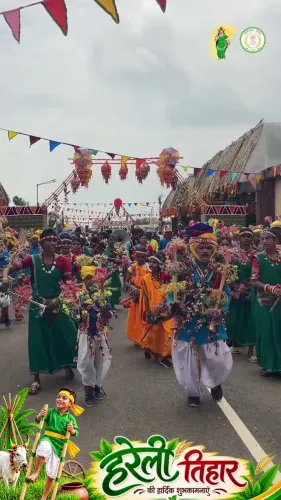
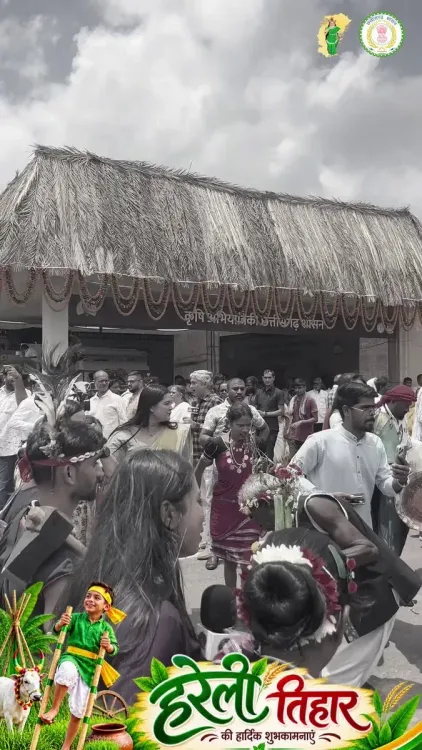
The Chief Minister's Office of Chhattisgarh celebrated Hareli Tihar 2026 at CM Vishnu Deo Sai's Raipur residence, showcasing Gedi stilt dancing, Mandar drumming, and regional folk music — marking the state's first major harvest festival of the year.
Key Takeaways
Hareli Tihar 2026 was celebrated at the Chief Minister's residence in Raipur on 12 August 2026 .
The festival featured Gedi (bamboo stilt) dancing, Mandar drumming, and Chhattisgarhi folk music.
Hareli is Chhattisgarh's first major festival of the year, marking the start of the agricultural season.
The celebration was publicised by the official Chief Minister's Office of the Vishnu Deo Sai government.
Chhattisgarh governments have a standing tradition of hosting Hareli Tihar at official venues to highlight indigenous culture.
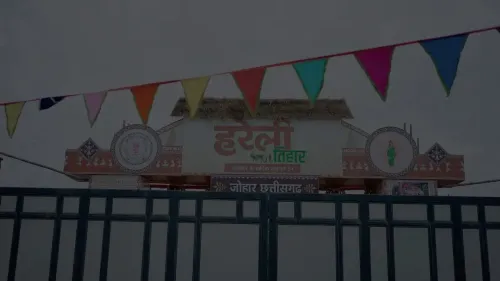
The beat of the Mandar drum, the sway of Gedi stilts, and the sweetness of folk tunes — Hareli Tihar came alive at the Chief Minister's residence in Raipur on Wednesday, 12 August 2026, as the Chief Minister's Office of Chhattisgarh marked the state's beloved harvest festival with a celebration rooted in the soil of the region.
Gedi, Mandar, and the Language of the Land
The post, shared in Chhattisgarhi, captured the essence of the occasion: 'Gedi ke masti, Mandar ke thaap aur lokdhun ke mithaas ke sang Hareli Tihar' — 'Hareli Tihar, celebrated with the joy of Gedi, the beat of Mandar, and the sweetness of folk tunes.' The Gedi is a traditional bamboo stilt unique to Chhattisgarh, synonymous with the festival; walking and dancing on Gedi is one of its most distinctive rituals. The Mandar is a double-headed drum central to tribal and folk music across the state.
What Hareli Tihar Means for Chhattisgarh
Hareli — derived from the word for 'green' — falls on the first day of the month of Sawan in the Hindu calendar, marking the onset of the agricultural season. It is Chhattisgarh's first major festival of the year, observed widely by farming communities who worship their tools, cattle, and the earth itself. The festival carries particular weight in a state where agriculture and tribal traditions remain central to daily life.
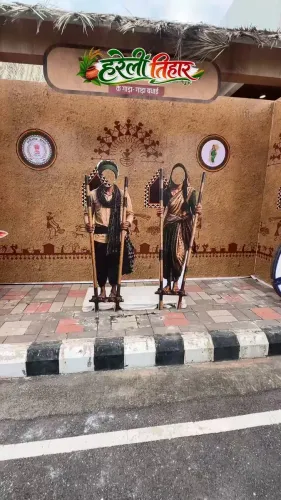
Chief Minister Vishnu Deo Sai, who has led the state since December 2023, has made the official observance of Hareli Tihar at the Mukhyamantri Nivas (Chief Minister's residence) a visible part of the government's cultural outreach. Chhattisgarh governments across administrations have used the festival to spotlight indigenous customs and reinforce the state's distinct regional identity.
State Power and Cultural Continuity
The decision to host and broadcast celebrations from the Chief Minister's official residence is deliberate. Across India, state administrations have increasingly used social media to mark regional festivals — not as policy announcements, but as acts of cultural affirmation directed at rural communities and folk performers who are the living custodians of these traditions. For Chhattisgarh, with its significant tribal population and deep-rooted agrarian culture, Hareli is not a ceremonial footnote — it is a statement of identity.
When a Gedi dancer lifts off the ground and a Mandar drummer sets the tempo at the seat of state power, the message is clear: this government sees the village in the capital.
Point of View
Himself from a tribal community, amplifying Chhattisgarh's indigenous festivals carries an added layer of symbolic weight beyond routine state patronage. The move fits a broader national pattern where ruling parties invest in regional cultural identity as a form of soft political consolidation, particularly ahead of local body elections and in states with sizeable Scheduled Tribe voter bases. Whether it translates into tangible support for folk performers and rural communities beyond the ceremonial moment is the question that will define its lasting significance.
NationPress
12 Aug 2026
Frequently Asked Questions
What is Hareli Tihar and why is it celebrated in Chhattisgarh?
Hareli Tihar is Chhattisgarh's first major festival of the year, marking the start of the agricultural season. Farmers worship their tools, cattle, and the earth, and the festival is celebrated with Gedi stilt dancing, Mandar drumming, and folk music.
What is Gedi in the context of Hareli festival?
Gedi refers to bamboo stilts unique to Chhattisgarh. Walking and dancing on Gedi is one of the most distinctive rituals of Hareli Tihar, symbolising joy and the spirit of the harvest season.
Who is Vishnu Deo Sai and what is his role in Hareli 2026?
Vishnu Deo Sai is the Chief Minister of Chhattisgarh, serving since December 2023. His official residence hosted the Hareli Tihar 2026 celebration, which was publicised by the Chief Minister's Office on social media.
When is Hareli Tihar 2026 celebrated?
Hareli Tihar 2026 was celebrated on 12 August 2026. The festival falls on the first day of the Hindu month of Sawan each year.
What is the Mandar drum used in Hareli Tihar?
The Mandar is a traditional double-headed drum central to tribal and folk music in Chhattisgarh. It is played prominently during Hareli Tihar celebrations and other regional festivals.