CM Bhupendra Patel backs Amit Shah's letter to Lok Sabha Speaker
Synopsis
Gujarat CM Bhupendra Patel publicly backed Home Minister Amit Shah's letter to Lok Sabha Speaker Om Birla on student issues, calling it proof of democratic dignity and challenging the opposition to engage constructively instead of disrupting Parliament.
Key Takeaways
Gujarat CM Bhupendra Patel publicly endorsed Union Home Minister Amit Shah's letter to Lok Sabha Speaker Om Birla on student-related issues.
Patel described the letter as 'proof of democracy's highest dignity' and said the government remains fully committed to discussion.
He directly challenged the opposition, stating solutions in a democracy come through dialogue, not 'constant disruption' ( हंगामा ).
The government's offer to debate student welfare issues follows a pattern established during the 2024 monsoon and winter Lok Sabha sessions .
The BJP's framing positions the ruling party as the defender of institutional process and places accountability for any stalemate on opposition parties.
A letter from Union Home Minister Amit Shah to Lok Sabha Speaker Om Birla on student-related issues has drawn public backing from Gujarat Chief Minister Bhupendra Patel, who called it proof of democracy's highest dignity — and turned it into a pointed challenge to the opposition.
Posting on Wednesday, August 12, 2026, Patel wrote in Hindi: 'लोकतंत्र में समाधान केवल सकारात्मक चर्चा और संवाद से ही संभव है, न कि लगातार हंगामा करने से' — 'In a democracy, solutions are possible only through positive discussion and dialogue, not through constant disruption.'
The letter and what it signals
Shah's decision to write formally to Speaker Birla — rather than simply making a floor statement — is a deliberate institutional move. It creates a paper trail of the government's stated willingness to debate student welfare, and places the burden of participation squarely on the opposition. Patel amplified that framing, describing the letter as an affirmation of democratic propriety and underscoring that the government 'was ready for discussion earlier and remains fully committed today.'Parliament disruptions and the student grievances backdrop
The exchange fits a pattern that has played out across multiple Lok Sabha sessions. During the 2024 monsoon and winter sessions, the government repeatedly offered to hold structured discussions on education and youth-related matters, only to face opposition-led walkouts and adjournments. The ruling party's consistent counter-narrative — that protest tactics harm the very students the opposition claims to champion — is the same argument Patel deploys here. Patel put it directly: if the opposition is genuinely serious about youth issues, it should 'respect the democratic process and engage in constructive discussion rather than becoming an obstacle.'A recurring fault line in the Lok Sabha
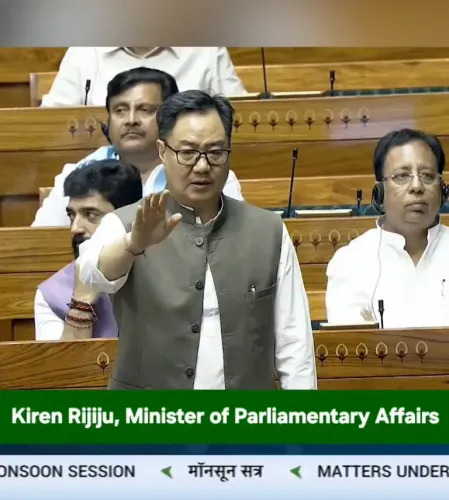
The BJP's framing of parliamentary disruptions as anti-democratic has been a durable political tool. By positioning Shah's letter as evidence of institutional good faith, the party shifts the optics: the government is seen knocking on the door of dialogue while the opposition, in this telling, refuses to open it. Whether opposition parties respond — and how Speaker Birla handles any formal request for a debate — will determine whether this exchange stays in the realm of social-media sparring or moves onto the floor of the House. The next scheduled Lok Sabha session will be the real test of whether either side's stated commitment to discussing student welfare translates into actual legislative conversation.Point of View
A letter to the Speaker — as a moral anchor, then challenge the opposition to either engage or be seen as obstructionist. The move is most effective when student or youth grievances are the subject, because it allows the ruling party to claim both procedural high ground and concern for a sympathetic constituency. The recurring nature of this dynamic — disruption, formal offer of debate, social-media amplification — suggests it has become a settled feature of India's parliamentary politics rather than a one-off dispute. The real indicator of intent, on both sides, will be conduct when the House next sits.
NationPress
27 Sept 2026
Frequently Asked Questions
Why did Amit Shah write a letter to the Lok Sabha Speaker?
Amit Shah wrote to Lok Sabha Speaker Om Birla to formally convey the government's willingness to hold a structured discussion on student-related issues, creating an official record of that offer amid opposition disruptions in Parliament.
What did Gujarat CM Bhupendra Patel say about the letter?
CM Bhupendra Patel called the letter 'proof of democracy's highest dignity' and urged the opposition to join constructive dialogue on student issues instead of disrupting parliamentary proceedings.
What student issues are being discussed in Parliament?
The specific student issues referenced in Shah's letter have not been officially disclosed publicly; the post and available information confirm the subject is student welfare, but precise details of the letter's content remain unverified.
What is the BJP's position on opposition disruptions in Parliament?
The BJP has consistently framed opposition-led disruptions as anti-democratic, arguing that constructive dialogue — not protests and walkouts — is the legitimate path to resolving policy grievances in the Lok Sabha.
What happens next after Amit Shah's letter to the Speaker?
The Lok Sabha Speaker may formally schedule a debate on student welfare matters. The opposition's response to the government's stated offer of dialogue will be closely watched in the next scheduled session of Parliament.