CM Saini Dares Rahul Gandhi to Face NEET Debate in Parliament
Synopsis
Haryana CM Nayab Singh Saini challenged Rahul Gandhi and Congress to participate in a Lok Sabha debate on the NEET student agitation, after Home Minister Amit Shah formally wrote to Speaker Om Birla requesting the discussion — framing it as a test of opposition accountability to India's students.
Key Takeaways
Haryana CM Nayab Singh Saini publicly challenged Rahul Gandhi to face a parliamentary debate on the NEET student agitation.
Union Home Minister Amit Shah wrote to Lok Sabha Speaker Om Birla requesting a House discussion on NEET-related student protests.
The NEET controversy dates to 2024 , when large-scale student protests erupted over alleged paper leaks and irregularities in NEET-UG .
Saini used the hashtag #राहुल_भागना_नहीं (Rahul must not run), framing opposition participation as a test of accountability to India's youth.
The BJP's move to invite parliamentary debate inverts the usual opposition narrative, positioning the ruling party as seeking transparency on the exam controversy.
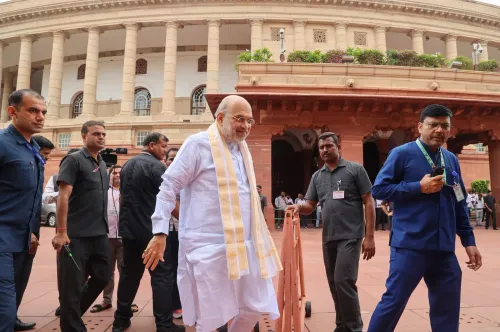
A direct challenge has landed in the political arena — and the clock is ticking for the opposition to answer it. Haryana Chief Minister Nayab Singh Saini on Wednesday, August 12 publicly dared Leader of Opposition Rahul Gandhi and the Congress party to participate in a parliamentary debate on the NEET student agitation, after Union Home Minister Amit Shah formally wrote to Lok Sabha Speaker Om Birla requesting the discussion be placed on the House's agenda.
Shah's Letter to Birla: What the Government Is Asking For
In a move that shifts the political battlefield from the streets to the floor of Parliament, Home Minister Amit Shah wrote to Speaker Om Birla seeking a structured debate on the student unrest linked to NEET — the National Eligibility cum Entrance Test that governs medical college admissions across India. CM Saini called the letter a demonstration of the government's 'khuli aur sarthak charcha' (open and meaningful discussion) commitment on issues affecting the country's youth.
The NEET examination has been a flashpoint since 2024, when large-scale student protests erupted following allegations of paper leaks and systemic irregularities in NEET-UG, triggering both judicial scrutiny and political pressure on the Centre.
Saini's Challenge to Rahul Gandhi and Congress
CM Saini's post — tagged with the hashtag #राहुल_भागना_नहीं (Rahul must not run) — was pointed and combative. 'Will Rahul Gandhi face a debate on serious issues in the House, or will he flee from discussion like a coward?' Saini wrote, framing the opposition's response as a test of political accountability to India's students.
He placed the responsibility squarely on Gandhi and the Congress party: as Leader of Opposition, Saini argued, Gandhi must come to the House, engage in debate, and state his position clearly on questions affecting India's youth and students. The challenge is calibrated — it inverts the usual opposition script, where the Congress has consistently accused the BJP of shielding exam authorities from accountability.
The NEET Fault Line in Indian Politics
The NEET controversy is one of the most politically charged education issues in recent Indian history. Protests by hundreds of thousands of aspirants, allegations of a pan-India paper leak network, and demands for re-examination kept the issue alive through the 2024 election cycle. The BJP's move to invite a parliamentary debate — rather than deflect — is a significant tactical pivot: it positions the ruling party as the one seeking transparency, not avoiding it.
Whether the debate actually materialises in the next Lok Sabha session, and whether the opposition chooses engagement or boycott, will define the next chapter of this political contest.
The gauntlet is on the floor of Parliament. The question now is whether anyone picks it up.
Point of View
The BJP is executing a well-worn but effective political manoeuvre — forcing the opposition to either engage on the government's terms or absorb the optics of avoidance. For Rahul Gandhi, who has built his opposition identity around student and youth issues, declining or deflecting the debate carries real reputational cost. The NEET controversy remains one of the few education issues with genuine mass resonance, and the ruling party's willingness to surface it in Parliament suggests confidence — or at least a calculated bet — that it can withstand scrutiny better than the opposition can sustain its pressure.
NationPress
26 Sept 2026
Frequently Asked Questions
Why did Amit Shah write to the Lok Sabha Speaker about NEET?
Union Home Minister Amit Shah wrote to Lok Sabha Speaker Om Birla requesting that a parliamentary discussion on the NEET student agitation be placed on the House's agenda, signalling the government's stated willingness to debate the issue openly.
What is the NEET controversy in India?
NEET (National Eligibility cum Entrance Test) is India's centralised medical admissions exam. In 2024, it became a major controversy after widespread student protests over allegations of paper leaks and irregularities in NEET-UG, prompting judicial and government review.
What did Haryana CM Nayab Singh Saini say about Rahul Gandhi?
CM Saini challenged Rahul Gandhi to face a parliamentary debate on the NEET student agitation, questioning whether Gandhi would engage seriously or 'flee like a coward,' and calling it the responsibility of the Leader of Opposition to state his position on student issues.
What is Rahul Gandhi's role in the NEET debate?
As Leader of Opposition in the Lok Sabha, Rahul Gandhi has been called upon by CM Saini and the BJP to participate in the proposed parliamentary debate on NEET and student grievances, framing it as a test of his accountability to India's youth.
Will there be a Parliament debate on NEET?
Home Minister Amit Shah has formally requested Lok Sabha Speaker Om Birla to schedule a debate on the NEET student agitation. Whether the debate is placed on the agenda and the nature of opposition participation remains to be determined in the next Lok Sabha session.