Rijiju urges opposition to allow student protest debate
Synopsis
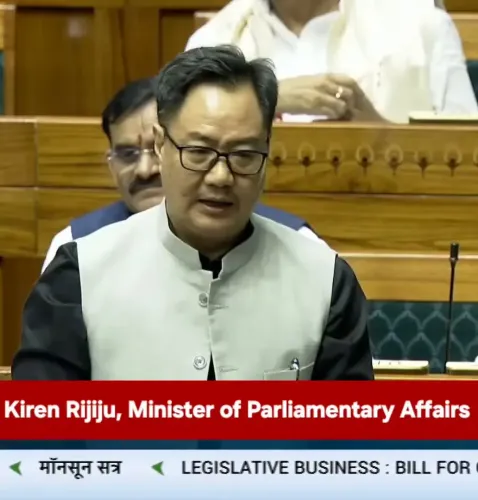
Parliamentary Affairs Minister Kiren Rijiju has publicly urged opposition parties to allow an undisturbed House discussion on student protests, stating that Home Minister Amit Shah is ready to deliver a detailed reply on the floor of Parliament.
Key Takeaways
Kiren Rijiju , Union Minister of Parliamentary Affairs, publicly called on opposition parties to permit an undisturbed debate on student protests in Parliament.
Home Minister Amit Shah has been designated as the government's respondent and is 'prepared to reply in details' on the issue.
Rijiju's public appeal — rather than a private negotiation — suggests prior back-channel efforts may have stalled.
By announcing readiness on record, the government shifts responsibility for any washout onto the opposition.
Student protests have periodically triggered demands for ministerial statements in Parliament, with the Home Ministry typically fielding replies on law-and-order dimensions.
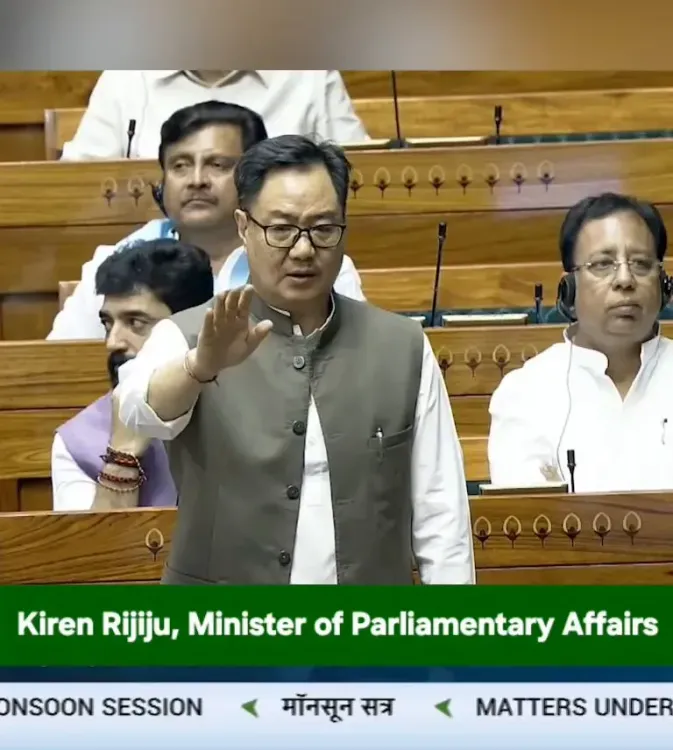
With student protests casting a shadow over parliamentary proceedings, Union Parliamentary Affairs Minister Kiren Rijiju stepped forward on Monday, August 10, 2026, to signal that the government is not just willing — it is ready — to face the floor on the issue. The message was pointed: Union Home Minister Amit Shah is prepared to deliver a detailed reply. All the government needs is the space to speak.
Rijiju's appeal was direct: 'Govt is ready to discuss on the issue of students protest and Home Minister Shri Amit Shah Ji is prepared to reply in details. I urge the opposition parties to allow the discussion to take place without any disturbance in the House.'
Amit Shah primed to address the House
The designation of Amit Shah as the government's respondent carries weight. As Union Home Minister, Shah is the cabinet's principal voice on law-and-order and internal security matters — precisely the lens through which student unrest tends to be examined in Parliament. His readiness to reply 'in details', as Rijiju put it, signals that the government is not looking to deflect but to engage substantively on record.
That framing is itself a political move: by publicly announcing Shah's preparedness, Rijiju places the burden of any washout squarely on the opposition. If the House is disrupted, the government can point to this statement as evidence of its good faith.
Opposition disruptions and the cycle of stalled debate
Parliamentary sessions in India have repeatedly seen opposition parties use well-timed disruptions — walkouts, slogan-shouting, marches to the Well of the House — to deny the government a platform it would otherwise use to its advantage. The opposition calculus is often the inverse: a minister's detailed reply, however critical, can be spun as the government 'normalising' a crisis. Denying that reply keeps the protest in the headlines on the opposition's terms.
Rijiju, as Minister of Parliamentary Affairs, is the government's chief floor manager — the person constitutionally responsible for steering legislative business and brokering exactly this kind of cross-aisle cooperation. His public appeal, rather than a quiet back-channel negotiation, suggests that private outreach may already have hit a wall.
What the next session hour decides
The immediate test is simple: will opposition benches hold their fire long enough for Shah to rise and speak? If they do, the debate becomes the story. If they don't, the government's readiness statement — now on public record — becomes the story instead. Either way, Rijiju has already made his move.
Student protests have a long history of forcing ministerial accountability in Parliament; the question now is whether the chamber itself will be the arena where that accountability plays out — or whether the walkouts will push it back onto the streets.
Frequently Asked Questions
Why is Kiren Rijiju urging the opposition to allow a Parliament discussion?
Rijiju, as Minister of Parliamentary Affairs, is the government's chief floor manager. He is urging the opposition not to disrupt proceedings so that Home Minister Amit Shah can deliver a detailed reply on the student protest issue on the floor of the House.
What is Amit Shah's role in the student protest Parliament debate?
Home Minister Amit Shah has been designated by the government to respond in detail on the student protest issue, reflecting his portfolio's responsibility for law-and-order and internal security matters.
What happens if the opposition disrupts Parliament and blocks the discussion?
If the opposition disrupts the session, the government's on-record statement of readiness means any washout is publicly attributed to the opposition, shifting political accountability away from the ruling side.
What is the Parliamentary Affairs Minister's role during a session?
The Minister of Parliamentary Affairs is constitutionally responsible for steering legislative business, coordinating between the government and opposition, and ensuring the smooth conduct of House proceedings — including scheduling ministerial statements and debates.
Have student protests been discussed in Indian Parliament before?
Yes. Student protests have periodically prompted demands for ministerial statements in Parliament, with the Home Ministry typically fielding replies on law-and-order aspects of such unrest.