Rahul Gandhi vs Amit Shah: Why Parliament remains deadlocked over student protests
Synopsis
The government put Home Minister Amit Shah on the table — ready to answer, on the record, in Parliament. Rahul Gandhi said that wasn't enough. At the heart of India's latest parliamentary deadlock is a single unanswered question: who ordered the alleged firing on protesting students? Until that is answered directly, Gandhi says, the House cannot move on.
Key Takeaways
Lok Sabha remained deadlocked on 10 August over the alleged police action against protesting students in Delhi .
Home Minister Amit Shah was confirmed ready to respond on the floor of the House; Parliamentary Affairs Minister Kiren Rijiju urged the Opposition to allow proceedings.
Nadda accused Rahul Gandhi of shifting demands after the government accepted the Opposition's call for a discussion.
BJP MP Nishikant Dubey posted on X alleging Gandhi was instructed to 'change the goalpost.' Gandhi, alongside Congress president Mallikarjun Kharge , demanded a direct answer on who authorised the alleged firing — not a general parliamentary speech.
The government denied Gandhi's claim that pellet guns or bullets were fired at protesters at Jantar Mantar .
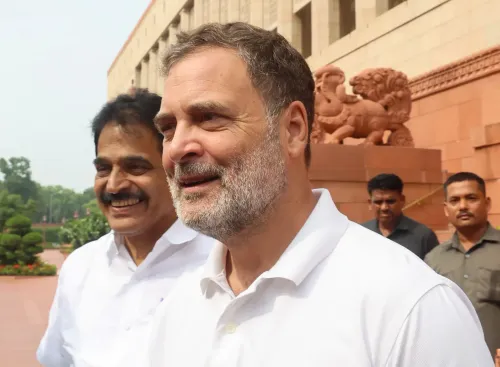
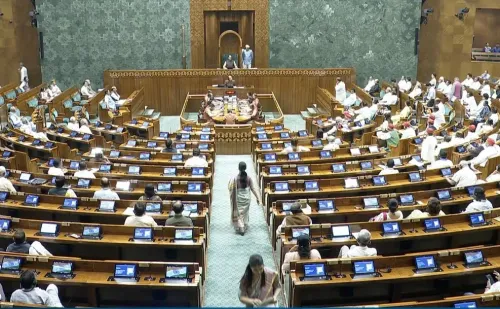
A standoff over alleged police action against protesting students brought the Lok Sabha to a halt on Monday, 10 August, as Bharatiya Janata Party (BJP) leaders accused Leader of Opposition Rahul Gandhi of deliberately obstructing Parliament even after the government agreed to hold a discussion and confirmed that Home Minister Amit Shah would respond on the floor of the House.
What the Government Said
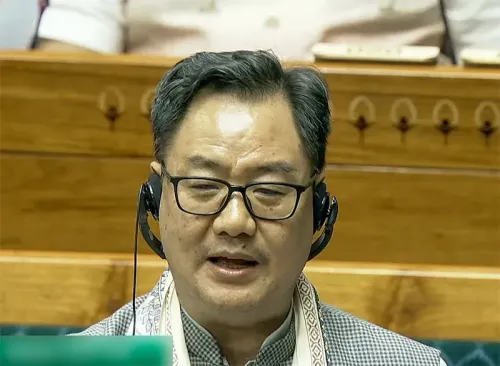
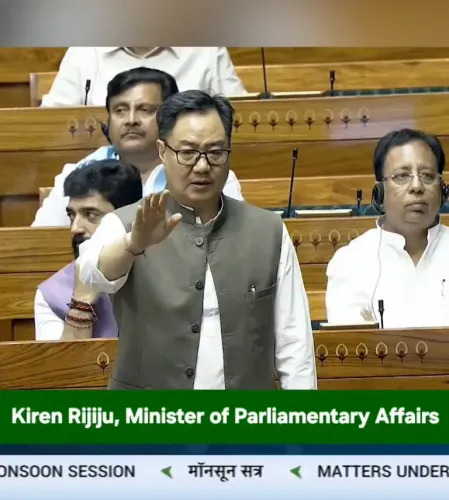
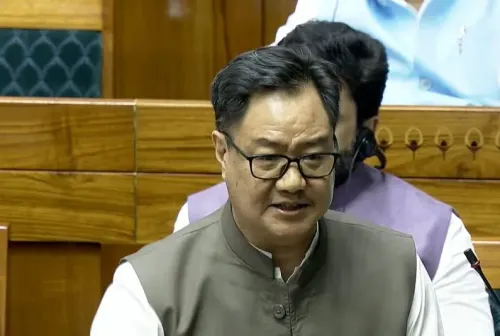
Parliamentary Affairs Minister Kiren Rijiju stated that the government was fully prepared for a detailed discussion on all issues concerning students, and that Shah would address every point raised by the Opposition. Rijiju urged Opposition members to allow proceedings to continue without disruption.
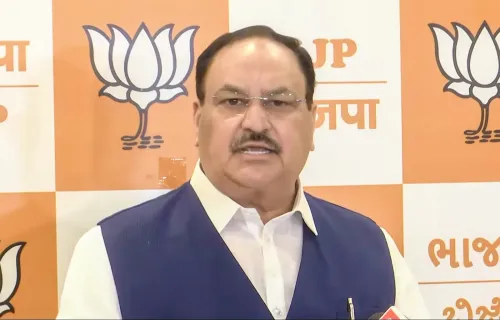
BJP president J.P. Nadda echoed that position, accusing Gandhi of shifting the terms of engagement after the government had already accepted the Opposition's demand for a debate. Nadda alleged that Gandhi was now attempting to create an atmosphere of anarchy by continuing to block the House, and rejected Gandhi's claim about bullets being fired at Jantar Mantar, stating that no such firing had taken place according to the government's position.
BJP's Charge: Changing the Goalpost
BJP MP Nishikant Dubey, in a post on X, alleged that Gandhi had been instructed to shift demands and was avoiding a direct confrontation with Shah in Parliament. Dubey wrote: 'The order to change the goalpost was given to Rahul Gandhi by George Soros. Why is Rahul Gandhi so afraid of Home Minister Amit Shah? Today, BJP, Lok Sabha Speaker Om Birla and Parliamentary Affairs Minister Kiren Rijiju repeatedly said that Amit Shah will answer. God alone knows what will happen to you and your party.'
The BJP's position is that the Opposition has been offered precisely what it demanded — a parliamentary discussion with a ministerial response — and that Gandhi's continued refusal to allow proceedings reflects a political calculation rather than a genuine accountability drive.
What Rahul Gandhi and the Opposition Demanded
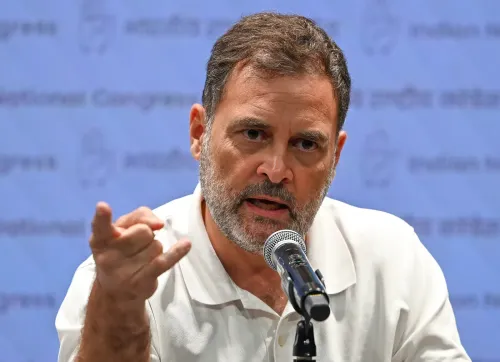
Gandhi, speaking alongside Congress president Mallikarjun Kharge on Monday evening, dismissed what he described as a 'fantasy conversation.' He clarified that the Opposition was not seeking a general speech from Shah, but a direct answer to one specific question: who authorised the alleged firing on protesting students?
Gandhi argued that if Shah personally authorised the action, he bears direct responsibility; if he was unaware of it, questions arise over his competence as Home Minister. He further asked who within the Ministry of Home Affairs issued the order, if not Shah himself. Gandhi had earlier alleged that pellet guns were fired at students protesting in Delhi, a claim the government categorically denied.
The Core Dispute
The confrontation has sharpened a fundamental question: is the Opposition seeking accountability through open parliamentary debate, or is it insisting on a pre-determined specific answer as a precondition for allowing any discussion to proceed? The government maintains it has met the Opposition's terms; the Opposition maintains the government is evading the central question.
This is not the first time the monsoon session has been disrupted over competing interpretations of what constitutes a satisfactory ministerial response. The pattern — Opposition disruption, government offer of discussion, Opposition counter-demand — has played out across multiple sessions in recent years, raising broader concerns about the erosion of productive parliamentary time.
What Happens Next
With both sides entrenched, the immediate outlook for the Lok Sabha's functioning remains uncertain. The Opposition has shown no sign of backing down from its demand for a specific answer, while the government insists Shah's floor response will be comprehensive. Whether a middle ground emerges — perhaps through the Speaker's intervention or an agreed-upon debate format — will determine if the House can return to normal business in the days ahead.
Point of View
Procedurally, exactly what the Opposition asked for — which makes Gandhi's refusal politically awkward unless the specific-answer demand gains public traction. The real contest here is not about parliamentary procedure but about who controls the narrative on the student protests. Gandhi's 'who authorised the firing' framing forces the government into a corner: answer and own the action, or deflect and appear evasive. The BJP's counter — invoking George Soros and foreign interference — is a deflection that risks looking disproportionate if the underlying facts about the alleged police action remain unresolved. What is being lost in this standoff is Parliament itself, and that cost is borne by citizens, not by either party's strategists.
NationPress
25 Sept 2026
Frequently Asked Questions
Why is the Lok Sabha deadlocked over the student protests?
The Lok Sabha has been disrupted because the Opposition, led by Rahul Gandhi, is demanding a direct answer on who authorised the alleged firing on protesting students, while the government says Home Minister Amit Shah is ready to respond through a full parliamentary discussion. Both sides accuse the other of blocking a resolution.
What exactly is Rahul Gandhi demanding from Amit Shah?
Gandhi is not seeking a general ministerial speech but a specific answer to one question: who within the government authorised the alleged action against protesting students? He argued that if Shah personally ordered it, he is responsible; if he did not, questions arise about his oversight of the Ministry of Home Affairs.
What has the government offered to resolve the deadlock?
The government, through Parliamentary Affairs Minister Kiren Rijiju and BJP president J.P. Nadda, confirmed that Home Minister Amit Shah would respond to every point raised by the Opposition on the floor of the House. The government says this offer has been repeatedly made and repeatedly rejected by Gandhi.
Did police fire on students at Jantar Mantar?
This is disputed. Rahul Gandhi alleged that pellet guns were fired at students protesting in Delhi. The government categorically denied that any bullets or pellets were fired at Jantar Mantar, according to its official position. The factual dispute over what happened is central to the parliamentary standoff.
Who is Nishikant Dubey and what did he say about Rahul Gandhi?
Nishikant Dubey is a BJP Member of Parliament who posted on X alleging that Gandhi had been directed by external forces to keep shifting his demands and avoid a direct parliamentary confrontation with Shah. He quoted Lok Sabha Speaker Om Birla and Rijiju as having confirmed Shah's readiness to respond.