Indus Waters Treaty abeyance: Pakistan must renounce terrorism, says report
Synopsis
A detailed legal analysis published in The Jerusalem Post backs India's suspension of the 1960 Indus Waters Treaty, arguing it is grounded in international law and not water weaponization. The report's bottom line: the treaty can be restored — but only if Pakistan credibly and irrevocably abandons cross-border terrorism, not through UN Security Council maneuvering.
Key Takeaways
India placed the 1960 Indus Waters Treaty in abeyance following the 22 April Pahalgam terror attack by a Pakistan-based group.
A Jerusalem Post report describes the move as "principled, proportionate, conditional, and reversible" under international law.
Pakistan brought the dispute to the UN Security Council , calling for full treaty restoration and warning of "grave humanitarian consequences".
India has not diverted or dammed Pakistani waters — only suspended data exchange, commission engagement, and dispute mechanisms.
The report invokes Article 26 of the VCLT and pacta sunt servanda to justify India's position.
Restoration of the treaty requires Pakistan's "credible, irrevocable, and verifiable abandonment of cross-border terrorism", the report states.
India's decision to place the 1960 Indus Waters Treaty (IWT) in abeyance — following the 22 April Pahalgam terror attack carried out by a Pakistan-based terror group — is "principled, proportionate, conditional, and reversible", according to a detailed report published in The Jerusalem Post. The report argues that India's move is not an attempt to weaponise water, but a suspension of cooperation with a state that has long weaponised terrorism from its own territory.
Pakistan's Response and the UN Gambit
Islamabad's reaction to the abeyance was, from the outset, rhetorical, according to the report. Pakistan portrayed the suspension as "an act of war" and branded it "water weaponization", leaning heavily on the country's near-total reliance on the Indus river system — one of the world's largest river basins. A year after the Pahalgam attack, Pakistan escalated the matter to the United Nations Security Council (UNSC), calling on India to "restore full implementation" of the treaty and warning of potential "grave humanitarian consequences".
The report, however, was unequivocal in its assessment: while the UNSC bears primary responsibility for international peace and security, it is "not a treaty-interpretation body, nor a tribunal" over the performance of a 1960 bilateral instrument. Pakistan's move to internationalise a bilateral dispute through the Security Council was, in this reading, legally misdirected.
The International Law Argument
Invoking Article 26 of the Vienna Convention on the Law of Treaties (VCLT), the report argued that parties are obligated to implement treaties in good faith — a standard that cannot be met through selective compliance while the underlying conditions of peaceful coexistence are being systematically eroded. India's position, the report noted, is that "sustained Pakistani sponsorship of cross-border terrorism", culminating in the Pahalgam attack, has shattered the very foundation of bilateral cooperation.
This, the report stressed, is "not a creative interpretation" but the "black-letter application of pacta sunt servanda (treaties must be performed in good faith)". The principle holds that a party cannot simultaneously demand the benefits of a cooperative treaty while undermining the conditions that make such cooperation possible.
What India Has — and Has Not — Done
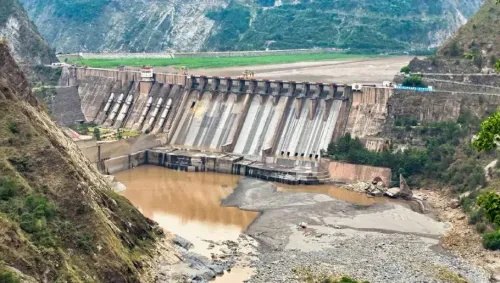
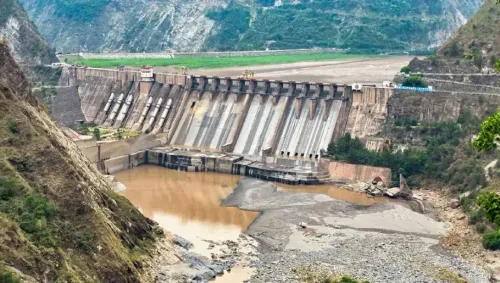
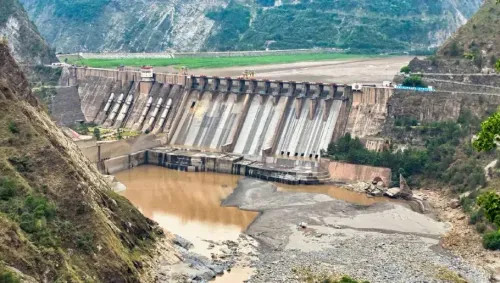
A central point in the report concerns the precise nature of India's abeyance. India has not "diverted, dammed, or interdicted Pakistani waters" in violation of the treaty's substantive provisions. What has been suspended is the cooperative apparatus: data exchange, commission engagement, and treaty-level dispute mechanisms. The report argues this distinction is critical — India has withheld cooperation, not water entitlements, making Pakistan's "weaponization" charge a conflation of the treaty's "cooperative scaffolding with its physical entitlements".
The Condition for Restoration
The report was direct about what a return to full treaty implementation would require. Pakistan must "credibly and irrevocably" renounce support for cross-border terrorism — a requirement described as both purposive and grounded in customary international obligation, reinforced by Security Council resolutions mandating that every state prevent the use of its territory for terrorist acts against others.
"The path back to the treaty is open," the report concluded. "It runs through Pakistan's credible, irrevocable, and verifiable abandonment of cross-border terrorism — through no other forum and certainly not the Security Council." The framing positions India's abeyance not as a permanent rupture but as a conditional suspension with a clearly articulated exit ramp — one that Pakistan alone can activate.
Point of View
The report reframes the IWT dispute from a water conflict into a question of state accountability for terrorism. Pakistan's UNSC gambit, meanwhile, looks strategically weak: the Council has no jurisdiction over bilateral treaty performance, and internationalising the dispute without a legal hook may backfire. The real pressure point the report surfaces — and mainstream coverage underplays — is the conditionality: India has left the door open, but the key is entirely in Islamabad's hands.
NationPress
24 Sept 2026
Frequently Asked Questions
Why has India placed the Indus Waters Treaty in abeyance?
India suspended the 1960 Indus Waters Treaty following the 22 April Pahalgam terror attack, which was carried out by a Pakistan-based terror group. New Delhi argues that Pakistan's sustained sponsorship of cross-border terrorism has undermined the foundational conditions of bilateral cooperation required for the treaty to function.
Has India stopped Pakistan's water supply under the IWT abeyance?
No. India has not diverted, dammed, or interdicted Pakistani waters. The abeyance covers only the cooperative mechanisms — data exchange, commission meetings, and treaty-level dispute resolution — not Pakistan's substantive water entitlements under the treaty.
What did Pakistan do at the UN Security Council over the IWT?
A year after the Pahalgam attack, Pakistan brought the matter to the UN Security Council, calling on India to restore full treaty implementation and warning of potential grave humanitarian consequences. Legal analysts, including the Jerusalem Post report, note the UNSC has no mandate to interpret or adjudicate a 1960 bilateral treaty.
What does international law say about India's position on the IWT?
The Jerusalem Post report cites Article 26 of the Vienna Convention on the Law of Treaties, which requires good-faith implementation. It argues that Pakistan cannot demand treaty benefits while simultaneously sponsoring terrorism that erodes the conditions of peaceful coexistence — the legal principle known as pacta sunt servanda.
What must Pakistan do for the Indus Waters Treaty to be restored?
According to the report, Pakistan must credibly, irrevocably, and verifiably renounce support for cross-border terrorism. The report states this is the only path to treaty restoration — not UN Security Council pressure or rhetorical reframing.