Gadkari hails PM Modi flagging off India's first hydrogen train from Jind

Synopsis
Prime Minister Narendra Modi flagged off India's first indigenously developed hydrogen-powered train from Jind, Haryana, on 17 July 2026. Union Minister Nitin Gadkari hailed the event as a defining milestone in sustainable rail transport, anchored in the National Green Hydrogen Mission and Indian Railways' 2030 net-zero commitment.
Key Takeaways
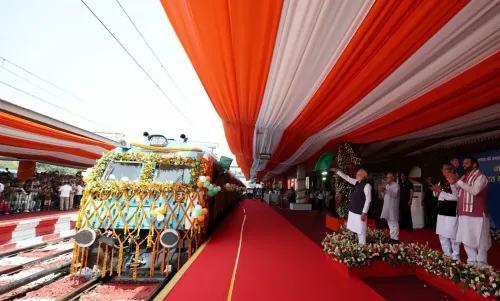
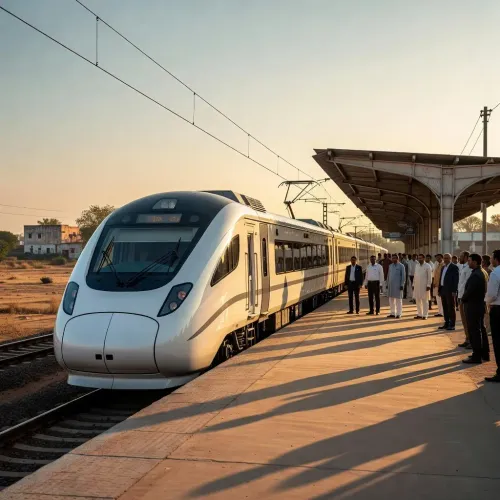
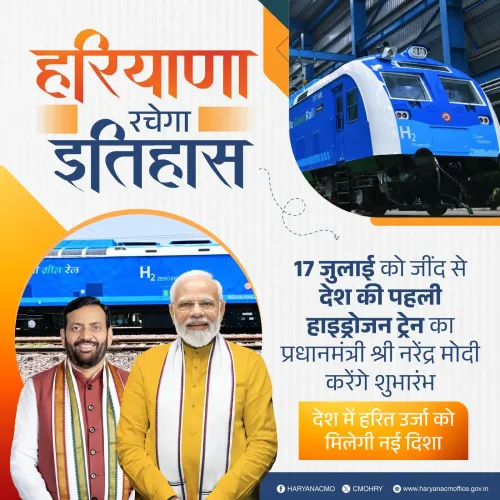
India's first indigenously developed hydrogen-powered train was flagged off from Jind, Haryana on 17 July 2026 by Prime Minister Narendra Modi .
Union Minister Nitin Gadkari described the event as 'a defining milestone in sustainable rail transport.' Indian Railways has pursued hydrogen fuel cell trains since 2021 as part of its 2030 net-zero commitment.
The National Green Hydrogen Mission , approved in 2023 , provides the policy framework supporting this rail pilot under the Atmanirbhar Bharat initiative.
The initiative positions India alongside global hydrogen rail pioneers while emphasising domestic R&D and Make in India manufacturing.
Future milestones include expanded route deployments, Railway Budget allocations, and potential technology transfer to state transport bodies.
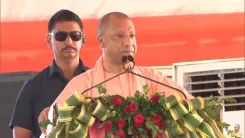
Union Road Transport and Highways Minister Nitin Gadkari on Friday, 17 July 2026, celebrated the flag-off of India's first indigenously developed hydrogen-powered train from Jind, Haryana, describing it as a defining milestone in the country's journey toward sustainable rail transport. The event was presided over by Prime Minister Narendra Modi, marking a landmark moment for domestic green technology and Indian Railways' decarbonisation drive.
Context
Gadkari took to X to share his enthusiasm, writing: 'India accelerates towards a cleaner future' as PM Modi flagged off the train, calling it a milestone in sustainable rail transport. The minister's post underscores the cross-ministerial significance of the hydrogen train initiative, which sits at the intersection of transport policy, clean energy, and domestic manufacturing — all areas that fall within Gadkari's broader portfolio mandate.
The flag-off was held at Jind, a city in Haryana, signalling that the rollout of next-generation rail technology is extending beyond major metropolitan hubs to smaller regional cities. The train is described as indigenously developed, aligning it squarely with the Atmanirbhar Bharat (self-reliant India) framework championed by the central government.
Policy Backdrop
Indian Railways first outlined plans for hydrogen fuel cell trains in 2021 as part of its ambitious 2030 net-zero commitment. The national carrier identified hydrogen propulsion as a key complement to its ongoing electrification programme and the rollout of Vande Bharat express services.
The National Green Hydrogen Mission, approved by the Union Cabinet in 2023, provided the policy and financial scaffolding for such pilot projects. The Mission targets scaling green hydrogen production, storage, and end-use across transport and heavy industry as India works toward its 2070 net-zero pledge made at COP26. Rail applications were explicitly identified as an early deployment sector under the Mission's guidelines, with domestic research and development encouraged under Make in India.
India's push mirrors global hydrogen rail pilots — notably in Germany and Japan — but distinguishes itself through an emphasis on indigenous design and manufacturing rather than technology import.
Stakeholders and Impact
For Indian Railways engineers and researchers, the Jind flag-off validates years of domestic R&D investment in hydrogen fuel cell propulsion. A successful pilot opens the door to technology transfer to state transport undertakings and potentially to metro and suburban rail networks grappling with diesel dependence.
The renewable energy sector stands to benefit significantly: scaling hydrogen trains requires a parallel ramp-up in green hydrogen production, creating demand for electrolysers, storage infrastructure, and refuelling stations along rail corridors. Railway passengers on routes eventually served by hydrogen trains can expect quieter, zero-emission journeys with no direct exhaust output. For communities near rail lines, the shift away from diesel traction translates into improved local air quality.
What's Next
Attention will now turn to the pace of further route deployments beyond the initial Jind demonstration, and whether the next Railway Budget allocates dedicated capital for hydrogen train procurement and infrastructure. Observers will also watch for phase-two guidelines of the National Green Hydrogen Mission, which could include expanded targets for rail applications and incentives for domestic component manufacturers.
The broader question is whether India can move from a single flagship pilot to a commercially viable, scalable hydrogen rail network — a transition that will require coordinated investment in both rolling stock and the green hydrogen supply chain across multiple states.
Point of View
However, will be whether the pilot translates into a funded, scalable programme or remains a high-visibility demonstration.
NationPress
17 Jul 2026
Frequently Asked Questions
What is India's first hydrogen-powered train and where was it flagged off?
India's first indigenously developed hydrogen fuel cell train was flagged off from Jind in Haryana by Prime Minister Narendra Modi on 17 July 2026, marking a milestone in the country's green rail transport ambitions.
What is the National Green Hydrogen Mission and how does it relate to this train?
The National Green Hydrogen Mission, approved by the Union Cabinet in 2023, is a central scheme to scale green hydrogen production and use across transport and industry. It provides the policy and funding framework under which hydrogen rail pilots, including this train, are being developed.
Is the hydrogen train indigenously built in India?
Yes, the train flagged off at Jind is described as indigenously developed, aligning with the government's Atmanirbhar Bharat and Make in India frameworks that prioritise domestic research, design, and manufacturing.
What is Indian Railways' net-zero target and how does hydrogen fit in?
Indian Railways has committed to achieving net-zero carbon emissions by 2030. Hydrogen fuel cell trains complement its electrification drive by offering a zero-emission solution for routes where overhead electrification is not yet feasible.
What happens after the Jind hydrogen train pilot?
The next steps include further route deployments, potential technology transfer to state transport undertakings, and dedicated allocations in upcoming Railway Budgets or phase-two guidelines of the National Green Hydrogen Mission.