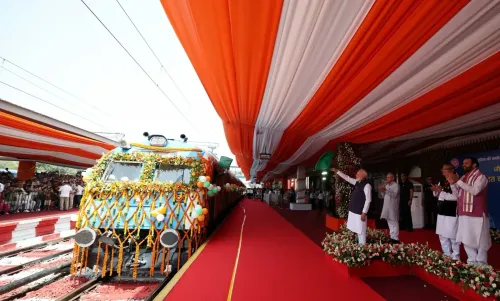
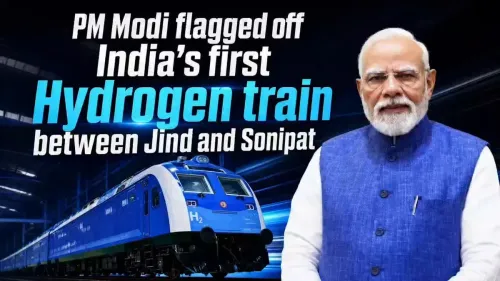
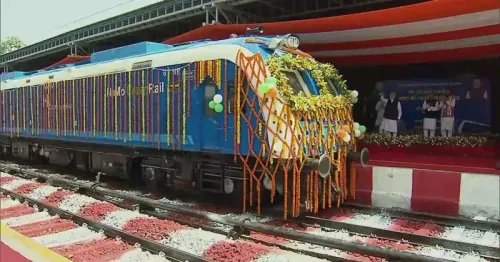
PM Modi Hails India's First Hydrogen Train as Historic Milestone

Synopsis
Prime Minister Narendra Modi on 17 July 2026 hailed the launch of India's first hydrogen-powered train as a landmark for self-reliance and sustainability, citing the National Green Hydrogen Mission and Atmanirbhar Bharat as the policy pillars behind the milestone.
Key Takeaways
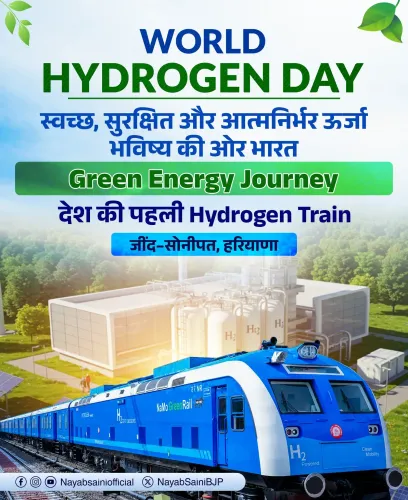
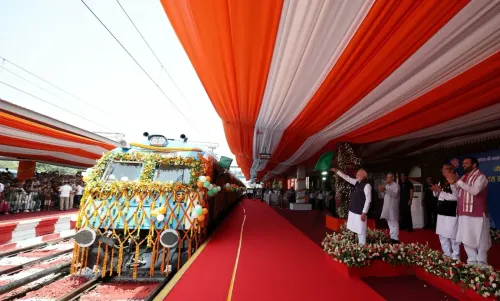
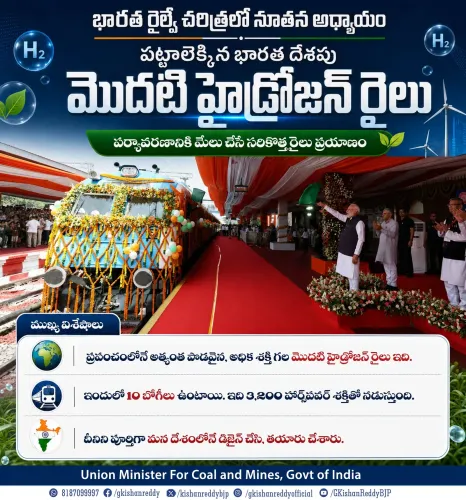
PM Modi on 17 July 2026 announced that India's first hydrogen train dream is being realised, calling it a historic day.
Indian Railways targets net-zero emissions by 2030 through electrification and alternative fuels, with hydrogen trains as a flagship pilot.
The National Green Hydrogen Mission (2023) and the National Hydrogen Energy Mission (2021-22 Budget) form the policy backbone of the initiative.
The project aligns with India's 2070 net-zero pledge and the 500 GW non-fossil electricity target for 2030 .
Indigenisation of fuel-cell technology under Atmanirbhar Bharat could reduce reliance on imported diesel and open export potential.
Key watchpoints include the commercial rollout timeline, additional hydrogen rakes sanctioned, and integration with green-hydrogen production clusters.
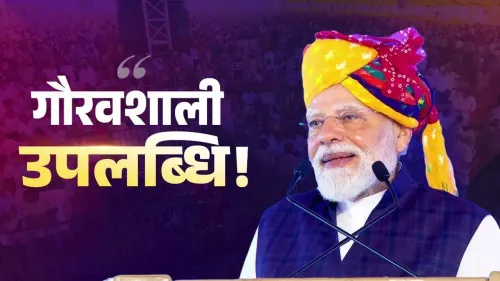
Prime Minister Narendra Modi on Friday, 17 July 2026, celebrated the realisation of India's first hydrogen-powered train, calling it a landmark day for self-reliance and sustainable development. Posting in Hindi on X, he extended congratulations to all those associated with the project and accompanied his message with a Sanskrit shloka underscoring the virtue of beginning every endeavour with full resolve.
Translating his words: 'आज भारत को पहली हाइड्रोजन ट्रेन मिलने का सपना साकार होने जा रहा है' ('Today, the dream of India getting its first hydrogen train is being realised'). The Prime Minister described the occasion as 'a very big day in the direction of Atmanirbhar Bharat and sustainable development' and offered congratulations to everyone involved.
He closed with a Sanskrit couplet from classical tradition: 'Prabhutam karyam alpam va yan narah kartum icchati / Sarvarambhena tat karyam simhadekam pracakshate' — broadly rendered as: 'Whether the task a person wishes to accomplish is great or small, one should begin it with full effort, as the lion teaches us.' The verse signals the government's framing of this launch as a model of decisive, wholehearted execution.
Context
Indian Railways operates the world's fourth-largest rail network and has long identified hydrogen fuel-cell trains as a cornerstone of its green mobility roadmap. The introduction of the first hydrogen rake marks the transition of that roadmap from planning to operational reality. Rail passengers and renewable-energy firms are the most immediate stakeholders in this shift.
The project is rooted in Atmanirbhar Bharat, the self-reliance programme launched in 2020, which mandates indigenous design and manufacture of strategic technologies. A domestically developed hydrogen train directly embodies that mandate and sets a precedent for further indigenisation of clean-transport hardware.
Policy Backdrop
The policy groundwork for this moment stretches back several years. The Union Budget 2021-22 announced the National Hydrogen Energy Mission, positioning hydrogen as a clean fuel of the future. Indian Railways subsequently identified hydrogen fuel-cell trains as a pilot project under its 2022-23 green mobility roadmap.
The National Green Hydrogen Mission, approved in 2023, further accelerated momentum by committing resources to scale up production, storage, and end-use of green hydrogen across sectors including transport. The hydrogen train initiative sits squarely within this layered policy architecture, aligning with India's 2070 net-zero pledge and the target of 500 GW of non-fossil electricity capacity by 2030.
Indian Railways has separately set an internal target of net-zero emissions by 2030 through electrification and alternative fuels. The hydrogen train represents one of the most visible milestones on that path, complementing the rapid electrification of trunk routes already under way.
Stakeholders and Impact
Rail passengers stand to benefit from quieter, cleaner journeys on hydrogen-powered routes, with zero direct emissions at the point of operation. For India's renewable energy firms, the launch signals a fresh and growing domestic market for green hydrogen supply chains, from electrolysers to storage systems.
The broader economy stands to gain through reduced dependence on imported diesel, which has historically been a significant cost and foreign-exchange burden for Indian Railways. Indigenisation of fuel-cell technology also opens the prospect of export opportunities as global demand for hydrogen mobility solutions rises.
What's Next
Attention will now turn to the commercial introduction timeline for hydrogen rakes on regular passenger routes, and to whether the government sanctions additional hydrogen trainsets beyond the inaugural unit. The linkage of rail hydrogen demand with upcoming green-hydrogen production clusters planned under the National Green Hydrogen Mission will be a key variable in determining scale and cost-competitiveness.
India's ability to operationalise hydrogen rail at scale could position it as a reference model for other emerging economies navigating the twin imperatives of rail expansion and decarbonisation — a strategic dividend that goes well beyond the domestic network.
Point of View
The 2023 National Green Hydrogen Mission, and Railways' own 2030 net-zero target — is moving from paper to platform. For the Modi government, the timing reinforces the Atmanirbhar Bharat narrative by demonstrating indigenous capability in a high-visibility, future-facing technology. The Sanskrit shloka Modi appended is a deliberate rhetorical flourish: it frames the launch not merely as an infrastructure event but as a civilisational statement about India's capacity for bold, complete execution. The real test, however, will be whether a single inaugural rake translates into a commercially viable, scaled fleet — and whether domestic green-hydrogen supply chains can deliver fuel at competitive cost.
NationPress
15 Oct 2026
Frequently Asked Questions
What is India's first hydrogen train and when was it launched?
India's first hydrogen-powered train was celebrated by PM Narendra Modi on 17 July 2026 . It is a fuel-cell train developed under Indian Railways' green mobility roadmap and represents the country's first operational hydrogen rake.
Which government scheme supports the hydrogen train project in India?
The National Green Hydrogen Mission , approved in 2023 , is the primary scheme supporting hydrogen in transport. It is complemented by the National Hydrogen Energy Mission announced in the Union Budget 2021-22 and the broader Atmanirbhar Bharat self-reliance programme.
How does the hydrogen train fit into Indian Railways' sustainability goals?
Indian Railways has set a target of net-zero emissions by 2030 . The hydrogen train is a flagship pilot under the railway's green mobility roadmap, alongside rapid electrification of trunk routes, to reduce dependence on imported diesel.
What does Atmanirbhar Bharat mean for the hydrogen train project?
Atmanirbhar Bharat , launched in 2020 , mandates indigenous design and manufacture of strategic technologies. The hydrogen train's domestic development directly fulfils this mandate and could position India as an exporter of fuel-cell rail technology.
What should we watch for after India's hydrogen train launch?
Key developments to track include the commercial introduction timeline on regular passenger routes, the number of additional hydrogen rakes sanctioned by the government, and the integration of rail hydrogen demand with upcoming green-hydrogen production clusters under the National Green Hydrogen Mission.