Giriraj Singh Hails Bharat Tex 2026 Industry Support
Synopsis
Union Textiles Minister Giriraj Singh on 17 July 2026 cited strong domestic and global participation in Bharat Tex 2026 as evidence that India is becoming a preferred global textile hub, reaffirming the sector's 2030 targets under PM Modi's Viksit Bharat 2047 vision.
Key Takeaways
Union Textiles Minister Giriraj Singh expressed confidence in India's textile sector on 17 July 2026 , citing momentum around Bharat Tex 2026 .
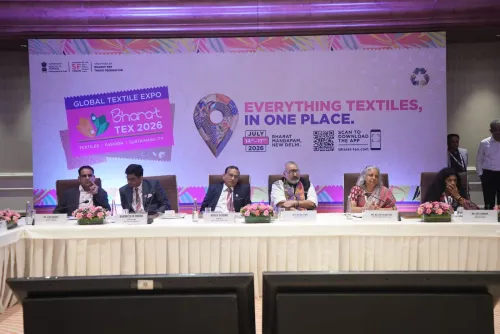
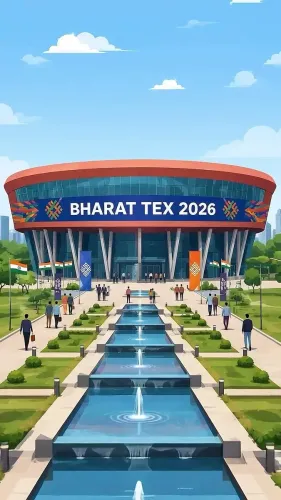
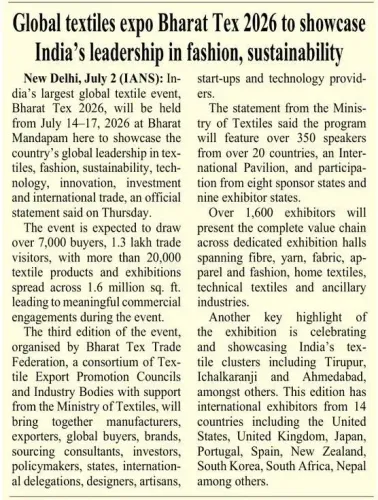
Bharat Tex 2026 is the Ministry of Textiles' flagship event, attracting participation from domestic and international stakeholders.
Singh framed the industry enthusiasm as aligned with PM Narendra Modi 's Viksit Bharat 2047 vision and the sector's 2030 growth targets.
The PLI Scheme for textiles , approved in 2021 , underpins India's push into man-made fibre and technical textiles segments.
Key beneficiaries include textile exporters, MSMEs , and weavers across major producing states such as Gujarat , Tamil Nadu and Uttar Pradesh .
Official participation data, buyer-seller outcomes and potential new policy announcements from the event are awaited.
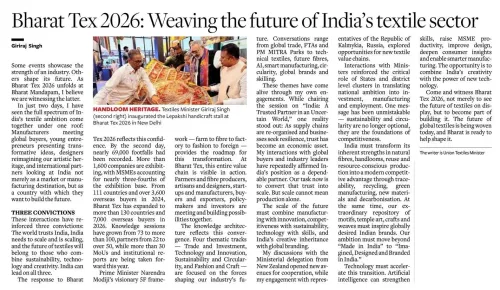
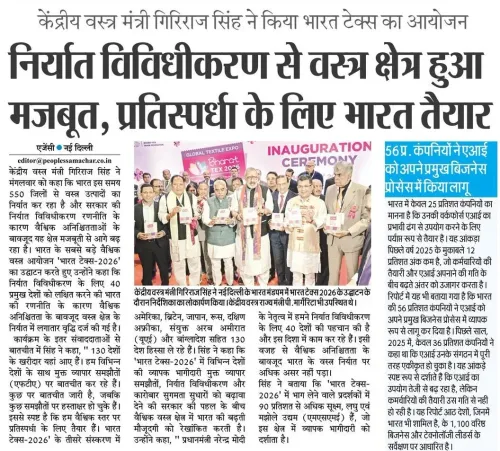
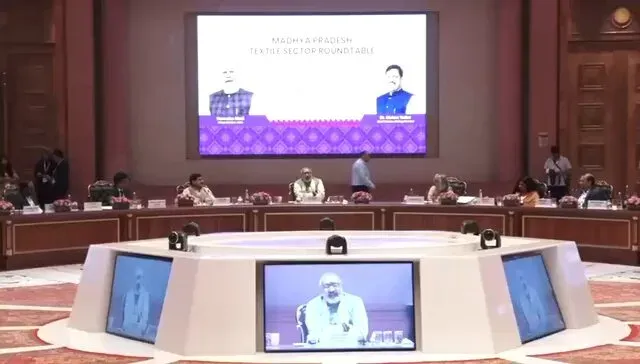
Union Textiles Minister Giriraj Singh on Friday, 17 July 2026 expressed strong confidence in India's textile ambitions, citing the growing domestic and international participation in Bharat Tex 2026 as evidence that the country is emerging as a trusted global hub for the textile industry.
Posting on X in Hindi, the minister wrote: 'भारत टेक्स 2026 को मिल रहा अपार सहयोग और उद्योग जगत का बढ़ता विश्वास देखकर अत्यंत प्रसन्नता हो रही है' — 'I am extremely pleased to see the immense support and growing industry confidence that Bharat Tex 2026 is receiving.' He added that rising participation from within the country and abroad signals that India is becoming a preferred and reliable centre for the global textile industry.
Context
Bharat Tex is the Ministry of Textiles' flagship showcase event, designed to project India's manufacturing depth and export potential to buyers, investors and policymakers from across the world. The 2026 edition has drawn attention from both domestic industry players and international stakeholders, reinforcing the event's positioning as a key platform in the global textile calendar.
Singh linked the momentum around the event directly to Prime Minister Narendra Modi's broader national vision, describing the confidence on display as 'the self-belief of the new India envisioned by the honourable Prime Minister, which sets big goals and achieves them too.'
Policy Backdrop
India's textile sector has been a focal point of government policy since 2014, with initiatives such as Make in India and Atmanirbhar Bharat seeking to deepen the sector's integration into global value chains. The Production Linked Incentive (PLI) Scheme for textiles and apparel, approved in 2021, specifically targets man-made fibre and technical textiles — segments where India has historically lagged behind competitors such as China, Bangladesh and Vietnam.
The overarching framework is the government's Viksit Bharat 2047 vision, which identifies textiles as a priority sector in India's journey toward becoming a developed economy by the centenary of independence. Singh's post explicitly invokes this vision, framing the Bharat Tex momentum as proof that the sector is on track to meet its 2030 targets.
Stakeholders and Impact
The textile sector in India encompasses a wide range of stakeholders — from large export-oriented manufacturers to MSMEs, handloom weavers and artisans spread across states such as Gujarat, Tamil Nadu, Maharashtra, Uttar Pradesh and West Bengal. Events such as Bharat Tex serve as critical buyer-seller platforms that can translate ministerial confidence into actual orders, investment commitments and technology tie-ups.
International participation is particularly significant given the global supply-chain realignment underway as buyers seek alternatives to China. A well-attended Bharat Tex 2026 would strengthen India's case as a credible, scalable sourcing destination for apparel, technical textiles and home furnishings.
What's Next
Attention will now turn to the official release of participation and business-generated data from Bharat Tex 2026, including the number of international buyers, countries represented and deals concluded. Any supplementary policy measures or scheme announcements the Ministry of Textiles makes in conjunction with the event will be closely watched by industry bodies and exporters.
With the next Union Budget cycle approaching, the sector will also be looking for signals on whether the PLI scheme's scope will be expanded or whether fresh export incentive structures will be introduced. Singh's upbeat public messaging suggests the ministry intends to sustain the political and policy momentum around textiles well into the second half of 2026.
Point of View
The minister is tying sector performance directly to the ruling party's broader economic credibility ahead of the budget cycle. The emphasis on international participation also serves a diplomatic-economic purpose: positioning India as a China-plus-one destination at a time when global supply chains are actively diversifying. Whether the enthusiasm translates into verifiable trade outcomes will determine how durable this confidence proves to be.
NationPress
17 Jul 2026
Frequently Asked Questions
What is Bharat Tex 2026?
Bharat Tex 2026 is the Ministry of Textiles' flagship showcase event that brings together domestic manufacturers, exporters, weavers and international buyers to project India's textile manufacturing and export potential on a global stage.
What is India's 2030 target for the textile sector?
The Indian government has set ambitious growth targets for its textile sector by 2030 as part of the Viksit Bharat 2047 vision, though the precise numerical figures have not been officially confirmed in publicly available records prior to 2024.
What is the PLI scheme for textiles?
The Production Linked Incentive (PLI) Scheme for textiles was approved in 2021 to attract investment specifically into man-made fibre fabrics and technical textiles, segments where India aims to compete more strongly in global markets.
Why is Bharat Tex important for India's textile industry?
Bharat Tex serves as a critical buyer-seller platform that can generate orders, investment commitments and technology partnerships. It also strengthens India's image as a reliable sourcing destination as global buyers seek alternatives to China.
What is Viksit Bharat 2047?
Viksit Bharat 2047 is the Indian government's long-term national vision to make India a fully developed economy by 2047, the centenary of independence, with the textile sector identified as one of its priority growth areas.