Giriraj Singh invited to Bharat Tex 2026 textile showcase
Synopsis
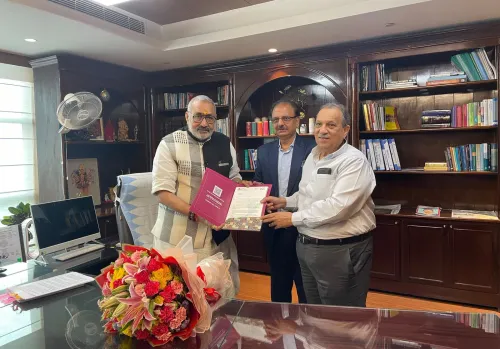
Union Textiles Minister Giriraj Singh has accepted a formal invitation to Bharat Tex 2026 from trade federation leaders Naren Goenka and Sudhir Sekhri. He called the event a vital global platform for India's textile, handloom and handicrafts sectors and expressed hope it would create new opportunities for weavers, artisans and entrepreneurs.
Key Takeaways
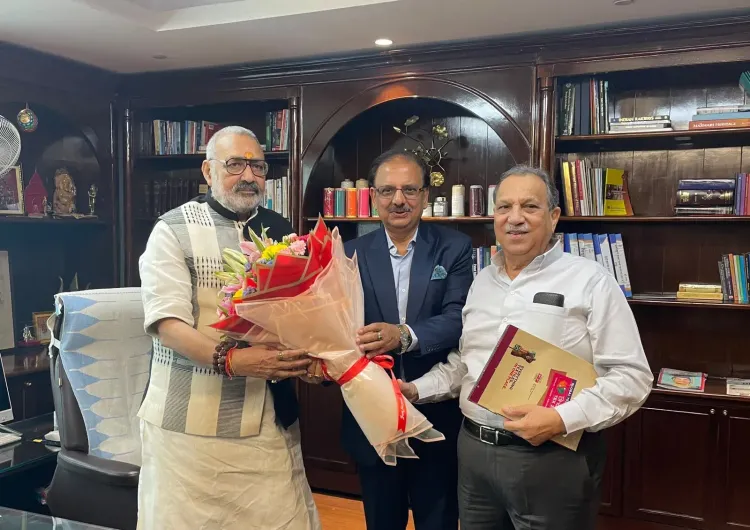
Union Textiles Minister Giriraj Singh received a formal invitation to Bharat Tex 2026 from federation president Naren Goenka and core committee member Sudhir Sekhri .
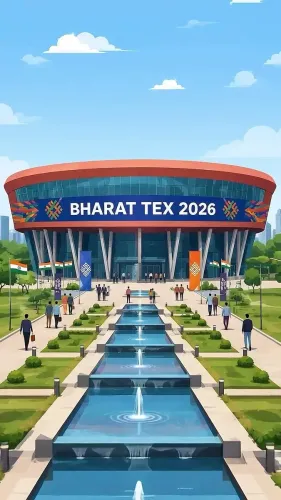
Bharat Tex is described as a platform for showcasing India's textiles, apparel, handloom and handicrafts heritage, innovation and global capabilities.
The minister expressed confidence the event would create new opportunities for weavers, artisans and entrepreneurs .
India is the second-largest textile exporter globally, with the sector supporting millions of livelihoods.
Government backing for the sector includes the PLI scheme (2021) , ATUFS (2016) and the National Handloom Development Programme .
The post was tagged #ViksitBharat2047 , linking the event to India's long-term developed-nation vision.
Union Textiles Minister Giriraj Singh on Tuesday, 7 July 2026 announced he has received a formal invitation to participate in the upcoming Bharat Tex 2026 trade exhibition, extended by Bharat Tex Trade Federation president Naren Goenka and core committee member Sudhir Sekhri. The minister described the event as a significant platform for showcasing India's textiles, apparel, handloom and handicrafts sector to the world.
Context
Posting in Hindi on X, the minister said he had received a formal invitation — 'औपचारिक आमंत्रण प्राप्त हुआ' (a formal invitation was received) — for participation in the forthcoming Bharat Tex edition. He expressed confidence that the event would 'provide new momentum to the Indian textile industry and open new avenues of opportunity for weavers, artisans and entrepreneurs.'
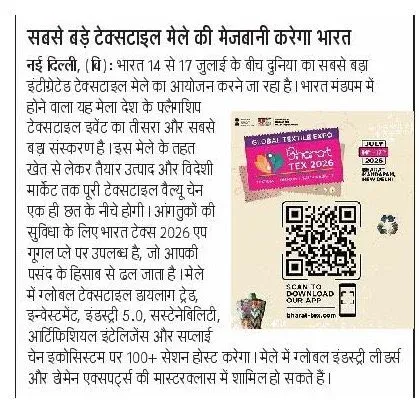
Bharat Tex is a large-format textile trade fair that brings together stakeholders from across the value chain — fibre to finished garment — and draws international buyers, investors and policymakers. The event carries added significance given India's standing as the second-largest textile exporter globally.
Policy Backdrop
The invitation comes against the backdrop of sustained government investment in the sector. The Production Linked Incentive (PLI) scheme for textiles, notified in 2021, was designed to attract fresh capital into man-made fibre and technical textiles and accelerate export growth. The Amended Technology Upgradation Fund Scheme (ATUFS), operationalised from 2016, has helped textile units modernise machinery and sharpen competitiveness.
Longer-standing programmes such as the National Handloom Development Programme have provided continuous support to weavers and artisans since the early 2000s. Together, these schemes reflect a deliberate policy of combining India's traditional strengths in handloom and handicrafts with technology upgradation and global marketing platforms — a pattern visible in events such as Bharat Tex.
The minister's post also carried the hashtag #ViksitBharat2047, linking the event to the government's overarching vision of making India a developed nation by 2047, in which textiles and manufacturing are identified as key contributors to employment and GDP.
Stakeholders and Impact
The sectors most directly affected by a high-profile ministerial presence at Bharat Tex are handloom weavers, textile artisans and MSME entrepreneurs — constituencies the minister specifically named in his post. For these groups, large trade fairs translate into potential export orders, buyer linkages and investment commitments that can sustain livelihoods at the grassroots level.
India's textile and apparel sector is one of the country's largest employers, supporting millions of workers — many of them women in rural areas — across spinning, weaving, dyeing and garment manufacturing. A ministerial-level push at Bharat Tex signals intent to use the platform for concrete trade outcomes, not merely ceremonial visibility.
What's Next
Attention will now turn to the formal schedule and scale of Bharat Tex 2026, including any export-order announcements, MoUs or investment pledges that emerge from the event. The minister's participation, once confirmed, could also set the stage for policy announcements aligned with the textile sector's priorities in the next Union Budget or a revised national textile policy. The convergence of heritage crafts and industrial innovation at such platforms is increasingly viewed as central to India's strategy of diversifying export markets amid shifting global supply chains.
Point of View
Not just bureaucratic support. By explicitly naming weavers, artisans and entrepreneurs alongside the #ViksitBharat2047 hashtag, the minister is stitching together grassroots welfare messaging with India's broader industrial ambitions — a framing that has become a signature of BJP economic communication. The move also reflects a wider pattern of using trade fairs as policy-launch pads, where ministerial presence can catalyse investor confidence and export commitments. Watch for whether this translates into concrete announcements on PLI disbursals or a new textile export target at the event itself.
NationPress
6 Oct 2026
Frequently Asked Questions
What is Bharat Tex 2026?
Bharat Tex 2026 is an upcoming major textile trade exhibition in India that showcases the country's textiles, apparel, handloom and handicrafts sector to global buyers, investors and policymakers. It is organised by the Bharat Tex Trade Federation.
Why is Giriraj Singh attending Bharat Tex 2026?
Union Textiles Minister Giriraj Singh received a formal invitation from Bharat Tex Trade Federation president Naren Goenka and core committee member Sudhir Sekhri. He expressed confidence the event would boost the Indian textile industry and open new opportunities for weavers, artisans and entrepreneurs.
What is India's position in global textile exports?
India is the second-largest textile exporter in the world, with strengths in handloom, apparel and handicrafts. The sector is one of the country's largest employers, supporting millions of workers across the value chain.
What government schemes support India's textile sector?
Key schemes include the Production Linked Incentive (PLI) scheme for textiles notified in 2021, the Amended Technology Upgradation Fund Scheme (ATUFS) operationalised from 2016, and the National Handloom Development Programme, which has supported weavers and artisans since the early 2000s.
What is Viksit Bharat 2047 and how does it relate to textiles?
Viksit Bharat 2047 is the government's vision to make India a developed nation by 2047. Textiles and manufacturing are identified as key contributors to employment and GDP under this framework, which is why the minister linked Bharat Tex 2026 to the initiative.