CM Saini Hails India's First Hydrogen Train Launch from Haryana
Synopsis
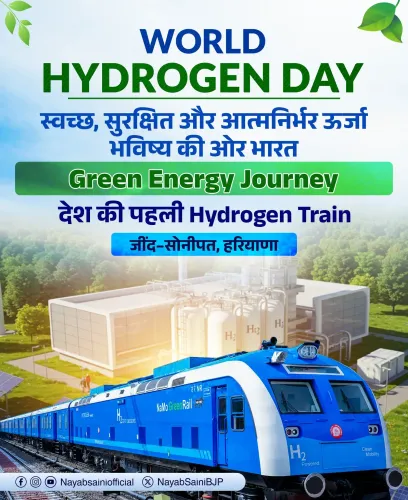
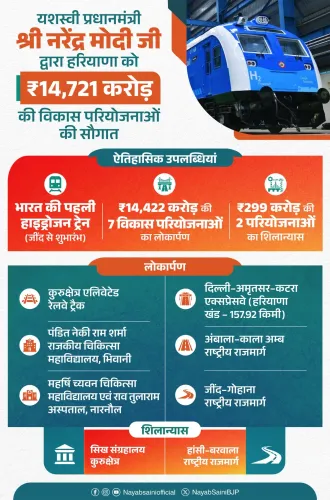
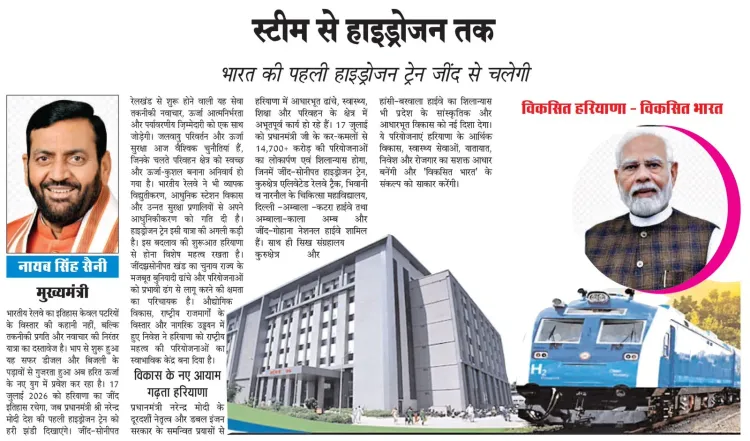
Haryana Chief Minister Nayab Singh Saini on 16 July 2026 hailed the launch of India's first hydrogen-powered train from Haryana as a landmark for green energy, modern technology, and the Atmanirbhar Bharat mission under PM Modi's leadership.
Key Takeaways
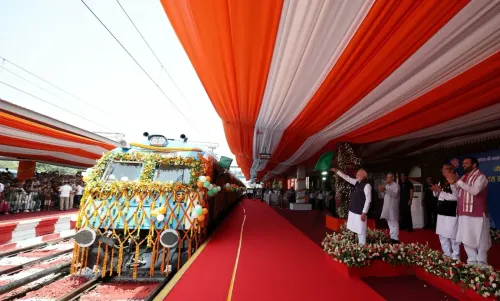
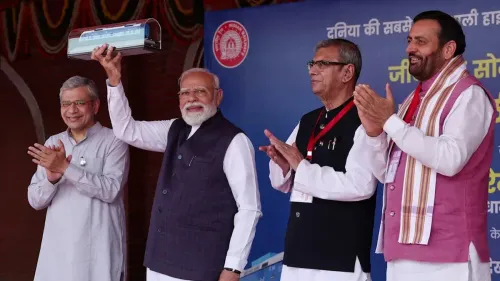
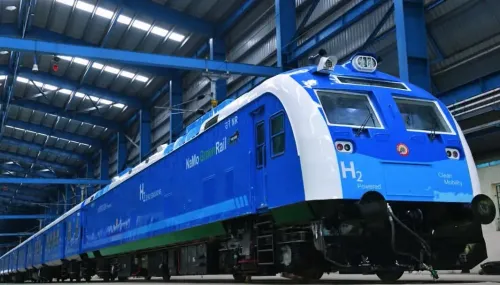
India's first hydrogen train was launched from Haryana on 16 July 2026 , marking a national clean-energy milestone.
CM Nayab Singh Saini credited PM Narendra Modi 's leadership, framing the event as 'Sankalp se Siddhi' — from determination to accomplishment.
The launch is rooted in the National Green Hydrogen Mission approved in January 2023 and pilot commitments made in the Union Budget 2021-22 .
Hydrogen trains emit only water vapour and can run on non-electrified routes, addressing a key gap in India's rail network.
The initiative supports India's 2070 net-zero target and the goal of reducing dependence on imported fossil fuels.
Further rollout of hydrogen rakes and state-level green hydrogen production facilities are the next milestones to watch.
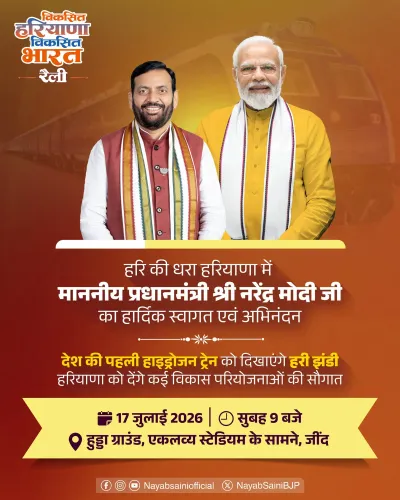
Haryana Chief Minister Nayab Singh Saini on Thursday, 16 July 2026, celebrated the launch of India's first hydrogen-powered train from Haryana, calling it a powerful symbol of the nation's journey from resolve to achievement under Prime Minister Narendra Modi.
Posting on X, CM Saini wrote that the train — described as realising the vision of a 'Viksit Bharat' (Developed India) — would give fresh momentum to green energy, modern technology, and the 'Atmanirbhar Bharat' (Self-Reliant India) mission. He credited PM Modi's leadership for making the milestone possible, framing it as 'Sankalp se Siddhi', meaning 'from determination to accomplishment.'
Context
India's first hydrogen train marks a significant step in the country's effort to decarbonise its vast railway network. Indian Railways, one of the world's largest rail operators, has been piloting hydrogen fuel-cell technology as part of a broader push to reduce dependence on diesel traction and cut carbon emissions. The launch from Haryana places the northern state at the centre of a nationally significant clean-energy milestone.
Hydrogen trains use fuel cells that combine hydrogen and oxygen to generate electricity, emitting only water vapour. Unlike battery-electric trains, they can operate on non-electrified routes, making them particularly relevant for India's partially electrified rail network.
Policy Backdrop
The hydrogen train initiative is rooted in a sequence of central policy commitments. The Union Budget 2021-22 first announced pilot projects for hydrogen-powered trains on Indian Railways. This was followed by the National Green Hydrogen Mission, approved in January 2023, which set out a framework to scale domestic green hydrogen production and deploy it across sectors including transport, industry, and energy storage.
The Mission is a cornerstone of India's strategy to meet its 2070 net-zero target and reduce the import bill for fossil fuels. Multiple central ministries — including Railways, New and Renewable Energy, and Heavy Industries — have coordinated on low-carbon mobility pilots since 2021, with the hydrogen train representing one of the most visible outcomes of that inter-ministerial effort.
The 'Atmanirbhar Bharat' dimension is equally significant: the government has pushed for indigenous development of fuel-cell components and hydrogen storage systems, aiming to build a domestic supply chain rather than rely on imported technology.
Stakeholders and Impact
The most immediate beneficiaries are railway passengers on routes served by the new hydrogen rakes, who stand to gain from quieter, cleaner travel. Beyond passengers, the renewable energy sector — particularly green hydrogen producers — stands to benefit from the demand signal that a fleet-scale railway deployment would create.
For Haryana, hosting the inaugural launch carries economic and reputational weight. The state has been positioning itself as an industrial and logistics hub, and association with a nationally pioneering clean-technology project reinforces that identity. Local manufacturing and maintenance ecosystems around the train could generate skilled employment in the state.
What's Next
Attention will now turn to the rollout of additional hydrogen train rakes and the establishment of state-level green hydrogen production facilities announced under the National Green Hydrogen Mission. The pace of scaling will depend on the cost trajectory of green hydrogen, the availability of electrolysis capacity, and the speed at which Indian Railways can retrofit or build hydrogen-compatible refuelling infrastructure at stations.
If the inaugural service demonstrates operational reliability, it could accelerate procurement decisions and encourage other states to compete for similar launches — turning a single milestone into a network-wide transformation of India's rail energy mix.
Point of View
Not merely policy outcomes. The framing of 'Sankalp se Siddhi' deliberately echoes the Prime Minister's long-running rhetorical arc, tightening the alignment between central and state BJP messaging. Whether the milestone translates into a sustained green hydrogen ecosystem will depend on procurement scale and cost reduction — factors that will determine if this remains a symbolic first or becomes a genuine inflection point for Indian Railways.
NationPress
15 Oct 2026
Frequently Asked Questions
What is India's first hydrogen train and where was it launched?
India's first hydrogen-powered train was launched from Haryana on 16 July 2026 . It uses hydrogen fuel-cell technology to generate electricity, emitting only water vapour, and is part of Indian Railways ' decarbonisation drive.
What is the National Green Hydrogen Mission?
The National Green Hydrogen Mission was approved by the central government in January 2023 to scale domestic green hydrogen production and deploy it across sectors including transport, making it the policy backbone for initiatives like the hydrogen train.
What did Haryana CM Nayab Singh Saini say about the hydrogen train?
CM Nayab Singh Saini said the launch from Haryana would give fresh momentum to green energy, modern technology, and the Atmanirbhar Bharat mission, calling it a powerful symbol of 'Sankalp se Siddhi' — from determination to accomplishment — under PM Modi's leadership.
How does a hydrogen train work?
A hydrogen train uses fuel cells that combine hydrogen and oxygen to produce electricity, which powers the train's motors. The only emission is water vapour, making it a zero-direct-emission alternative to diesel trains, and it can operate on routes that are not electrified.
What comes next after India's first hydrogen train launch?
The focus will shift to rolling out additional hydrogen train rakes and setting up state-level green hydrogen production facilities under the National Green Hydrogen Mission . Refuelling infrastructure at stations and cost reduction in green hydrogen production are the key factors to watch.