Mandaviya: India's social protection coverage hits 68.4%
Synopsis
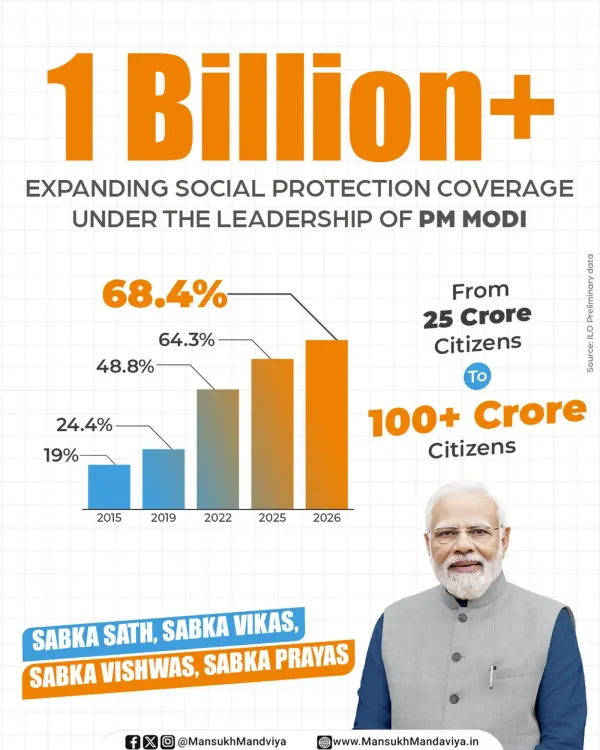
Union Labour Minister Mansukh Mandaviya announced on 16 July 2026 that India has crossed 1 billion in social protection coverage, with the rate rising from 19% in 2015 to 68.4% in 2026 — crediting PM Modi's flagship welfare and financial-inclusion programmes for the near-four-fold expansion.
Key Takeaways
India's social protection coverage has risen from 19% in 2015 to 68.4% in 2026 , according to Union Minister Mansukh Mandaviya .
More than 100 crore citizens are now covered under India's social protection framework — crossing the 1 billion mark.
Key enablers cited include Pradhan Mantri Jan Dhan Yojana , Atal Pension Yojana , Ayushman Bharat PMJAY , the Code on Social Security 2020 , and the e-Shram portal.
The expansion is linked to India's commitment to UN SDG 1.3 , which targets substantial social protection coverage by 2030 .
The next focus area is expected to be deepening benefit adequacy for gig workers , informal sector workers , and inter-state migrants .
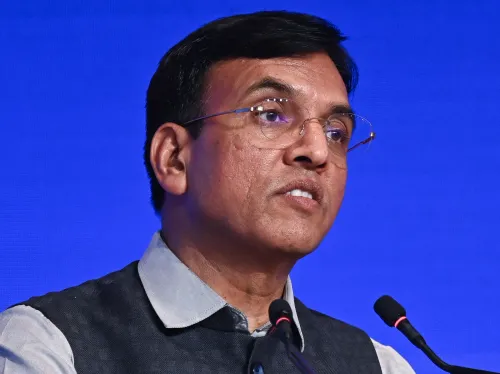
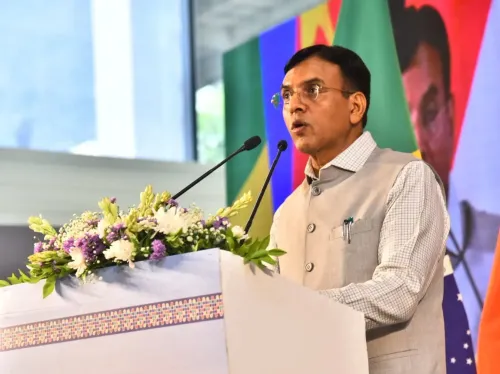
Union Labour and Sports Minister Mansukh Mandaviya announced on Thursday, 16 July 2026, that India has crossed the 1 billion mark in social protection coverage, with the share of citizens under the country's social protection framework rising from 19% in 2015 to 68.4% in 2026 — a nearly 3.6-fold increase over a decade.
Posting on X, the minister credited the expansion to the leadership of Prime Minister Narendra Modi, stating that 'more than 100 crore citizens' are now covered under the social protection umbrella.
Context
The claim marks a significant milestone in India's long-running effort to extend formal welfare coverage to its vast informal and rural population. Social protection coverage — which encompasses health insurance, pensions, maternity benefits, unemployment support and allied transfers — has historically been low in India due to the dominance of the unorganised sector, which accounts for the bulk of the country's workforce. A coverage rate of 19% in 2015 placed India well below the global average at the time, according to International Labour Organisation benchmarks.Policy Backdrop
The expansion has been built on a stack of interlocking programmes launched or scaled since 2014. The Pradhan Mantri Jan Dhan Yojana, launched in August 2014, created bank accounts for hundreds of millions of previously unbanked citizens, providing the financial plumbing for direct benefit transfers. The Atal Pension Yojana, introduced in May 2015, extended contributory pension access to unorganised sector workers. The Ayushman Bharat Pradhan Mantri Jan Arogya Yojana, rolled out in September 2018, offered health cover of up to Rs 5 lakh per year to over 50 crore identified beneficiaries. The Code on Social Security, passed in September 2020, consolidated multiple labour laws to extend pensions, insurance and gratuity to gig and platform workers — a category previously excluded from formal coverage. The e-Shram portal, launched in 2021, created a national database of unorganised workers to enable targeted benefit delivery. Together, these initiatives form the architecture behind the coverage numbers cited by Minister Mandaviya.Stakeholders and Impact
The beneficiaries of this expansion span informal sector workers, rural households, senior citizens, and women heading low-income families. For decades, exclusion errors — where eligible citizens were left out due to lack of documentation or banking access — were a persistent challenge. The Aadhaar-Jan Dhan-mobile linkage, sometimes called the JAM trinity, has been central to reducing such gaps by enabling identity-verified, direct transfers that bypass intermediaries. The milestone also carries significance in India's commitment to UN Sustainable Development Goal 1.3, which calls on countries to implement nationally appropriate social protection systems and achieve substantial coverage of the poor and vulnerable by 2030. Reaching 68.4% coverage four years ahead of that deadline positions India to argue it is on track — or ahead — of its SDG obligations.What's Next
Attention will now turn to the quality and portability of coverage rather than its breadth. Analysts and labour policy observers are likely to scrutinise the implementation rules under the four labour codes — which subsume the Code on Social Security — as the government moves toward operationalising benefits for gig workers and inter-state migrants. Coverage metrics are also expected to feature in the next Economic Survey and in periodic ILO monitoring reports. The challenge ahead is deepening benefit adequacy — ensuring that the 100 crore citizens counted as 'covered' receive meaningful, timely transfers rather than nominal enrolment.Point of View
Arriving as the ruling party seeks to consolidate its narrative of inclusive growth ahead of state electoral cycles. The jump from 19% to 68.4% — if borne out by independent methodology — would represent one of the fastest expansions of social protection coverage among large economies, comparable to shifts seen in Brazil and China during their respective welfare-scaling phases. The figure also serves a diplomatic purpose, positioning India as an SDG overachiever on the global stage. However, the distinction between nominal enrolment and active, adequate benefit receipt will be the critical test that opposition parties and labour economists are likely to press.
NationPress
15 Oct 2026
Frequently Asked Questions
What is India's current social protection coverage in 2026?
According to Union Minister Mansukh Mandaviya, India's social protection coverage stands at 68.4% in 2026, covering more than 100 crore citizens .
How much has India's social protection coverage grown since 2015?
Coverage has grown from 19% in 2015 to 68.4% in 2026 , a nearly 3.6-fold increase over roughly a decade, driven by schemes such as Jan Dhan, Ayushman Bharat and e-Shram.
Which schemes contributed to India crossing 1 billion in social protection coverage?
Key schemes include Pradhan Mantri Jan Dhan Yojana (banking access), Atal Pension Yojana (pensions for unorganised workers), Ayushman Bharat PMJAY (health insurance), the Code on Social Security 2020 , and the e-Shram unorganised worker database.
What is SDG 1.3 and how does India's coverage relate to it?
UN Sustainable Development Goal 1.3 calls on countries to implement social protection systems covering the poor and vulnerable by 2030 . India's reported 68.4% coverage, four years before the deadline, suggests it is ahead of schedule on this target.
What are the next steps for India's social protection expansion?
The focus is expected to shift to benefit adequacy and portability — particularly implementing the four labour codes to extend formal coverage to gig workers and inter-state migrants , with progress likely to appear in the next Economic Survey .