Mandaviya Backs PM Modi's Vision for Secure Jobs, Social Security
Synopsis
Union Labour Minister Mansukh Mandaviya amplified PM Modi's call for secure employment and universal social security under the PM Viksit Bharat Rozgar Yojana, underscoring the government's push to formalise India's vast unorganised workforce through EPFO, ESIC, and the Social Security Code, 2020.
Key Takeaways
Mansukh Mandaviya shared PM Modi's statement on June 19, 2026 , committing to 'secure employment' and 'social security for every worker.' The post is tagged under #PMViksitBharatRozgarYojana , linking it to the government's Viksit Bharat development framework.
The Code on Social Security, 2020 extended social-security coverage to gig and unorganised workers for the first time.
The e-Shram portal (2021) created a national database of unorganised workers as a foundation for targeted welfare delivery.
Mandaviya's ministry oversees EPFO and ESIC , the primary instruments for delivering provident fund and health insurance to formal workers.
Full operationalisation of the four labour codes depends on state-level rule notifications, making central signalling critical to implementation pace.
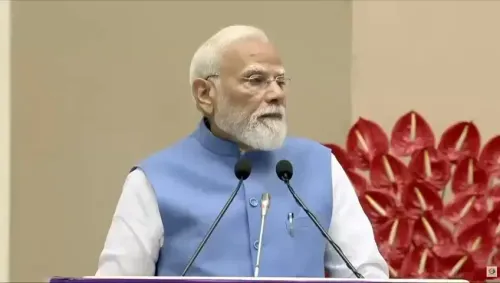
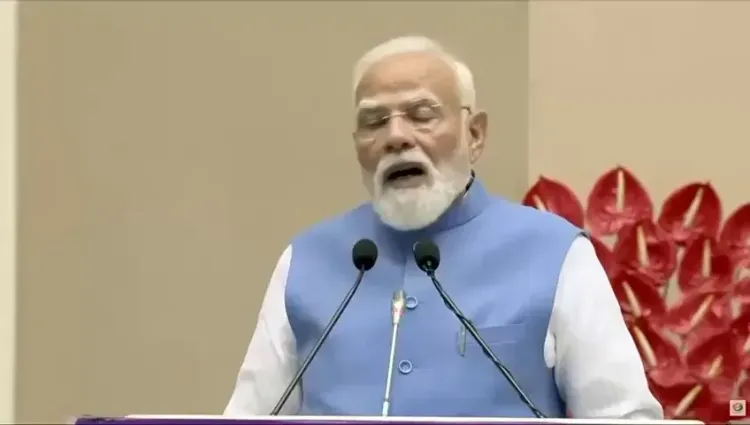
Union Labour and Sports Minister Mansukh Mandaviya on Friday, June 19, 2026, shared a statement attributed to Prime Minister Narendra Modi reaffirming the government's commitment to secure employment and universal social security for workers across India, tagging the post under the #PMViksitBharatRozgarYojana initiative.
Context
The post carries a direct quote from PM Modi: 'हमारी सोच Secure Employment की है, हमारी सोच Social Security For Every Worker की है' — translated as, 'Our thinking is of secure employment, our thinking is of social security for every worker.' The statement was shared by Mandaviya in his capacity as the minister overseeing labour welfare, signalling alignment at the highest levels of government on the twin goals of job security and worker protection.
The hashtag #PMViksitBharatRozgarYojana links the message to a broader employment-generation initiative under the Viksit Bharat (Developed India) policy framework, which the government has positioned as its long-term development vision.
Policy Backdrop
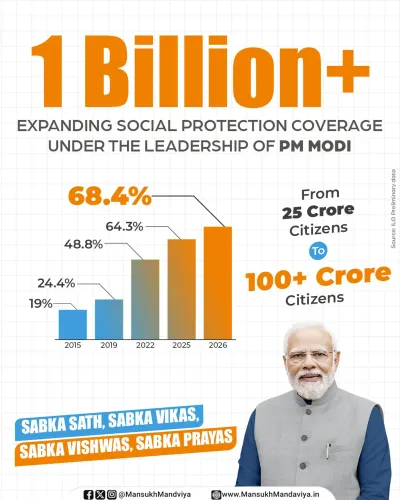
India's push for formalising its vast workforce has a defined legislative lineage. The Code on Social Security, 2020 consolidated multiple existing laws and extended the ambit of social security to gig workers and unorganised-sector employees for the first time. The e-Shram portal, launched in 2021, built a national database of unorganised workers to enable targeted welfare delivery — a foundational step toward the 'social security for every worker' goal articulated in the post.
Earlier, the Pradhan Mantri Rojgar Protsahan Yojana (2016) offered EPFO contribution subsidies to employers who created new formal jobs, incentivising formalisation from the demand side. Mandaviya's ministry oversees both EPFO and ESIC, the two primary vehicles through which provident fund and health insurance coverage reach formal workers.
The current emphasis on 'secure employment' continues a trajectory that successive governments have pursued — linking job-creation incentives with portable, contributory social-security coverage that follows the worker rather than the employer.
Stakeholders and Impact
The statement is most directly relevant to India's unorganised sector, which accounts for the overwhelming majority of the country's workforce. Gig workers, contract labourers, migrant workers, and daily-wage earners remain the primary beneficiaries targeted by the social-security expansion agenda.
Youth job seekers form a second critical constituency. Employment-linked incentive schemes under the Viksit Bharat umbrella are designed to reduce the cost of first-time hiring for employers, nudging them toward formal, EPFO-registered employment rather than informal arrangements. Any expansion of ESIC health cover or EPFO provident-fund access directly translates into a tangible safety net for millions of first-time entrants into the labour market.
What's Next
Analysts and worker-welfare advocates will watch Union Budget 2026-27 allocations closely for fresh employment-linked incentive outlays and any gazette notifications under the Social Security Code that operationalise gig-worker protections. Rules under the four labour codes — passed between 2019 and 2020 — are yet to be fully notified by all states, making central-level signalling from Mandaviya's ministry particularly significant in setting the pace of implementation.
The political messaging around #PMViksitBharatRozgarYojana suggests the government intends to keep employment and worker welfare at the centre of its public communication ahead of key legislative and budgetary cycles.
Point of View
Not merely information sharing — it anchors the ruling party's employment narrative within the 'Viksit Bharat' brand ahead of budget season. The framing of 'social security for every worker' is significant because it extends the government's traditional base of formal-sector beneficiaries toward the far larger, and electorally consequential, unorganised workforce. This mirrors a broader pattern in which welfare-state expansion is used both as genuine policy and as a mobilisation tool among working-class voters. The gap between legislative ambition — particularly the still-unoperationalised Social Security Code — and on-ground delivery remains the central credibility test for this messaging.
NationPress
19 Sept 2026
Frequently Asked Questions
What is PM Viksit Bharat Rozgar Yojana?
PM Viksit Bharat Rozgar Yojana is an employment-generation initiative under the government's 'Viksit Bharat' (Developed India) framework, aimed at creating formal, secure jobs and extending social-security coverage to workers across sectors.
What did Mansukh Mandaviya post about employment on June 19, 2026?
Mandaviya shared a statement from PM Modi saying the government's vision is 'secure employment' and 'social security for every worker,' tagging it under #PMViksitBharatRozgarYojana .
What is the Code on Social Security 2020?
The Code on Social Security, 2020 is a central law that consolidated multiple older statutes and, for the first time, brought gig workers and unorganised-sector employees within the ambit of formal social-security protections in India.
What is the e-Shram portal and who is it for?
The e-Shram portal , launched in 2021 , is a government platform that maintains a national database of unorganised workers — including migrant labourers, domestic workers, and construction workers — to enable targeted delivery of welfare benefits.
How does EPFO relate to secure employment in India?
The Employees' Provident Fund Organisation (EPFO) provides provident fund, pension, and insurance cover to formal-sector workers; expanding EPFO enrolment is a key government mechanism for converting informal jobs into 'secure,' benefit-linked employment.