Mandaviya Backs New Labour Codes for Worker Rights
Synopsis
Union Labour Minister Mansukh Mandaviya on 19 June 2026 quoted PM Modi on the new labour codes, saying their purpose is to give India's workers more security, transparency, and rights — framed under the Viksit Bharat employment vision.
Key Takeaways
Union Labour Minister Mansukh Mandaviya on 19 June 2026 quoted PM Narendra Modi on the purpose of the new labour codes.
PM Modi's stated aim: give workers 'more security, more transparency, and more rights' through the new codes.
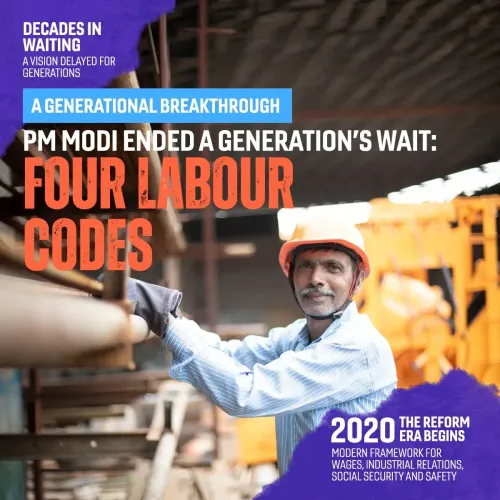
India consolidated 44 central labour laws into four labour codes enacted between 2019 and 2020 .
The post was tagged under #PMViksitBharatRozgarYojana , linking the message to the Viksit Bharat 2047 employment agenda.
Full implementation depends on state-level notification of rules , which remains uneven across India.
Key stakeholders include workers in organised and unorganised sectors, trade unions , and MSMEs .
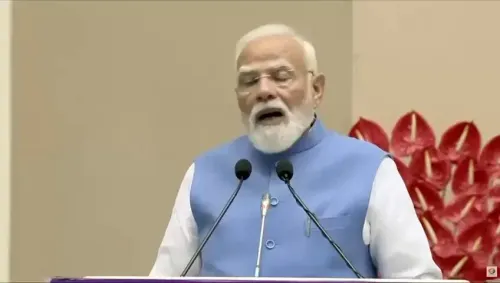
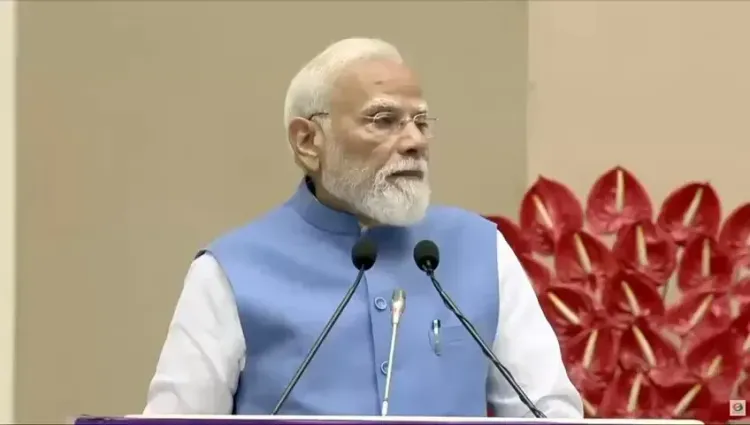
Union Labour and Sports Minister Mansukh Mandaviya on Friday, 19 June 2026, shared a statement attributed to Prime Minister Narendra Modi underlining the government's rationale for the new labour codes, calling them a framework to deliver greater security, transparency, and rights to workers across India.
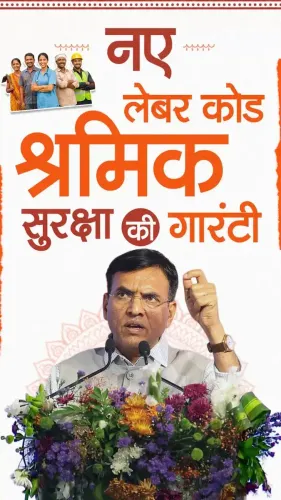
Quoting PM Modi, the minister wrote: 'नए लेबर कोड़ का उद्देश्य कामगारों को अधिक सुरक्षा, अधिक पारदर्शिता, और अधिक अधिकार देना है' — ('The purpose of the new labour codes is to give workers more security, more transparency, and more rights'). The post was accompanied by a video and tagged under the hashtag #PMViksitBharatRozgarYojana, linking the message to the government's broader employment agenda under the Viksit Bharat vision.
Context
India's labour law landscape has historically been fragmented, with 44 central labour laws governing everything from wages to workplace safety. The current government initiated a consolidation exercise that resulted in four labour codes — on Wages, Industrial Relations, Social Security, and Occupational Safety, Health and Working Conditions — enacted between 2019 and 2020. The stated aim has been to simplify compliance, extend formal social security coverage, and make the regulatory environment more predictable for both workers and employers.
Mandaviya, as the minister responsible for the rollout of these codes, has been a consistent advocate for their implementation. His post amplifies the Prime Minister's framing of the reform as fundamentally worker-centric rather than purely business-driven.
Policy Backdrop
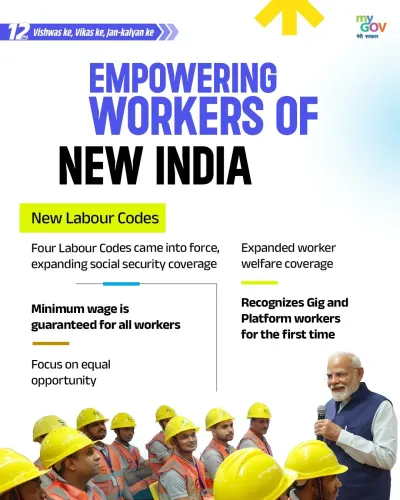
The legislative groundwork for the four codes began with the introduction of bills in Parliament from 2017 onwards. The Code on Wages was the first to be passed, in 2019, followed by the remaining three codes in September 2020. Together, they aim to universalise minimum wage guarantees, streamline dispute resolution, and bring unorganised and gig workers into the ambit of social security for the first time at scale.
Earlier employment-linked schemes such as the PM Rojgar Protsahan Yojana, launched in 2016–17, sought to incentivise formal job creation by subsidising employer contributions to provident fund accounts. The current push builds on that lineage, with the Viksit Bharat framework — the government's long-term roadmap for a developed India by 2047 — providing the overarching policy umbrella for employment generation and worker welfare.
Stakeholders and Impact
The reforms directly affect workers in both the organised and unorganised sectors, trade unions, and MSMEs, which employ the largest share of India's workforce. Trade unions have historically held mixed views on the codes, with some welcoming the extension of social security and others raising concerns about provisions they argue dilute collective bargaining rights and ease conditions for retrenchment.
For MSMEs, simplified compliance under a unified code structure is expected to reduce the administrative burden of adhering to multiple overlapping statutes. The government has presented the balance between worker protection and employer flexibility as essential to attracting domestic and foreign investment and sustaining job creation at scale.
What's Next
The critical outstanding step remains state-level notification of rules under the four codes. Labour is a concurrent subject under the Indian Constitution, meaning both central and state governments must frame and notify rules before the codes can come into full operational effect. Progress has been uneven across states, and the pace of rule notification will determine when workers and businesses actually experience the reforms on the ground.
Any fresh budgetary allocations or operational guidelines linked to schemes under the #PMViksitBharatRozgarYojana banner will be closely watched as indicators of how the government intends to translate the legislative framework into measurable employment outcomes ahead of 2047.
Point of View
Mandaviya is reinforcing the political ownership of the labour code project at the highest level — a signal that the government sees these reforms as an electoral as well as a policy asset. The timing, tied to the #PMViksitBharatRozgarYojana hashtag, suggests an effort to build a coherent narrative linking legislative reform to tangible employment outcomes under the Viksit Bharat umbrella. However, the gap between enactment and implementation — particularly the slow pace of state-level rule notification — remains the central credibility test for this messaging. Until the codes are operationally live across major states, the worker-centric framing risks being seen as aspirational rather than achieved.
NationPress
19 Sept 2026
Frequently Asked Questions
What are the new labour codes in India?
India's new labour codes consolidate 44 central labour laws into four codes covering Wages, Industrial Relations, Social Security, and Occupational Safety — enacted between 2019 and 2020 to simplify compliance and extend worker protections.
What did PM Modi say about the new labour codes?
PM Modi stated that 'the purpose of the new labour codes is to give workers more security, more transparency, and more rights,' as quoted by Labour Minister Mansukh Mandaviya on 19 June 2026 .
What is PM Viksit Bharat Rozgar Yojana?
The hashtag #PMViksitBharatRozgarYojana is associated with the government's employment generation agenda under the Viksit Bharat vision for a developed India by 2047 ; specific scheme details are yet to be officially confirmed.
Have the four labour codes been implemented yet?
The four labour codes have been enacted by Parliament but full implementation requires state governments to notify rules under the codes — a process that has been uneven and is still ongoing across different states.
How do the new labour codes affect workers and MSMEs?
For workers, the codes aim to universalise minimum wages and extend social security to unorganised and gig workers; for MSMEs , they reduce the compliance burden by replacing multiple overlapping statutes with a unified framework.