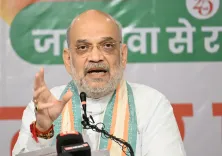
Mandaviya: Gig Worker Welfare Is Modi Govt Priority

Synopsis
Union Labour Minister Mansukh Mandaviya declared on X that protecting gig workers is a Modi government priority, drawing attention to the Code on Social Security, 2020, which first gave India's platform workers a statutory right to welfare schemes — rules for which are still pending.
Key Takeaways
Mansukh Mandaviya , Union Minister of Labour and Employment, stated on 30 July 2026 that gig worker welfare is a priority of the Modi government.
The Code on Social Security, 2020 was the first Indian law to define gig and platform workers and mandate social security for them.
The code consolidated 29 central labour laws into four codes, a reform drive that began in 2019 .
Central rules under Chapter IX of the Social Security Code — which would activate welfare schemes — are still pending notification.
Platform companies and the government are envisaged as co-contributors to gig worker welfare funds under the code's framework.
Some states, including Rajasthan , have launched independent gig worker welfare boards while awaiting central rules.
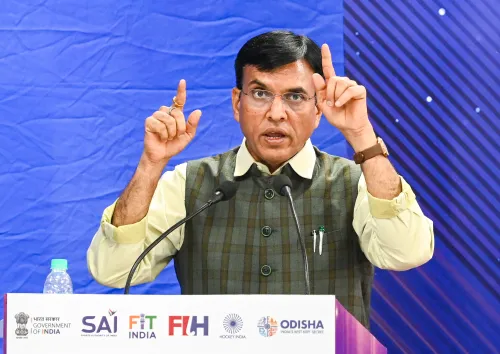
India's millions of delivery riders, cab drivers, and platform workers have long existed in a legal grey zone — earning livelihoods through apps but falling outside the protections that formal employment guarantees. Union Labour and Sports Minister Mansukh Mandaviya moved to address that gap directly on Thursday, 30 July 2026, posting a pointed assertion on X that protecting the interests of gig workers is a stated priority of the Modi government.
The post — 'गिग वर्कर्स के हितों की रक्षा, मोदी सरकार की प्राथमिकता' ('Protecting the interests of gig workers is the Modi government's priority') — is brief but pointed. Coming from the minister who holds direct charge of labour policy, it signals that welfare for this fast-growing segment of the workforce remains live on the ministry's agenda.
How the Code on Social Security Changed the Rules
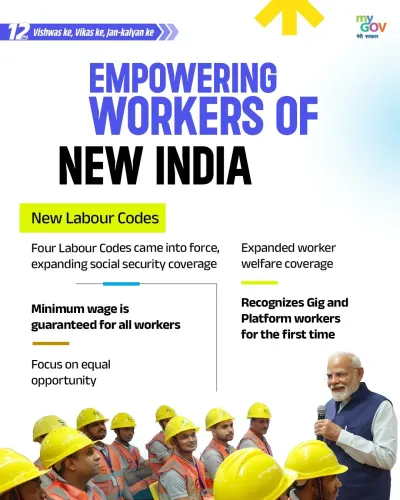
The legislative foundation for this commitment was laid with the Code on Social Security, 2020 — one of four landmark labour codes that consolidated 29 central labour laws into a streamlined framework. For the first time in Indian law, gig and platform workers received a statutory definition and a formal right to social security schemes.
Before the code, a delivery executive or ride-hailing driver had no employer on paper, and therefore no access to provident fund, insurance, or gratuity. The 2020 code's Chapter IX created a dedicated category for these workers, mandating that the central government notify welfare schemes funded through contributions from both platform companies and the government.
A Gig Economy That Has Outgrown Its Safety Net
India's gig economy has expanded rapidly alongside the growth of ride-hailing, food delivery, and logistics platforms. Platform companies have scaled to millions of active workers, yet the central rules required to operationalise the social security provisions of the 2020 code are still awaited. States including Rajasthan have moved independently with their own registration and welfare board models, underscoring the urgency at the ground level.
Mandaviya's post lands in that context — a political signal that the Centre has not lost sight of the unfinished implementation work, even as the ministry juggles the broader rollout of all four labour codes.
For the workers themselves, the stakes are concrete: access to accident insurance, health cover, and retirement savings that most salaried Indians take for granted. The minister's words now need rules behind them — and that is exactly what the gig economy is watching for.
Point of View
But its timing matters: with the four labour codes still awaiting full implementation years after passage, the ministry faces growing pressure from platform workers and civil society to move from legislation to action. The statement keeps the issue visible at the cabinet level, which matters for bureaucratic momentum. However, until the Centre notifies the rules under Chapter IX of the Social Security Code, the commitment remains aspirational — and the gap between legislative intent and on-ground welfare is precisely what critics of the government's labour reform pace point to.
NationPress
14 Sept 2026
Frequently Asked Questions
What did Mansukh Mandaviya say about gig workers?
Mandaviya posted on X on 30 July 2026 that protecting the interests of gig workers is a priority of the Modi government, signalling continued political focus on welfare for platform-based workers.
What is the Code on Social Security 2020 and how does it help gig workers?
The Code on Social Security, 2020 was the first Indian law to formally define gig and platform workers and give them a statutory right to social security schemes, to be funded through contributions from platform companies and the government.
Are gig workers in India covered under social security yet?
Not fully. While the Code on Social Security, 2020 created the legal framework, the central rules needed to operationalise welfare schemes for gig workers under Chapter IX of the code are still pending notification.
Which ministry handles gig worker welfare in India?
The Ministry of Labour and Employment, currently headed by Union Minister Mansukh Mandaviya, is the nodal ministry for labour codes including the provisions covering gig and platform workers.
How many labour laws did India consolidate into the four labour codes?
The Modi government consolidated 29 central labour laws into four codes between 2019 and 2020, including the Code on Social Security that covers gig workers.