US Justice Dept highlights India's role in fighting tech-support scams
Synopsis
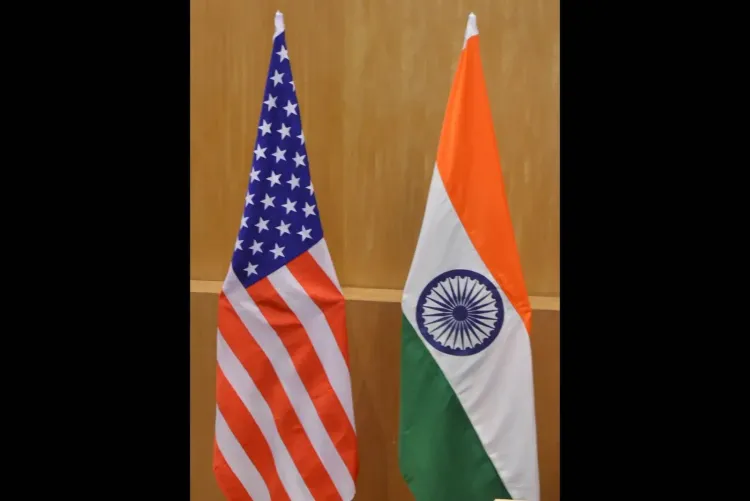
A US Justice Department official publicly credited Indian law enforcement with helping dismantle tech-support and government-impersonation scam networks — placing India alongside West Africa, Southeast Asia, and Jamaica in a widening multinational crackdown. The acknowledgement, made at a Washington press briefing, carries diplomatic weight even without operational detail, signalling that cyber fraud has become a priority in bilateral US–India relations.
Key Takeaways
Richard Goldberg of the US Justice Department's Cyber-Enabled Scam Initiative praised India's cooperation in shutting down tech-support and government-impersonation fraud schemes.
The remarks were made at a Washington Foreign Press Centre briefing on 29 October 2026 ; no new India-specific operation was announced.
US Attorney Jeanine Pirro confirmed she visited India as part of her international engagement, without specifying a date or new bilateral arrangement.
FBI assistant director Heith Janke highlighted government impersonation as a recurring tactic and the role of overseas attachés in intelligence-sharing.
The Cyber-Enabled Scam Initiative launched in summer 2026 ; the DC Scam Centre Strike Force was established in November 2025 .
Officials acknowledged the limits of prosecution alone: 'We cannot prosecute our way out of this problem,' Goldberg said.
A senior US Justice Department official on 29 October 2026 publicly acknowledged cooperation with Indian law enforcement in dismantling technology-support and government-impersonation fraud schemes, underscoring the cross-border nature of cyber-enabled scams that target American households.
What Was Said at the Briefing
Richard Goldberg, director of the Justice Department's Cyber-Enabled Scam Initiative, made the remarks at a Washington Foreign Press Centre briefing. 'We've worked with Indian law enforcement to shut down tech support and government imposter fraud schemes throughout India,' Goldberg said. He did not announce a new operation in India, nor did he specify dates, arrests, or financial recoveries tied to those cases.
The briefing framed India as one of several countries where US prosecutors and investigators have partnered with local authorities against criminal networks targeting Americans — placing it alongside Southeast Asia, West Africa, Jamaica, and Mexico in the scope of ongoing enforcement activity.
The Scale of the Challenge
Goldberg described a recurring structural obstacle: a single fraud scheme can originate in one country, route communications through a second, and move criminal proceeds through several more. He stressed that cross-border cooperation was essential to gathering evidence and recovering assets. 'We cannot prosecute our way out of this problem,' he said, urging journalists and local authorities to build public awareness alongside enforcement action.
Jeanine Pirro, the US Attorney for the District of Columbia, told the briefing that she had visited India as part of her international engagement, though she did not provide a date or describe any new bilateral arrangement. She noted that countries hosting scam operations often face the same fraud targeting their own citizens — framing it as a shared problem rather than a one-way burden.
FBI's Role and Recurring Tactics
Heith Janke, assistant director of the FBI's Criminal Division, said the bureau's overseas law-enforcement attachés were central to building intelligence-sharing relationships with partner countries — particularly where victims are in the United States but criminal organisations operate abroad. Janke flagged government impersonation as a persistent tactic, noting that investigators had encountered setups designed to make scammers appear to be law-enforcement officials from multiple jurisdictions.
About the Initiatives
The Justice Department's Cyber-Enabled Scam Initiative was launched in the summer of 2026, according to Goldberg. It consolidates prosecutors and specialists in fraud, cybercrime, money laundering, international evidence-gathering, extradition, and asset forfeiture under a single operational umbrella. Separately, the District of Columbia's Scam Centre Strike Force was established in November 2025, according to Pirro. Its work has included probes into cryptocurrency fraud networks, website disruption, and efforts to secure the extradition of overseas defendants.
The briefing did not identify the specific Indian agencies involved in the operations Goldberg cited, nor did it provide case names or an estimate of losses prevented through the US–India partnership. Observers note that such public acknowledgements, even without operational detail, carry diplomatic weight — signalling that both governments treat cyber fraud as a priority bilateral issue.
Point of View
No arrests or recoveries were cited, and no new bilateral mechanism was announced. That gap matters because accountability in cross-border fraud enforcement is notoriously difficult to measure. The admission that prosecution alone cannot solve the problem is an honest concession — but it also implicitly places the burden on public awareness campaigns and local authorities, which historically have had uneven reach in India's vast and varied digital consumer base.
NationPress
29 Oct 2026
Frequently Asked Questions
What did the US Justice Department say about India and cyber scams?
Senior Justice Department official Richard Goldberg acknowledged at a Washington briefing on 29 October 2026 that US prosecutors had worked with Indian law enforcement to shut down tech-support and government-impersonation fraud schemes. He did not announce a new operation or provide details on arrests or financial recoveries.
What is the US Justice Department's Cyber-Enabled Scam Initiative?
The Cyber-Enabled Scam Initiative is a unit within the Justice Department's Criminal Division, launched in the summer of 2026. It brings together specialists in fraud, cybercrime, money laundering, international evidence-gathering, extradition, and asset forfeiture to pursue cross-border scam networks.
Why did Jeanine Pirro visit India?
US Attorney for the District of Columbia Jeanine Pirro confirmed she visited India as part of her broader international engagement with foreign law-enforcement agencies, though she did not specify the date or describe any new bilateral arrangement resulting from the visit.
What countries are part of the US-led scam crackdown?
Beyond India, the Justice Department has pursued cryptocurrency investment schemes in Southeast Asia, romance and business-email fraud in West Africa, lottery scams from Jamaica, and timeshare fraud linked to Mexican drug cartels, according to Goldberg's briefing remarks.
What challenge do investigators face in prosecuting cyber fraud?
Officials highlighted that criminals often launch a scheme in one country, use communications infrastructure in another, and move proceeds through several more — making evidence-gathering and asset recovery dependent on coordinated international cooperation rather than unilateral prosecution.