India-US AI and chip partnership shifts from policy to projects
Synopsis
At a Washington roundtable on 28 June, India and the US moved beyond strategic rhetoric — senior officials from MeitY, MEA, the US Commerce Department, and the Energy Department signalled that the bilateral tech partnership is now converting iCET's policy architecture into live semiconductor, AI, and critical minerals projects. The private sector is expected to drive execution.
Key Takeaways
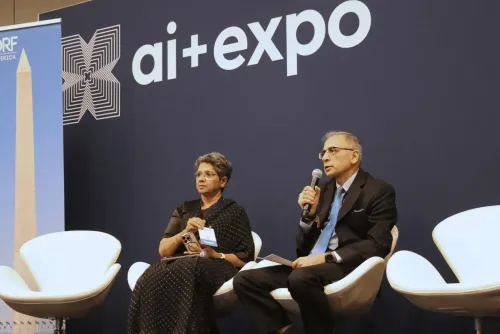
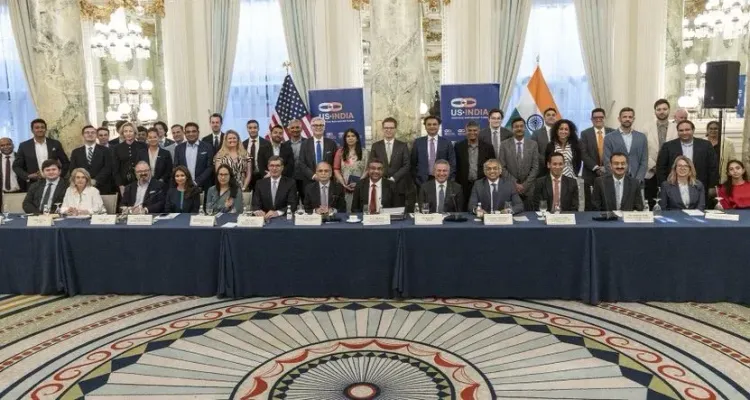
India and the US held a high-level technology roundtable in Washington on 28 June , hosted by the USISPF , Embassy of India , and Silverado Policy Accelerator .
Ambassador Vinay Kwatra said the two nations could build 'trusted, resilient technology ecosystems' spanning chips to neural networks.
Krishnan confirmed that semiconductor fabrication in India is 'now becoming a reality' and the next phase of India's Semiconductor Mission is underway.
MEA Additional Secretary K.
Nagaraj Naidu said the partnership is 'moving from principles to projects' across AI, quantum, critical minerals, and advanced energy.
Senior officials from the US Department of Commerce and US Department of Energy participated, reflecting strong federal-level US commitment.
USISPF CEO Mukesh Aghi said industry — not just government — will ultimately drive execution and investment in the partnership.
India and the United States have significantly deepened cooperation across semiconductors, artificial intelligence, quantum technologies, and critical minerals, with senior officials from both nations signalling that the bilateral technology partnership is now transitioning from broad policy frameworks to concrete projects and trusted supply chains. The shift was underscored at a high-level roundtable held in Washington on 28 June, hosted by the US-India Strategic Partnership Forum (USISPF) in partnership with the Embassy of India and the Silverado Policy Accelerator.
What Officials Said
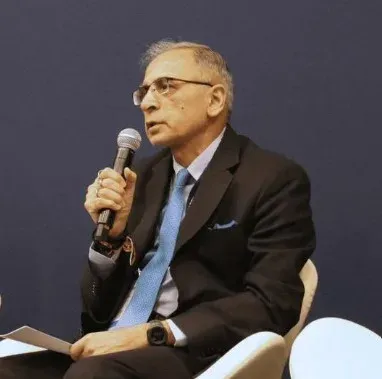
India's Ambassador to the United States, Vinay Kwatra, told the roundtable that the two countries possess complementary strengths that make collaboration in emerging technologies particularly powerful. 'The opportunity before the United States and India extends from chips to neural networks. India's mission-based approach across semiconductors, AI, and quantum technologies, combined with America's innovation ecosystem, creates enormous potential for collaboration,' he said. Kwatra added that the goal was to 'build trusted, resilient technology ecosystems while ensuring secure access to the critical infrastructure that powers these emerging technologies.'
S. Krishnan, Secretary in India's Ministry of Electronics and Information Technology (MeitY), said India's electronics manufacturing ecosystem had 'expanded dramatically' and that semiconductor fabrication was 'now becoming a reality.' He noted that the next phase of India's Semiconductor Mission would build on this momentum, and that India's talent base, digital public infrastructure, and AI capabilities created an opportunity to 'develop solutions not just for India, but for the world.'
K. Nagaraj Naidu, Additional Secretary (Americas) at the Ministry of External Affairs, described the relationship as a 'comprehensive strategic partnership fit for the 21st century,' adding that through initiatives spanning AI, quantum technologies, critical minerals, advanced energy, and trusted supply chains, the two sides were 'now moving from principles to projects.' He emphasised that the private sector would play an 'indispensable role in transforming these frameworks into real-world outcomes.'
Industry and US Government Perspectives
Mukesh Aghi, President and CEO of the USISPF, said microchips and critical minerals would define the future of the global economy, and that the United States and India were 'uniquely positioned to build the trusted technology partnership of the 21st century.' He noted that while governments could establish enabling frameworks, 'it is industry that will ultimately drive execution, innovation, and investment.'
The roundtable also featured Bill Guidera, Deputy Under Secretary for Innovation and Engagement at the US Department of Commerce, and Christopher Saldana, Deputy Assistant Secretary in the Office of Critical Minerals, Materials, and Manufacturing at the US Department of Energy — signalling high-level US federal engagement in the partnership.
Why This Moment Matters
The Washington roundtable comes amid a broader global scramble to secure semiconductor supply chains, reduce dependence on single-source chip producers, and establish trusted AI infrastructure. India's Semiconductor Mission, backed by significant government investment, has already attracted commitments from global chipmakers. This is not the first high-level dialogue on the subject — the Initiative on Critical and Emerging Technology (iCET), launched in 2023, set the strategic architecture — but the emphasis on moving 'from principles to projects' marks a notable escalation in urgency on both sides.
Organisers said closer collaboration between governments, industry, and research institutions would be essential as the two countries deepen cooperation in emerging technologies and resilient supply chains. The next steps in the partnership are expected to be driven significantly by the private sector, with USISPF positioned as a key convening body.
Point of View
Not a diplomatic pleasantry. But the gap between high-level dialogue and ground-level execution in the India-US tech corridor has been wide before: iCET was announced in 2023 with similar fanfare, and semiconductor fab timelines in India have repeatedly slipped. The presence of US Commerce and Energy department officials adds institutional weight, but the real test is whether private capital follows the convening — and on what timeline. India's leverage in this partnership is growing as Washington seeks to diversify chip supply chains away from East Asia, but that leverage is only bankable if India's Semiconductor Mission delivers fabrication capacity at scale.
NationPress
26 Sept 2026
Frequently Asked Questions
What was agreed at the India-US technology roundtable in Washington?
The roundtable, held on 28 June in Washington, focused on deepening cooperation in semiconductors, AI, quantum technologies, and critical minerals. Officials from both countries said the partnership is moving from policy frameworks to concrete projects and trusted technology supply chains, with the private sector expected to drive execution.
What is India's Semiconductor Mission and where does it stand?
India's Semiconductor Mission is a government-backed initiative to establish domestic semiconductor fabrication capacity. MeitY Secretary S. Krishnan said at the roundtable that semiconductor fabrication in India is 'now becoming a reality' and that the next phase of the mission will build on existing momentum in electronics manufacturing.
What is the USISPF and what role did it play?
The US-India Strategic Partnership Forum (USISPF) is a bilateral industry body that convenes government and private-sector dialogue between the two countries. It hosted the 28 June roundtable in partnership with the Embassy of India and the Silverado Policy Accelerator, with CEO Mukesh Aghi emphasising industry's role in translating strategic vision into tangible partnerships.
Which US government departments participated in the roundtable?
The US Department of Commerce was represented by Bill Guidera, Deputy Under Secretary for Innovation and Engagement, and the US Department of Energy by Christopher Saldana, Deputy Assistant Secretary in the Office of Critical Minerals, Materials, and Manufacturing — indicating strong federal-level engagement from the US side.
How does this roundtable connect to the broader India-US tech partnership?
The roundtable builds on the Initiative on Critical and Emerging Technology (iCET), launched in 2023, which established the strategic framework for India-US cooperation in emerging technologies. The 28 June discussions represent an effort to convert that framework into active projects, supply chain agreements, and investment commitments.