Kishan Reddy Hails Lok Sabha Passage of MMDR Amendment Bill 2026
Synopsis
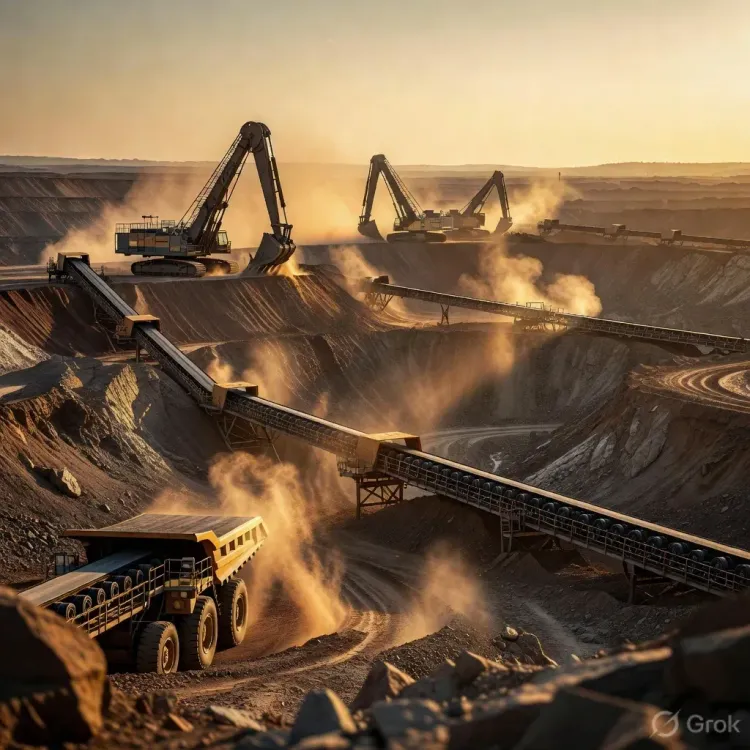
The Lok Sabha passed the Mines and Minerals (Development and Regulation) Amendment Bill, 2026 on August 12. Union Mines Minister G. Kishan Reddy called it a landmark step to bring certainty to the sector, attract investment, boost domestic production, and strengthen India's mineral security under the Viksit Bharat vision.
Key Takeaways
The Lok Sabha passed the Mines and Minerals (Development and Regulation) Amendment Bill, 2026 on August 12, 2026 .
Union Mines Minister G.
Kishan Reddy said the bill will bring 'greater certainty and predictability' to the mining sector and encourage investment.
The legislation aims to boost domestic mineral production and strengthen India's mineral security.
The reform builds on the MMDR Amendment Act of 2015 , which introduced auction-based mineral block allocation.
The bill must still pass the Rajya Sabha before becoming law; state governments will then notify implementation rules.
The push is closely linked to India's critical minerals strategy and PM Narendra Modi 's Viksit Bharat agenda.
A legislative push years in the making cleared a major hurdle on Wednesday, August 12, 2026, as the Lok Sabha passed the Mines and Minerals (Development and Regulation) Amendment Bill, 2026 — and Union Coal and Mines Minister G. Kishan Reddy wasted no time framing what it means for India's economic ambitions.
What the Lok Sabha just approved
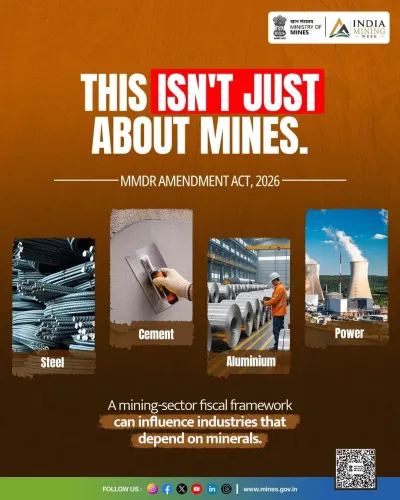
Reddy welcomed the bill's passage, stating it 'will bring greater certainty and predictability to the sector, encourage investment, boost domestic mineral production and strengthen our mineral security.' The minister expressed confidence that the reforms 'will help unlock our vast mineral potential and contribute to infrastructure, manufacturing, energy security and the growth of our economy.'
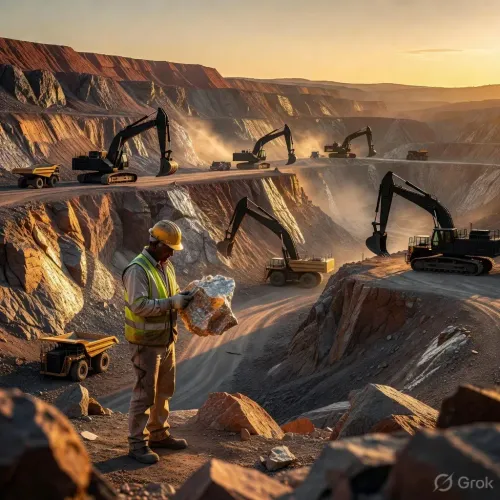
The legislation moves through Parliament as India's dependence on imported minerals — particularly critical minerals essential for electric vehicles, renewable energy infrastructure and defence manufacturing — has become a strategic pressure point. Domestic production gaps have long been identified as a vulnerability the government is now legislating its way out of.
A decade of MMDR reform — and why 2026 matters
This amendment is the latest chapter in a reform arc that began with the MMDR Amendment Act of 2015, which replaced discretionary allotments with an auction-based system for mineral block allocation. That shift was designed to eliminate opacity and cronyism from the sector. Each subsequent amendment has layered on transparency measures and investor protections — but gaps in certainty and regulatory predictability have continued to deter large-scale private capital.
The Ministry of Mines has increasingly focused on critical minerals — lithium, cobalt, nickel, rare earth elements — as India races to build supply chains for its energy transition and 'Make in India' manufacturing push. The 2026 bill, according to Reddy, is aimed squarely at closing those gaps and signalling to investors that the rules of the game are stable.
Reddy tied the legislation explicitly to Prime Minister Narendra Modi's Viksit Bharat [Developed India] vision, framing a 'stronger, more transparent and vibrant mining ecosystem' as foundational to that goal.
The road to the Rajya Sabha
Lok Sabha passage is a significant milestone, but the bill must still clear the Rajya Sabha before it can become law. After that, state governments — who hold concurrent jurisdiction over mineral resources — will need to notify rules for implementation. Mineral-rich states like Odisha, Jharkhand, Chhattisgarh and Rajasthan will be the primary arenas where the legislation's real-world impact plays out.
If the Rajya Sabha clears the bill without significant amendments, the focus shifts immediately to how swiftly the Centre and states can operationalise the new framework — and whether it delivers the investor confidence Reddy is promising.
Point of View
But the real test will be Rajya Sabha dynamics and, more critically, how mineral-rich opposition-governed states choose to implement the rules. Reddy's framing of the bill as a Viksit Bharat cornerstone is deliberate: it anchors a technocratic mining policy to a populist national vision, making opposition politically costly. Watch whether the bill's provisions on critical mineral auctions and investor protections survive the upper house intact.
NationPress
26 Sept 2026
Frequently Asked Questions
What is the MMDR Amendment Bill 2026?
The Mines and Minerals (Development and Regulation) Amendment Bill, 2026 is a legislation passed by the Lok Sabha on August 12, 2026, aimed at reforming India's mining sector to bring greater regulatory certainty, attract investment, boost domestic mineral production and strengthen mineral security.
What is the MMDR Act and why does it keep getting amended?
The Mines and Minerals (Development and Regulation) Act is the central law governing mineral extraction in India. It has been amended multiple times since 2015 — when auction-based allocation replaced discretionary allotments — to improve transparency, attract private capital and reduce import dependence on critical minerals.
What happens after the Lok Sabha passes the MMDR Amendment Bill?
The bill must be passed by the Rajya Sabha, the upper house of Parliament, before it can become law. After that, state governments — who share jurisdiction over minerals — will need to notify rules for implementation.
Why are critical minerals important for India?
Critical minerals such as lithium, cobalt and rare earth elements are essential for electric vehicles, renewable energy infrastructure, electronics and defence manufacturing. India currently depends heavily on imports for many of these, making domestic production a strategic and economic priority.
What is Viksit Bharat and how does mining reform connect to it?
Viksit Bharat, meaning 'Developed India,' is PM Narendra Modi's vision for India to become a fully developed nation. Mining reform is seen as foundational to this goal because a robust domestic minerals sector underpins infrastructure, manufacturing and energy security — all pillars of the vision.