Kishan Reddy backs Mines Amendment Act 2026 for stronger economy
Synopsis
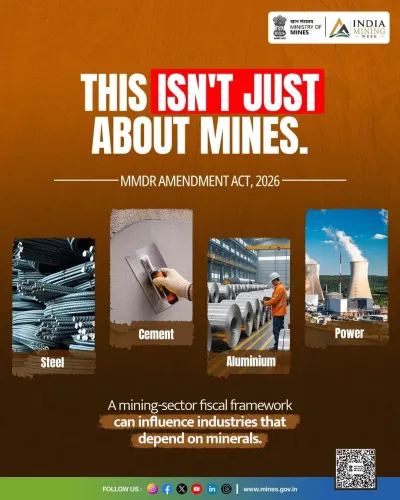
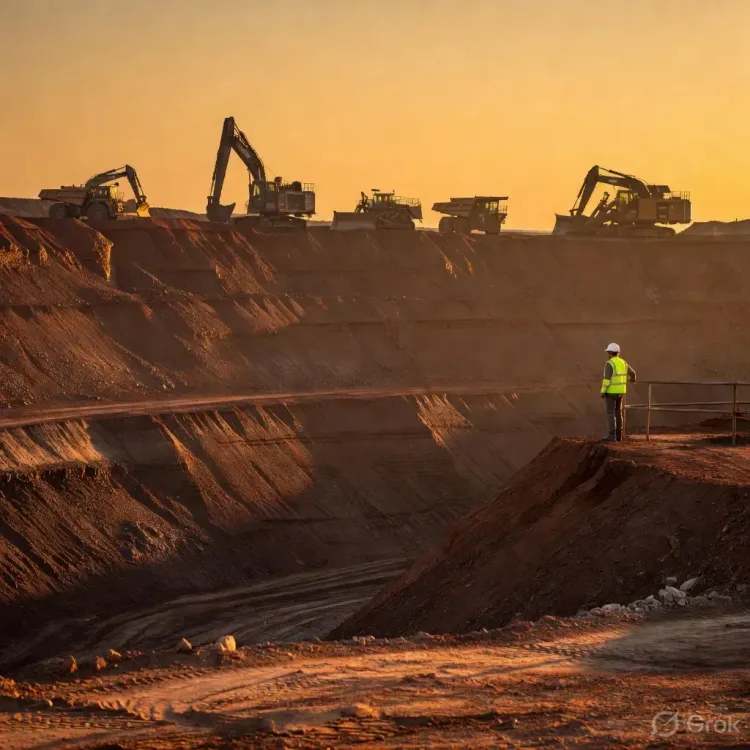
Union Minister G. Kishan Reddy backed the Mines and Minerals (Amendment) Act, 2026 on 19 August, calling it a stable, future-ready ecosystem to drive investment, boost production, secure mineral supply, and protect state revenues — the latest step in India's decades-long MMDR reform arc.
Key Takeaways
Kishan Reddy , Union Coal and Mines Minister, publicly endorsed the Mines and Minerals (Amendment) Act, 2026 on 19 August 2026 .
The Act is framed around four pillars: policy certainty, investment and production growth, mineral availability, and sustainable state revenues.
It continues a reform lineage stretching from the original MMDR Act, 1957 through the landmark 2015 auction-based overhaul .
The amendment is positioned as part of the Atmanirbhar Bharat push to reduce India's dependence on imported critical minerals.
State governments are key stakeholders, with the framework explicitly designed to protect royalty and auction-based revenue streams.
Next steps hinge on Parliamentary passage, state notifications, and new mineral block auction calendars.
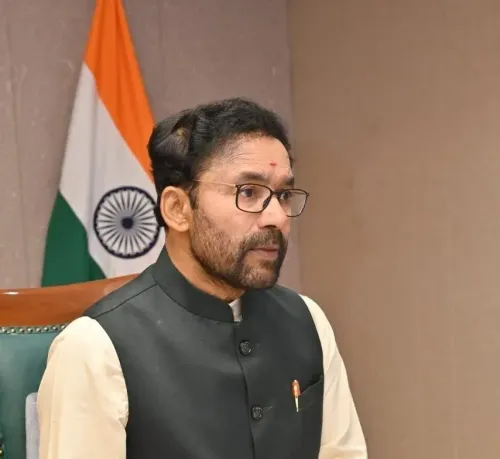
A stronger mining sector is the foundation of a stronger economy — and Union Coal and Mines Minister G. Kishan Reddy made that case explicitly on Wednesday, 19 August 2026, throwing his weight behind the Mines and Minerals (Amendment) Act, 2026 as a framework built for the long haul.
Posting on X, the Minister described the legislation as aimed at creating 'a stable and future-ready mining ecosystem' — one that delivers policy certainty, draws fresh investment, boosts production, secures mineral supply, and protects state revenue streams. The hashtag #MMDR2026 tagged alongside signals an active government communications push around the amendment.
Six decades of MMDR reform — and why 2026 is the next step
India's foundational mining law, the Mines and Minerals (Development and Regulation) Act, 1957, has been overhauled in waves. The landmark 2015 amendment scrapped the old first-come-first-served system for mineral concessions and replaced it with competitive auctions — a structural shift designed to bring transparency and maximise state revenues from royalties and block sales. The 2026 amendment is the latest iteration in that lineage, with Reddy framing it as a progressive leap rather than a patch.
The policy emphasis on 'greater policy certainty' speaks directly to a persistent investor complaint: that frequent regulatory changes and legal disputes over mining leases have kept capital on the sidelines. Stable rules, the argument goes, unlock long-term commitments from both domestic and foreign mining companies.
Atmanirbhar Bharat's upstream bet
The amendment lands squarely within the government's broader Atmanirbhar Bharat strategy — the self-reliance drive that seeks to strengthen upstream supply chains for manufacturing and the energy transition. India's dependence on imported critical minerals, from lithium to cobalt, has become a strategic vulnerability as the country scales up electric vehicles, batteries, and clean energy infrastructure. A more productive domestic mining sector is one lever to reduce that exposure.
State governments are a critical stakeholder in this calculus. Mining royalties and auction premiums feed directly into state revenues, and any framework that promises 'sustainable State revenues' — as Reddy's post explicitly does — is designed to bring state administrations on board as willing partners rather than reluctant regulators.
What happens next: Parliament, notifications, and auction calendars
The immediate watch-points are Parliamentary introduction and passage of the Amendment Bill, followed by state-level notifications and the release of new mineral block auction calendars. How quickly states move to operationalise the new framework will determine whether the 2026 amendment translates into actual production gains — or remains a policy document.
India's mining liberalisation has moved in increments for seven decades. The question the Ministry of Mines now faces is whether this amendment is the one that finally closes the gap between policy intent and ground-level output.
Point of View
Who have historically resisted central mining reforms they see as encroaching on their fiscal turf. More broadly, the 2026 amendment fits a pattern in which the BJP-led Centre uses legislative milestones to reinforce the Atmanirbhar Bharat brand, particularly in sectors — critical minerals, energy transition — where import dependence is a visible strategic liability. The real test will be execution speed at the state level, where previous MMDR amendments have stalled.
NationPress
5 Oct 2026
Frequently Asked Questions
What is the Mines and Minerals Amendment Act 2026?
The Mines and Minerals (Amendment) Act, 2026 is the latest overhaul of India's foundational mining law, aimed at creating a stable, investment-friendly mining ecosystem with greater policy certainty, stronger mineral availability, and sustainable revenues for state governments.
What did G. Kishan Reddy say about MMDR 2026?
Union Coal and Mines Minister G. Kishan Reddy described the 2026 amendment as a 'progressive framework for a self-reliant India,' saying it would enable policy certainty, encourage investment and production, and ensure sustainable state revenues.
How is MMDR 2026 different from the 2015 mining reform?
The 2015 MMDR amendment replaced first-come-first-served mineral concessions with competitive auctions to boost transparency and state revenues. The 2026 amendment builds on that base, focusing on investment stability, mineral security, and a future-ready regulatory ecosystem.
How does the mining amendment connect to Atmanirbhar Bharat?
The amendment is part of India's Atmanirbhar Bharat self-reliance drive, which seeks to strengthen domestic mining output and reduce dependence on imported critical minerals needed for manufacturing, electric vehicles, and clean energy.
What are the next steps after the Mines and Minerals Amendment Act 2026?
The immediate steps include Parliamentary introduction and passage of the Amendment Bill, followed by state government notifications and the release of new mineral block auction calendars to operationalise the framework.