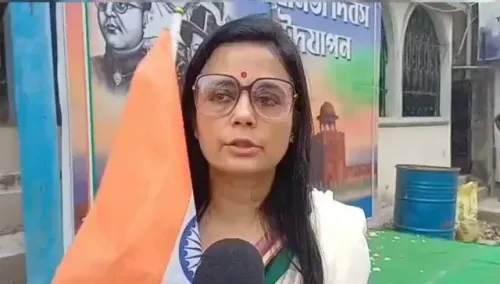
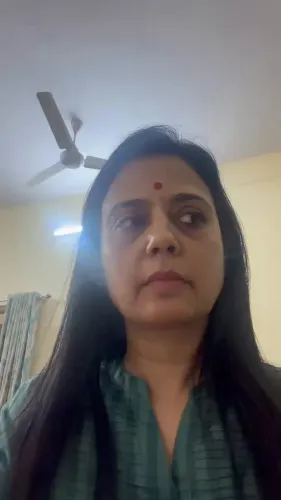
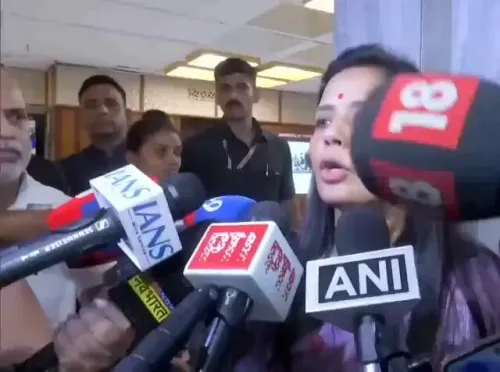
Mahua Moitra Appeals to IPU Over Lok Sabha Speaker's Inaction
Synopsis
TMC MP Mahua Moitra publicly appealed to the Inter-Parliamentary Union on 5 October 2026, accusing Lok Sabha Speaker Om Birla of ignoring IPU guidelines on Opposition rights and failing to act on a joint all-Opposition Breach of Privilege demand for two months.
Key Takeaways
TMC MP Mahua Moitra publicly wrote to the Inter-Parliamentary Union (IPU) on 5 October 2026 , seeking intervention in her privilege case.
She accused Lok Sabha Speaker Om Birla of attending IPU Assemblies while flouting the body's own guidelines on Opposition MPs' rights.
All Opposition parties jointly wrote to the Speaker demanding a Breach of Privilege action in Moitra's case.
After two months , the Speaker's office has issued neither a response nor any action on that joint demand.
The post is the first in a three-part thread , suggesting further evidence or demands were shared in subsequent posts.
The IPU, comprising over 180 member parliaments , has established guidelines on the rights and protections of individual legislators.
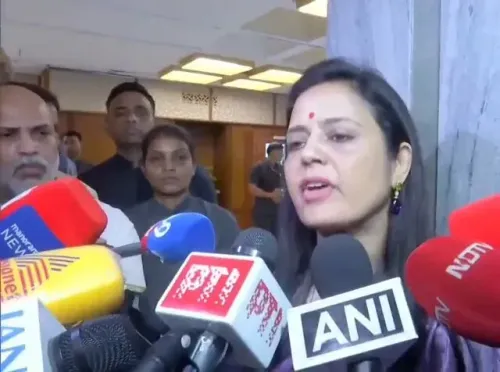
Two months of silence from the Lok Sabha Speaker's office — and now TMC MP Mahua Moitra is taking her fight to an international forum. In a pointed public appeal on 5 October 2026, the Krishnanagar MP wrote directly to the Inter-Parliamentary Union (IPU), accusing Lok Sabha Speaker Om Birla of attending IPU Assemblies and dispatching ruling party MPs to IPU conferences while systematically ignoring the body's own guidelines on the rights of Opposition parliamentarians.
The post — the first in a thread of at least three — lays out Moitra's central charge: that all Opposition parties collectively wrote to the Speaker demanding that a Breach of Privilege motion be taken up in her case, and that two months on, neither action nor even an acknowledgement has followed. Her closing line — 'Can we expect some help from you?' — is as much a diplomatic signal as a political one, inviting the Geneva-based IPU to scrutinise conditions inside India's lower house.
What the IPU's Own Standards Say About Opposition MPs
The Inter-Parliamentary Union, founded in 1889 and now comprising over 180 member parliaments, has long published guidelines and declarations on the rights and immunities of individual legislators — including the right to speak, the right to be heard, and protections from punitive measures without due process. Moitra's appeal essentially holds the Speaker to the standards his own parliament has subscribed to by virtue of India's IPU membership.
A Breach of Privilege motion is one of Parliament's most serious instruments: it invokes the collective dignity of the House when a member believes her rights as a legislator have been violated. If the Speaker declines to admit such a motion — or simply does not respond — the member has no conventional domestic escalation path left, which is precisely why Moitra has turned outward.
A Pattern Opposition Parties Are Calling Deliberate
The fact that all Opposition parties — not just the TMC — signed on to the Breach of Privilege demand signals that this is not a solo grievance. It represents a cross-party consensus that procedural safeguards for the Opposition inside the current Lok Sabha are being eroded. The Speaker's two-month non-response to a joint Opposition letter amplifies that concern: conventions of parliamentary courtesy, let alone statutory obligation, generally require at least an acknowledgement.
Moitra's pivot to the IPU is a calibrated escalation. By framing the issue in the language of international parliamentary standards rather than partisan combat, she shifts the terrain from domestic political noise to institutional accountability — a move harder for the ruling side to dismiss as mere Opposition theatrics.
What Happens Next in the Thread — and in Parliament
The post is explicitly marked 1/3, meaning at least two further instalments were released with additional detail, evidence, or demands. With Parliament's next session on the horizon, the IPU outreach could translate into formal correspondence, a query from the IPU's Committee on the Human Rights of Parliamentarians, or simply sustained international attention — each of which raises the political cost of continued silence.
Whether the IPU acts or not, Moitra has ensured that the Speaker's record on Opposition rights is now part of an international conversation — one that Geneva, not just Sansad Marg, will be watching.
Point of View
And even a formal inquiry would carry diplomatic weight the ruling side would have to manage.
NationPress
5 Oct 2026
Frequently Asked Questions
Why did Mahua Moitra write to the IPU?
Mahua Moitra wrote to the Inter-Parliamentary Union because the Lok Sabha Speaker did not respond to a joint all-Opposition demand for Breach of Privilege action in her case for two months, leaving her with no domestic escalation route.
What is a Breach of Privilege motion in Indian Parliament?
A Breach of Privilege motion is a formal complaint that a member's rights as a legislator have been violated; the Speaker decides whether to admit it for the House to examine.
What is the Inter-Parliamentary Union (IPU)?
The IPU, founded in 1889 and based in Geneva, is the global organisation of national parliaments with over 180 member assemblies; it sets guidelines on legislators' rights and runs a committee on the human rights of parliamentarians.
Which parties signed the letter to the Lok Sabha Speaker on Mahua Moitra's privilege case?
According to Moitra's post, all Opposition parties collectively signed the letter demanding Breach of Privilege action, though she did not name each party individually in this instalment.
Can the IPU compel the Lok Sabha Speaker to act?
The IPU cannot directly compel a national parliament, but its Committee on the Human Rights of Parliamentarians can open formal inquiries, correspond with governments, and generate international diplomatic attention that raises the political cost of inaction.