Rijiju Fires Back at Kharge Over Election Commission Barb

Synopsis
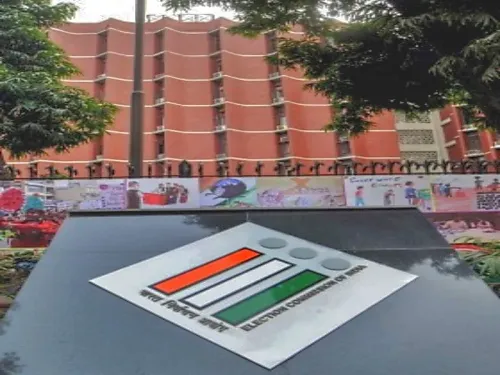
Union Minister Kiren Rijiju fired back at Congress president Mallikarjun Kharge's criticism of the Election Commission, asking why Congress's own Telangana victory is not 'illegal' by that logic, and telling Kharge to win voters rather than blame institutions.
Key Takeaways
Kiren Rijiju publicly replied to Congress president Mallikarjun Kharge on 5 October 2026 over remarks targeting the Election Commission of India.
Rijiju pointed to the Congress-governed Telangana as a contradiction — if the ECI is compromised, he argued, that state win is equally suspect.
The minister told Kharge to 'win the heart of the voters' rather than 'accusing the Election Commission of India.' The exchange underlines a recurring BJP counter-narrative: Opposition ECI critiques are strategic deflection, not genuine institutional concern.
No specific election or ECI ruling was cited by either leader in the immediate exchange — the debate remains at the level of broad credibility.
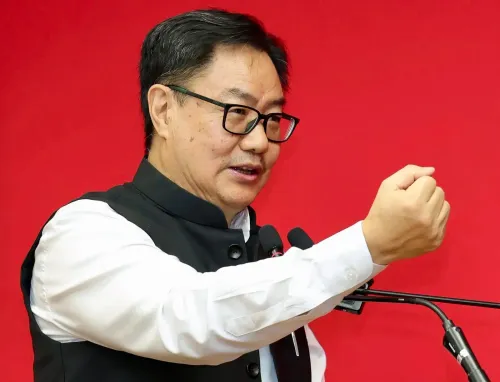
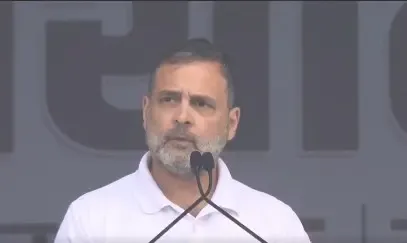
A sharp political exchange crackled across social media on Monday when Union Parliamentary Affairs and Minority Affairs Minister Kiren Rijiju clapped back at Congress president Mallikarjun Kharge, turning the senior Opposition leader's own logic against him in a pointed public retort.
Rijiju's reply cuts straight to a contradiction he sees in the Congress position: if the Election Commission of India (ECI) is corrupt or biased — as Kharge's camp has repeatedly alleged — then how does the Opposition explain its own victories? 'And Congress ATM, Telangana Chief Minister also illegal?' Rijiju wrote, a reference to Congress Chief Minister Revanth Reddy, whose government in Telangana was itself delivered by the same election machinery the party now questions.
The ECI Credibility Debate That Won't Go Away
Allegations against the Election Commission have become a recurring motif in Indian opposition politics, surfacing after almost every major electoral setback. The logic Rijiju dismantles here is a familiar one in democratic discourse worldwide: a losing side impugns the referee, while the same referee's decisions in the winner's favour go unchallenged. His point is blunt — you cannot selectively trust an institution only when it rules in your favour.
Rijiju's Message to Kharge: Win Voters, Not Arguments
The minister's closing line carries the real sting: 'Kharge ji, you need to win the heart of the voters to win the election, not by accusing the Election Commission of India!' It reframes the entire debate — away from institutional credibility and toward electoral strategy, essentially telling the Congress chief that blaming the umpire is a substitute for, not a path to, political relevance. For the BJP, this is a well-worn but effective counterpunch: position any ECI critique as sour-grapes defeatism rather than legitimate democratic concern.
The exchange reflects a pattern that has intensified ahead of state and national electoral cycles, where the credibility of constitutional bodies becomes a proxy battleground for parties staking out their narratives well before a single vote is cast.
Point of View
He forces Kharge into an uncomfortable corner — either defend the ECI or implicitly delegitimise a Congress state government. What makes this moment broader than a social-media spat is what it signals about pre-election positioning: both sides are already fighting over who controls the narrative around institutional trust, a contest that will intensify as electoral calendars fill up.
NationPress
5 Oct 2026
Frequently Asked Questions
Why did Kiren Rijiju respond to Mallikarjun Kharge about the Election Commission?
Rijiju responded to counter Kharge's apparent criticism of the Election Commission of India, arguing that if the ECI were truly biased, Congress's own Telangana election victory would also be illegitimate.
What did Rijiju say about the Telangana Chief Minister?
Rijiju asked rhetorically whether the Congress Telangana Chief Minister's election was also 'illegal,' highlighting what he called a contradiction in Congress's stance on the Election Commission.
What is the Congress party's main allegation against the Election Commission?
The Congress party has repeatedly questioned the Election Commission's impartiality, especially following electoral defeats, though no specific new ruling was cited in this particular exchange.
Who is Mallikarjun Kharge?
Mallikarjun Kharge is the president of the Indian National Congress, the principal opposition party, and a veteran politician from Karnataka.
What was the core message of Rijiju's reply to Kharge?
Rijiju's core message was that winning elections requires earning voters' trust, not blaming constitutional bodies like the Election Commission of India for political losses.