Kishan Reddy defends MMDR 2026 as balance of state and centre
Synopsis
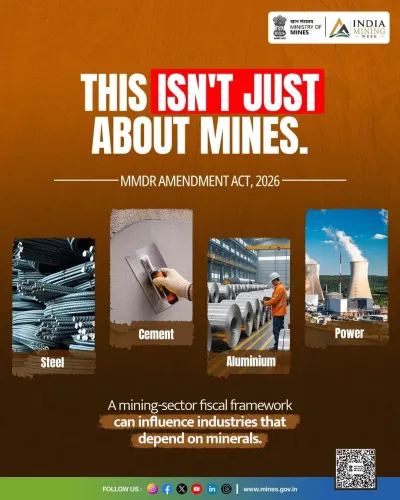
Union Mines Minister G. Kishan Reddy on 19 August 2026 defended the Mines and Minerals (Amendment) Act, 2026, arguing it preserves state authority while bringing greater balance and stability to India's mining governance framework — the latest step in a decade-long MMDR reform cycle.
Key Takeaways
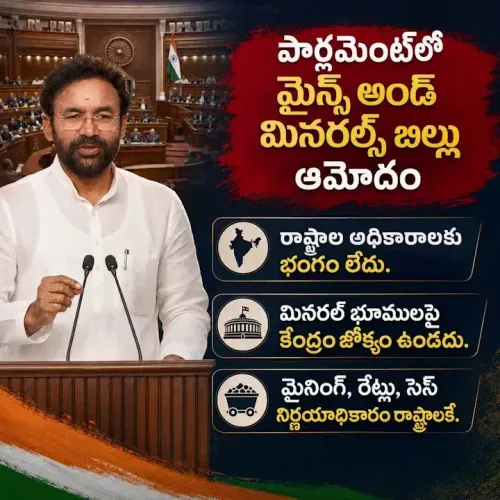
Kishan Reddy publicly backed the Mines and Minerals (Amendment) Act, 2026 on 19 August 2026 , framing it as protective of state authority.
The amendment is the latest in a series dating to 2015 , when auction-based lease allocation replaced the first-come-first-served system.
The 2021 MMDR amendment had already removed end-use restrictions on captive mines, allowing open-market mineral sales.
The original MMDR Act dates to 1957 and has been amended repeatedly to balance central policy goals with state fiscal and regulatory interests.
Implementation rules from the Ministry of Mines and potential legal challenges from state governments are the next critical milestones to watch.
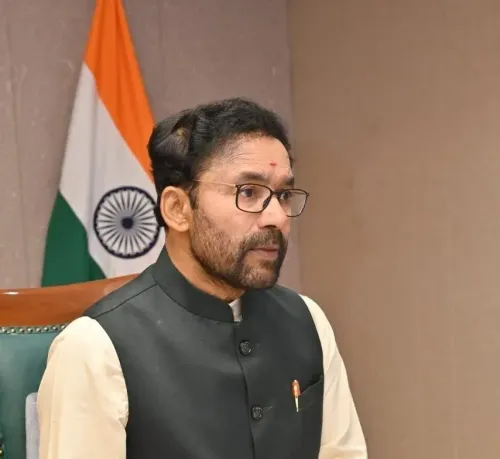
A decade of mining-sector reform just got its next chapter. On Wednesday, 19 August 2026, Union Coal and Mines Minister G. Kishan Reddy took to X to frame the newly enacted Mines and Minerals (Amendment) Act, 2026 as a framework that keeps state authority intact while injecting fresh stability into India's mineral governance architecture.
What the minister is signalling — and why it matters
Reddy's post is deliberate in its sequencing: states' authority comes first in his framing, balance and stability second. That ordering is not accidental. Every major MMDR amendment since 2015 has attracted pushback from mineral-rich states — Jharkhand, Odisha, Chhattisgarh, Rajasthan — wary of the Centre encroaching on royalties, lease revenues, and regulatory turf. By leading with 'States' authority intact,' the minister is pre-empting that friction.
The Ministry of Mines has been the engine of this reform cycle. The 2015 amendment replaced the old first-come-first-served lease system with competitive auctions — a structural overhaul that boosted transparency but triggered years of litigation. The 2021 amendment went further, lifting end-use restrictions on captive mines and allowing them to sell minerals on the open market, unlocking supply that had been locked inside integrated steel and cement plants.
The 2026 amendment's place in a decade-long arc
The Mines and Minerals (Development and Regulation) Act dates to 1957 — a Nehruvian-era statute built for a command economy. Successive governments have layered amendments onto it, each one attempting to reconcile three competing pressures: attracting private and foreign capital, preserving state fiscal interests, and reducing the litigation that has historically paralysed lease grants.
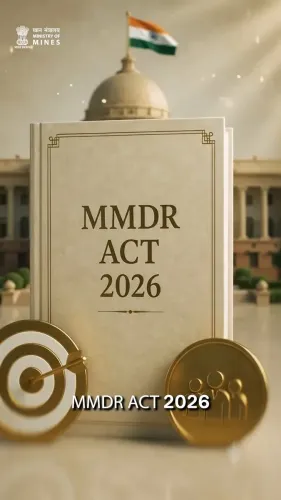
The 2026 iteration, tagged #MMDR2026 by the minister, is presented as the next increment in that balancing act. Reddy's phrase 'sustainable mining and a stronger economy' links the amendment to both environmental optics and macroeconomic ambition — a dual framing that has become standard in mining-sector communication from New Delhi.
What state governments and investors will watch next
The real test of any MMDR amendment is in the rules and guidelines the Ministry of Mines issues after passage — the operational fine print that determines whether states retain meaningful discretion or find their powers hollowed out in practice. Legal challenges from state governments have followed previous amendments, and the 2026 Act is unlikely to be immune.
Mining companies, meanwhile, will parse the rules for clarity on lease timelines, royalty structures, and dispute-resolution mechanisms — the three variables that most directly determine whether capital flows into greenfield projects or stays on the sidelines.
India's mineral ambitions — critical minerals for the energy transition, steel for infrastructure, coal for baseload power — depend on getting that federal compact right. The minister's post plants a flag. The rules that follow will tell the real story.
Point of View
Reddy is attempting to insulate the 2026 Act from the coalition politics and legal challenges that dogged its predecessors. The amendment fits a decade-long BJP-era pattern of using legislative reform to accelerate mineral auctions and attract private capital, while deploying federal reassurances to manage state-level resistance. Whether the fine print of the implementing rules matches that reassurance will determine the Act's political and economic legacy.
NationPress
5 Oct 2026
Frequently Asked Questions
What is the Mines and Minerals Amendment Act 2026?
The Mines and Minerals (Amendment) Act, 2026 is the latest amendment to India's foundational 1957 mining law. Union Mines Minister G. Kishan Reddy has described it as preserving state authority while bringing greater balance and stability to the mineral governance framework.
How does MMDR 2026 affect state governments?
According to Minister Kishan Reddy, the 2026 amendment keeps states' authority intact. However, the operational impact will depend on the rules and guidelines issued by the Ministry of Mines after the Act's enactment — these details are what state governments will scrutinise closely.
What were the previous MMDR amendments?
The MMDR Act of 1957 was significantly amended in 2015 to introduce auction-based mining lease allocation, replacing the first-come-first-served system. The 2021 amendment removed end-use restrictions on captive mines, allowing them to sell minerals on the open market.
Who is G. Kishan Reddy?
G. Kishan Reddy is the Union Minister of Coal and Mines in the Government of India and also serves as the BJP's Telangana state president. He oversees the Ministry of Mines, which is responsible for mineral policy and regulation.
What happens next after the MMDR 2026 amendment?
The Ministry of Mines is expected to issue implementing rules and guidelines that will define how the amendment works in practice. State governments and mining companies will study these rules closely, and legal challenges from states are possible, as has occurred after previous MMDR amendments.