India-US semiconductor and AI partnership moves into industrial execution phase
Synopsis
What began as a strategic framework in February 2025 is now a live industrial programme: India and the US are co-building semiconductor fabs, AI data centres, and a critical minerals supply chain — all explicitly designed to reduce dependence on China. With Big Tech pouring billions in and National Security Advisors steering the agenda, this is less a trade deal and more a structural rewiring of global tech supply chains.
Key Takeaways
The India-US TRUST Initiative , launched in February 2025 by PM Modi and President Trump , has moved from dialogue to industrial execution.
The Shakti Semiconductor Fab is developing compound semiconductors for EV and aerospace applications, with General Atomics , Synopsys , and 3rdiTech among partners.
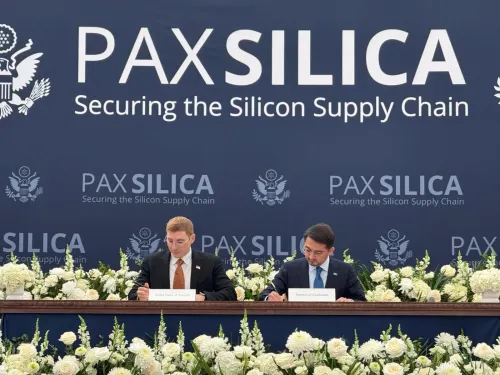
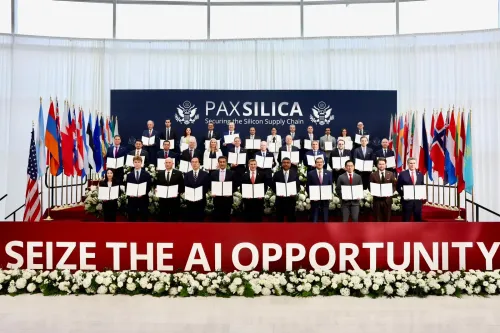
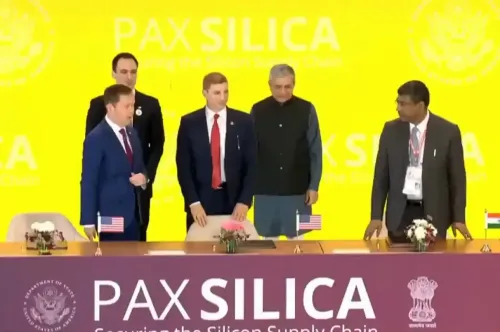
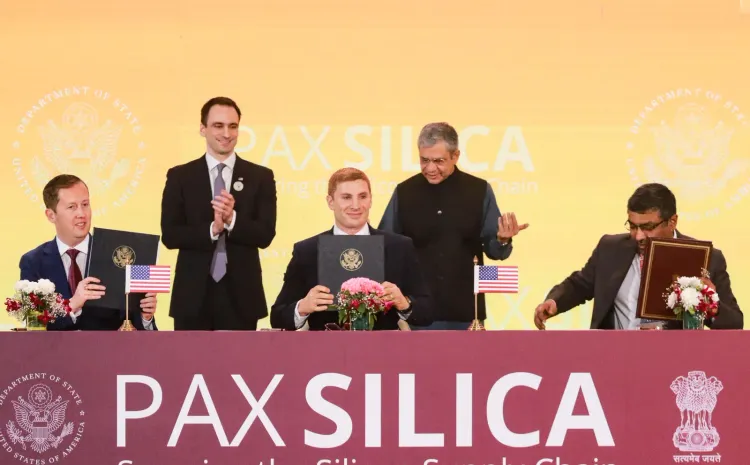
India has joined the PAX Silica Declaration , a US-led coalition for secure AI, semiconductor, and critical mineral supply chains.
Amazon , Microsoft , and Google are making multi-billion-dollar investments in India's cloud and data-centre infrastructure.
A critical minerals and rare earths pact was signed during Secretary of State Marco Rubio's visit, targeting supply-chain resilience against single-source monopolies.
The partnership is jointly steered by the National Security Advisors of both countries, merging commercial and security objectives.
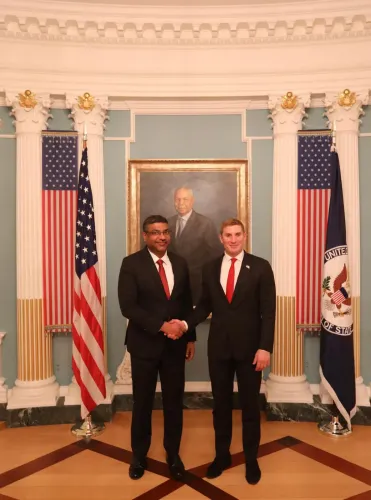
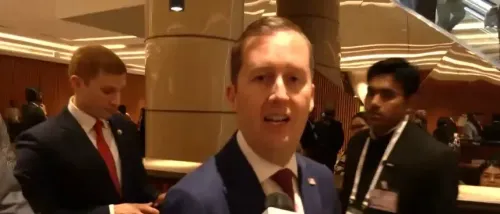
The India-US partnership in semiconductors and artificial intelligence (AI) has shifted decisively from strategic dialogue to industrial execution, anchored by the US-India TRUST Initiative and the PAX Silica Declaration. The transition, which accelerated following US Secretary of State Marco Rubio's recent visit to New Delhi, is now focused on building trusted technology supply chains, expanding computational capacity, and launching joint research and development projects.
Origins of the TRUST Framework
The strategic vision was first articulated in February 2025, when Prime Minister Narendra Modi and US President Donald Trump jointly outlined the Transforming the Relationship Utilizing Strategic Technologies (TRUST) initiative. The framework was designed to inject fresh momentum into AI-driven innovation and deploy emerging technologies for broader human prosperity, according to senior officials.
Since then, the initiative has moved rapidly from vision to implementation, with both governments aligning commercial digitisation goals with national security imperatives. The partnership is jointly steered by the National Security Advisors of both countries.
Semiconductor Manufacturing and Industrial Partnerships
A central pillar of the collaboration is defence and commercial semiconductor manufacturing. The Shakti Semiconductor Fab is among the flagship projects, developing compound semiconductors for electric vehicle (EV) and aerospace applications.
US companies including General Atomics and Synopsys are partnering with Indian entities such as 3rdiTech to validate chip designs and train a robust engineering workforce, officials said. By formally joining the PAX Silica Declaration — a US-led strategic coalition for secure and resilient supply chains in AI, semiconductors, and critical minerals — India has consolidated its position within a select global network aimed at reducing dependence on adversarial nations.
AI Infrastructure and Big Tech Investment
The two governments are actively developing an AI Infrastructure Roadmap to overcome constraints in financing, powering, and scaling large-scale US-origin AI infrastructure within India. American technology companies are also seeking access to India's fast-growing AI market, and the US views India as a critical partner for building AI infrastructure outside China.
Tech giants including Amazon, Microsoft, and Google are making multi-billion-dollar investments to expand India's cloud networks and local data-centre capabilities. Both governments are aligned on reciprocal compute access and shared regulatory frameworks, with the stated aim of empowering startups and driving cross-border innovation without restrictive AI-diffusion policies.
Critical Minerals Pact: Reducing China Dependence
During Rubio's visit, India and the US signed a strategic agreement deepening cooperation in critical minerals and rare earths — foundational materials used in semiconductors, EVs, solar panels, and high-tech defence products. The pact is explicitly framed against the backdrop of China's dominance over these inputs, which critics argue gives Beijing the leverage to disrupt global supply chains.
Rubio stated that the agreement was signed because India and the US 'have a strategic and shared interest in the fact that vibrant innovation economies such as ours cannot afford to leave the foundational materials of these industries vulnerable to single source monopolies that could deny us these things, not just in a time of conflict, but as a leverage point contrary to our sovereign national interests.'
The agreement also opens the door for joint financing and investment in critical mineral and rare earth ventures, securing the raw materials necessary for semiconductor fabrication and defence technologies.
What Comes Next
With industrial partnerships now operational and a critical minerals pact in place, the focus is expected to shift to scaling execution — particularly on financing frameworks for AI infrastructure and verifiable workforce development targets in the semiconductor sector. The trajectory of this partnership will be closely watched as a template for US technology alliances in the Indo-Pacific.
Point of View
And the real test for the TRUST Initiative is whether the Shakti Fab and allied projects produce verified output at scale, not just MoUs. The critical minerals pact is arguably the more durable achievement: it locks in a supply-chain architecture that is difficult to reverse regardless of political cycles. What mainstream coverage underplays is the national security architecture underneath — with NSAs steering the agenda, this is not a commerce ministry deal. It is a technology alliance with defence implications, and that framing changes both the durability and the stakes of every commitment made under it.
NationPress
21 Oct 2026
Frequently Asked Questions
What is the India-US TRUST Initiative?
The TRUST Initiative — Transforming the Relationship Utilizing Strategic Technologies — is a bilateral framework launched in February 2025 by PM Narendra Modi and President Donald Trump to drive collaboration in AI, semiconductors, and critical technologies. It is jointly steered by the National Security Advisors of both countries, merging commercial and security goals.
What is the PAX Silica Declaration and why has India joined it?
The PAX Silica Declaration is a US-led strategic coalition aimed at building secure, resilient supply chains for AI, semiconductors, and critical minerals. India joined to reduce dependence on adversarial nations — primarily China — for foundational technology inputs, and to integrate into a trusted global network of technology partners.
What is the Shakti Semiconductor Fab?
The Shakti Semiconductor Fab is a flagship project under the India-US semiconductor partnership, focused on developing compound semiconductors for electric vehicle and aerospace applications. US firms General Atomics and Synopsys are partnering with Indian entity 3rdiTech on design validation and workforce training.
What does the critical minerals pact signed during Rubio's visit cover?
The agreement deepens India-US cooperation in critical minerals and rare earths — materials essential for semiconductors, EVs, solar panels, and defence products. It opens the door for joint financing and investment in mining and processing ventures, explicitly aimed at countering China's dominance over these supply chains.
Which US tech companies are investing in India's AI infrastructure?
Amazon, Microsoft, and Google are among the US tech giants making multi-billion-dollar investments to expand India's cloud networks and data-centre capabilities. The US views India as a key destination for building large-scale AI infrastructure outside China.