India-US semiconductor and AI talks: Key outcomes from Washington meeting
Synopsis
India and the US are no longer treating semiconductors, AI, and critical minerals as separate policy tracks — they are linking them into a single supply-chain resilience agenda. The Washington meeting between MeitY's S. Krishnan and US Under Secretary Jacob S. Helberg signals that iCET is maturing from a vision document into an operational framework, with a $1 trillion global chip industry and a one-million-professional talent gap as the backdrop.
Key Takeaways
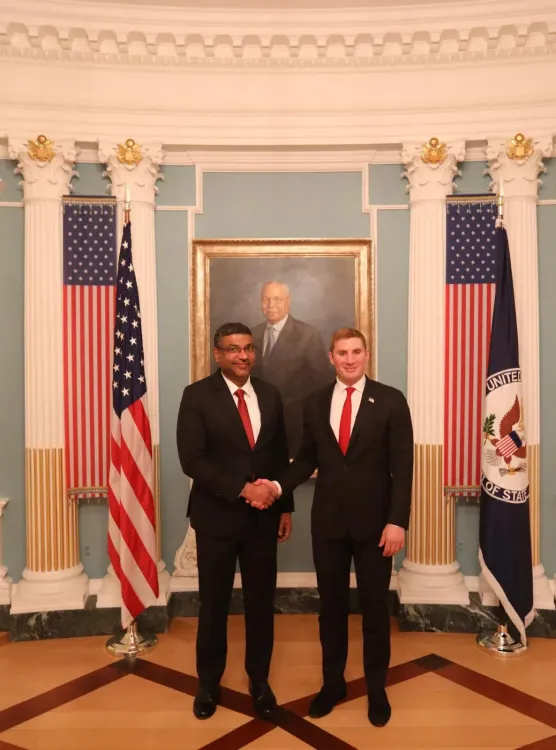
Krishnan met US Under Secretary of State Jacob S.
Helberg in Washington on 25 June to deepen bilateral technology cooperation.
Talks covered semiconductor manufacturing , AI adoption , trusted supply chains, and access to critical minerals .
The global semiconductor industry is valued at approximately $800 billion and is projected to cross $1 trillion within a year, according to Minister Ashwini Vaishnaw .
An estimated one million new semiconductor jobs are expected globally by 2032 , against a current shortage of nearly one million skilled professionals .
The discussions build on the India-US initiative on Critical and Emerging Technology ( iCET ) framework.
India and the United States held a high-level bilateral meeting in Washington on 25 June to explore deeper cooperation in semiconductor manufacturing, artificial intelligence (AI), trusted supply chains, and critical minerals — sectors both nations regard as strategically indispensable. The meeting underscores a sharpening technology partnership between the world's largest and most populous democracies.
Key Discussions
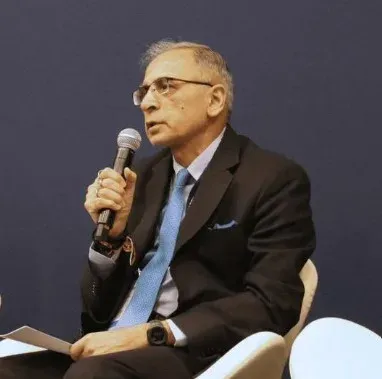
S. Krishnan, Secretary of the Ministry of Electronics and Information Technology (MeitY), met Jacob S. Helberg, US Under Secretary of State, to chart avenues for expanding bilateral technology collaboration. The Embassy of India in Washington confirmed the meeting via a post on social media platform X.
'MeitY Secretary S. Krishnan met with US Under Secretary of State Jacob S. Helberg to deepen bilateral technological cooperation,' the Embassy stated. The two sides examined opportunities in building diversified and trusted supply chains, with particular emphasis on semiconductor manufacturing and AI adoption.
Critical Minerals on the Agenda
A significant portion of the talks centred on securing reliable access to critical minerals — raw materials increasingly vital for advanced manufacturing, clean energy technologies, and other strategic industries. Both governments have flagged supply chain concentration risks, particularly given China's dominance in rare earth processing, and the discussions reflect a shared intent to reduce those dependencies.
This comes amid a broader India-US push under the initiative on Critical and Emerging Technology (iCET), which has progressively expanded its scope since its launch to cover defence, space, and now deeper supply-chain integration.
India's Semiconductor Talent Opportunity
The Washington talks follow remarks earlier this month by Union Minister for Electronics and Information Technology Ashwini Vaishnaw, who highlighted a global semiconductor talent crunch. According to the minister, the global semiconductor industry — currently valued at around $800 billion — is expected to cross the $1 trillion mark within a year.
'By 2032, around one million jobs are expected to emerge in the semiconductor sector globally. At the same time, the industry is facing a shortage of nearly one million skilled professionals,' Vaishnaw had said. India, with its large engineering talent pool, is positioning itself as a key supplier of skilled labour for this gap.
What This Signals
Notably, the meeting's agenda — spanning semiconductors, AI, and critical minerals simultaneously — reflects a more integrated approach to technology diplomacy than earlier bilateral exchanges, which tended to treat these as separate tracks. Both nations appear to be converging on a framework that links supply chain resilience with talent development and raw material security.
The next steps will likely involve working-group level engagements to translate the high-level intent into concrete agreements, investment commitments, and possibly joint research frameworks in AI and semiconductor design.
Point of View
AI, and critical minerals are being treated as a single strategic stack rather than separate bilateral files. That integration matters because the real chokepoints in advanced technology are not design or software — they are the minerals that feed fabrication and the talent that runs it. India's pitch on the talent side is credible given its engineering output, but converting that into a durable supply-chain role requires investment in domestic chip design and fabrication capacity that remains nascent. The $800 billion-to-$1 trillion chip market projection also raises the stakes: if India does not lock in agreements now, the window to become a structural partner — rather than a peripheral supplier — may narrow as the US consolidates its semiconductor alliances with Japan, South Korea, and the Netherlands.
NationPress
23 Sept 2026
Frequently Asked Questions
What did India and the US discuss at the Washington technology meeting on 25 June?
The two sides discussed expanding bilateral cooperation in semiconductor manufacturing, AI adoption, trusted supply chains, and securing access to critical minerals. MeitY Secretary S. Krishnan and US Under Secretary of State Jacob S. Helberg led the discussions.
Who represented India and the US at the meeting?
India was represented by S. Krishnan , Secretary of the Ministry of Electronics and Information Technology (MeitY). The US side was led by Jacob S. Helberg , Under Secretary of State.
Why are critical minerals central to India-US technology talks?
Critical minerals are essential inputs for advanced semiconductor manufacturing, clean energy technologies, and strategic industries. Both India and the US are seeking to diversify supply chains away from concentrated sources, making joint access strategies a priority.
What is the scale of the global semiconductor talent shortage?
According to Union Minister Ashwini Vaishnaw, the global semiconductor industry faces a shortage of nearly one million skilled professionals, even as around one million new jobs are expected to emerge in the sector by 2032. India is positioning itself as a key talent supplier to fill this gap.
How does this meeting fit into the broader India-US technology partnership?
The talks are part of the India-US initiative on Critical and Emerging Technology (iCET), which has expanded to cover defence, space, semiconductors, and AI. The 25 June meeting signals a move toward more integrated, supply-chain-linked cooperation across these domains.