Pax Silica expands to 24 nations: India backs US AI supply chain push
Synopsis
Washington's Pax Silica initiative — barely six months old — has already drawn 35 countries into a US-led AI and supply chain alliance. India's place as an existing member, and Under Secretary Helberg's pointed remarks about deepening semiconductor and critical minerals cooperation with New Delhi, signal that the initiative could become a significant plank of India-US tech diplomacy in 2026.
Key Takeaways
India joined 34 other countries in endorsing the Joint Statement on AI Opportunity at the 2026 Pax Silica Summit on 26 June 2026 .
10 new partners signed the Pax Silica Declaration, raising total membership to 24 countries and economies .
New signatories include Argentina , Chile , Germany , the European Union , Kazakhstan , and Panama , among others.
Under Secretary Jacob Helberg described India as a potential 'comprehensive partner' on semiconductor manufacturing and critical minerals processing.
New initiatives announced include an AI Assistance Project pilot in Panama and Foundry School , a workforce programme with Stanford University .
Pax Silica was launched in December 2025 as the State Department's flagship AI and supply chain security initiative.
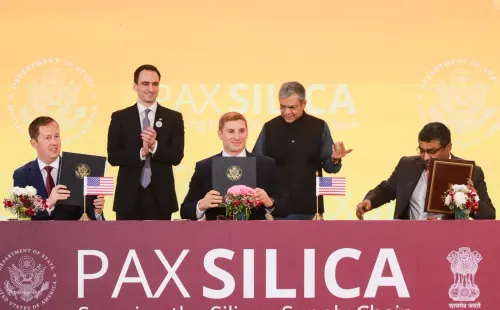
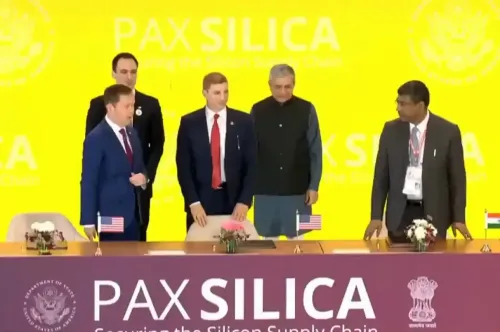
India has joined the United States and 34 other countries in endorsing a new declaration on artificial intelligence, as Washington expanded its Pax Silica partnership at the 2026 Pax Silica Summit hosted by the U.S. State Department on 26 June 2026. The initiative aims to build trusted technology supply chains among like-minded economies, covering critical minerals, semiconductors, energy, advanced manufacturing, and AI infrastructure.
What the AI Opportunity Statement Commits To
The Joint Statement on AI Opportunity, unveiled at the summit, commits participating countries to a pro-growth, pro-innovation approach to artificial intelligence. The declaration supports policies that 'advance technological innovation and promote investment' and pledges to champion 'a pro-growth regulatory environment that fosters AI innovation.'
Signatories also agreed to deepen cooperation on trusted semiconductor ecosystems, reliable energy infrastructure, critical minerals, and skilled workforces. Cross-border venture capital flows, joint research and development, and industry partnerships to expand AI computing capacity, next-generation data centres, and trusted AI models are also on the agenda.
Ten New Partners Join, Membership Reaches 24
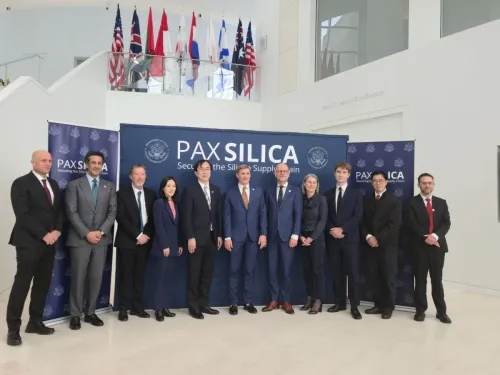
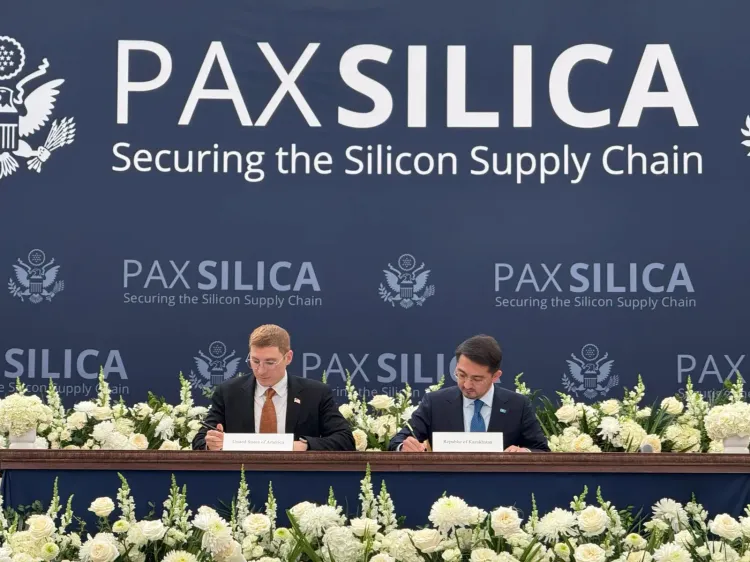
The State Department announced that 10 new partners had signed the Pax Silica Declaration, bringing total membership to 24 countries and economies. The new signatories are Argentina, Chile, Costa Rica, El Salvador, the European Union, Germany, Greece, Kazakhstan, the Netherlands, and Panama.
India is among the initiative's existing members, alongside Australia, Finland, Israel, Japan, Norway, Qatar, the Republic of Korea, Singapore, Sweden, the Philippines, the United Arab Emirates, the United Kingdom, and the United States. Taiwan has endorsed the declaration's principles through a separate joint statement on U.S.-Taiwan economic security cooperation.
India's Role and Bilateral Potential
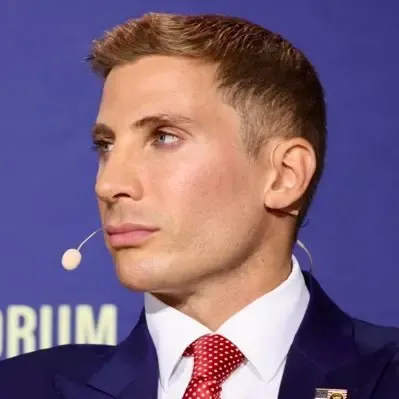
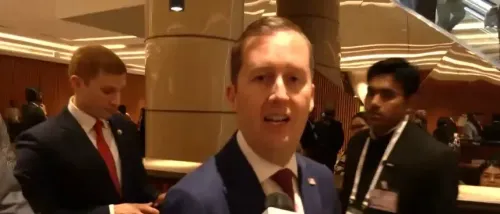
Responding to questions after the summit, Under Secretary for Economic Affairs Jacob Helberg said India had the potential to become 'a comprehensive partner' under the initiative. 'Our administrations have announced their collaboration on the trust initiative. We already work together on a whole array of different issues, and Pax Silica opens the door to deepen our collaboration on semiconductor manufacturing, on critical minerals processing,' Helberg said.
He added that both countries shared concerns over supply chain vulnerabilities and opportunities to build innovation ecosystems, particularly given India's large youth population. This comes amid a broader global push to reduce dependence on concentrated, vulnerable technology supply chains.
New Programmes: Panama AI Pilot and Foundry School
Among the summit's concrete outcomes, the State Department announced a pilot Artificial Intelligence Assistance Project in Panama — a platform designed to credential and track provenance across AI supply chains, speeding the movement of semiconductors, critical minerals, and related products through trusted logistics networks.
The department also unveiled Foundry School, a workforce development initiative developed in partnership with Stanford University. The programme will begin with a seminar series for founders and chief executives in advanced manufacturing, followed by a curriculum that educational institutions across Pax Silica economies can adopt.
Background: What Is Pax Silica
Launched by Jacob Helberg in December 2025, Pax Silica is the State Department's flagship initiative on artificial intelligence and supply chain security. It seeks to build economic security partnerships among allies and trusted partners to reduce dependence on vulnerable global networks — a direct response to concerns over technology chokepoints in critical sectors. The summit's expansion to 35 participating countries marks a significant scaling of the initiative within its first year.
Point of View
The initiative is a strategic opportunity — Helberg's language about semiconductor manufacturing and critical minerals is unusually specific for a diplomat, suggesting real bilateral deliverables are being discussed behind the declaration's broad language. What remains unresolved is whether India will move from endorsing principles to committing capital and policy space — particularly on semiconductor fabrication, where its track record on execution is still nascent. The inclusion of the EU and Germany as new signatories also complicates the framing: Pax Silica is no longer a purely Anglophone or Indo-Pacific club, and managing divergent regulatory philosophies across 24 members will test the initiative's coherence.
NationPress
25 Sept 2026
Frequently Asked Questions
What is the Pax Silica initiative?
Pax Silica is the U.S. State Department's flagship initiative on artificial intelligence and supply chain security, launched in December 2025 by Under Secretary Jacob Helberg. It aims to build economic security partnerships among allies and trusted partners to strengthen supply chains for critical technologies and reduce dependence on vulnerable global networks.
Which countries joined Pax Silica at the 2026 summit?
Ten new partners signed the Pax Silica Declaration at the 2026 summit: Argentina, Chile, Costa Rica, El Salvador, the European Union, Germany, Greece, Kazakhstan, the Netherlands, and Panama. This brought total membership to 24 countries and economies.
What did India commit to under the Pax Silica declaration?
India, as an existing Pax Silica member, endorsed the Joint Statement on AI Opportunity, committing to a pro-growth regulatory approach to AI and deeper cooperation on semiconductors, critical minerals, energy infrastructure, and skilled workforces. Under Secretary Helberg indicated India could become a 'comprehensive partner' on semiconductor manufacturing and critical minerals processing.
What is the Foundry School announced at the Pax Silica summit?
Foundry School is a workforce development initiative unveiled by the U.S. State Department in partnership with Stanford University. It will begin with a seminar series for founders and executives in advanced manufacturing and will eventually offer a curriculum that educational institutions across Pax Silica economies can adopt.
What is the AI Assistance Project pilot in Panama?
The AI Assistance Project in Panama is a pilot programme announced at the 2026 Pax Silica Summit. It aims to develop an AI supply chain credentialing and provenance platform to speed the movement of semiconductors, AI infrastructure, critical minerals, and related products through trusted logistics networks.