How Does the 'Pax Silica' Declaration Aim to Tackle China’s Expanding AI Influence?
Synopsis
In a significant move, the United States and its allies have launched the 'Pax Silica' Declaration to establish a trusted ecosystem in AI and critical minerals. This strategic initiative aims to counter China's rising dominance in these sectors, fostering cooperation among nations for a stable and secure supply chain.
Key Takeaways
The Pax Silica Declaration aims to create a trusted supply chain ecosystem for AI and critical minerals .
It includes participation from key nations to counter China's influence.
The initiative emphasizes fair market practices and collaboration.
It seeks to protect sensitive technologies and infrastructure.
The declaration reflects the importance of stable supply chains in today's global economy.
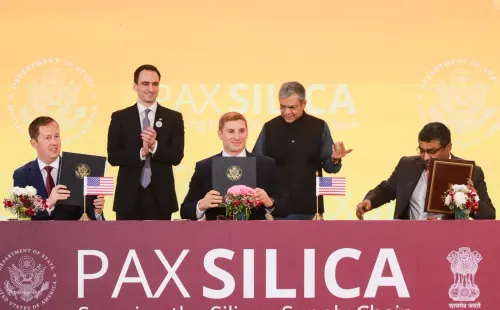
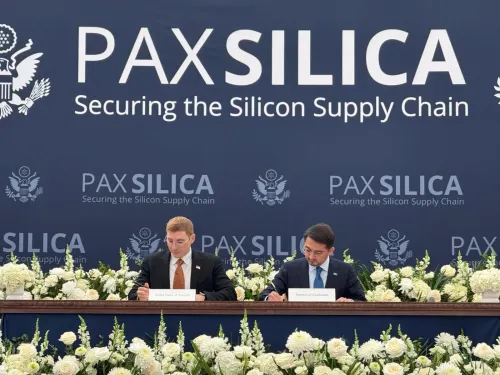
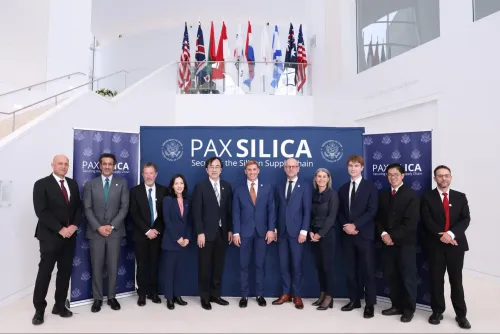
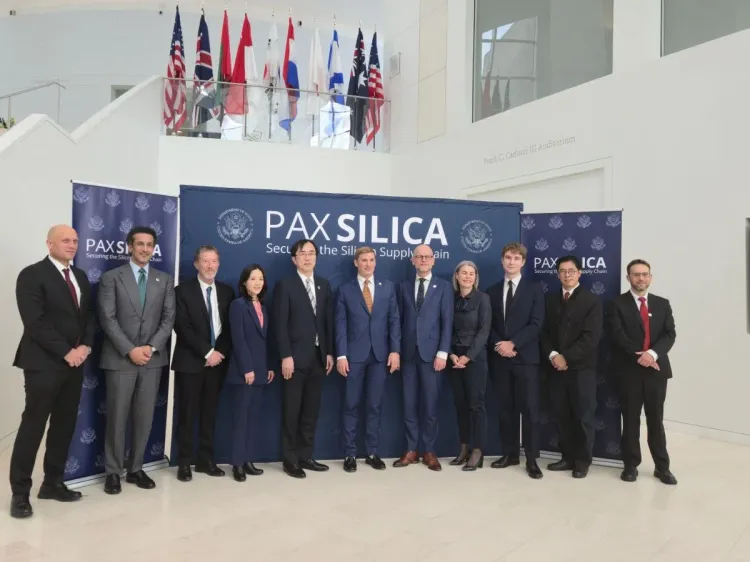
Washington, Dec 13 (NationPress) The United States, South Korea, and additional partners have embraced the Pax Silica Declaration to foster a trusted supply chain ecosystem for artificial intelligence (AI), critical minerals, and various other domains, as Washington aims to mitigate China's expanding influence in these sectors.
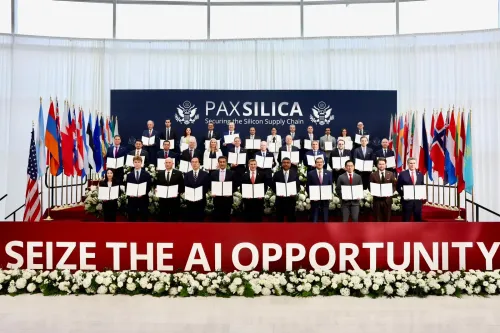
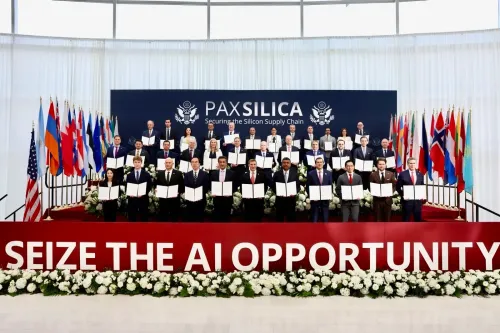
Seven nations, including Japan, Australia, Britain, Israel, and Singapore, endorsed the declaration during an America-led initiative to create a coalition among U.S. allies and partners at the inaugural Pax Silica summit in Washington, according to reports from the Yonhap news agency.
The term Pax Silica is derived from Latin, where pax signifies peace, stability, and enduring prosperity, while silica pertains to the compound refined into silicon, a vital chemical element for computer chips essential for artificial intelligence, as per the State Department.
This declaration emerged as the administration under President Donald Trump is striving to bolster America's global AI dominance, secure dependable supply chains for critical minerals, and counter China's authority over these strategically essential resources amidst escalating rivalry between the two superpowers.
Second Vice Foreign Minister Kim Jina represented South Korea at the summit. The Netherlands and the United Arab Emirates also attended but did not sign the declaration.
As stated by Seoul's foreign ministry, the declaration underscored that AI is a transformative force for countries' long-term prosperity and that trustworthy systems are crucial for ensuring mutual security and prosperity.
It identified a broad spectrum of cooperation areas, including software applications and platforms, frontier foundation models, information connectivity and network infrastructure, computing and semiconductors, advanced manufacturing, transportation logistics, minerals refining and processing, and energy.
Moreover, it emphasized the significance of fair market practices and collaborative efforts against market distortions, although it refrained from directly naming China.
"We believe that genuine economic security necessitates diminishing excessive dependencies and establishing new connections with reliable partners and suppliers devoted to fair market practices. ... We will strive to provide access to trusted partners to the entire spectrum of technological advancements that are shaping the AI economy," the declaration asserted.
"We recognize the importance of addressing non-market practices that jeopardize innovation and fair competition. We believe that coordination is vital to safeguard private investment from the market distortions of overcapacity and unfair dumping practices, and to maintain a level playing field for innovation and growth."
Furthermore, it highlighted the necessity for collaboration on policy initiatives to safeguard sensitive technologies and critical infrastructure from undue access, influence, or control.
The nations also expressed their intention to construct and implement trusted information networks, including information and communication technology systems, fiberoptic cables, and data centers.
During the summit, Seoul's vice foreign minister highlighted the importance of collaboration throughout the entirety of the global AI supply chain, encompassing energy, critical minerals, cutting-edge manufacturing, AI infrastructure, transportation, and logistics, as reported by her ministry in a press release.
She conveyed Seoul's commitment to enhancing supply chain stability by leveraging the strengths of South Korean companies in batteries, semiconductors, energy, and other domains, the ministry stated.
The Pax Silica initiative emerges amid rising concerns regarding China's dominant control over critical minerals, including rare earth elements pivotal for the production of military and electronic equipment.
Point of View
It's crucial to prioritize trustworthy partnerships while ensuring fair market practices. This initiative not only seeks to enhance economic security but also highlights the importance of collaborative efforts in safeguarding sensitive technologies and fostering innovation.
NationPress
2 Oct 2026
Frequently Asked Questions
What is the Pax Silica Declaration?
The Pax Silica Declaration is an agreement among the United States and allied nations aimed at establishing a trusted supply chain ecosystem for artificial intelligence and critical minerals.
Which countries signed the Pax Silica Declaration?
Countries including the United States, South Korea, Japan, Australia, Britain, Israel, and Singapore signed the declaration.
What are the main goals of the Pax Silica initiative?
The primary goals are to counter China's influence in AI and critical minerals, promote fair market practices, and ensure a stable supply chain.
How does the Pax Silica Declaration aim to ensure economic security?
By reducing dependencies on unreliable sources and fostering partnerships committed to fair practices, the declaration aims to enhance economic security among participating nations.
What are the concerns regarding China's control over critical minerals?
There are growing concerns about China's dominance over critical minerals, which are essential for the manufacturing of military and electronic equipment.