US launches Pax Silica AI partnership with 9 new signatories at Washington summit

Synopsis
The US used its second Pax Silica Summit to go on the offensive on AI — committing $50 million, launching a Stanford-backed workforce school, and pulling in 9 new signatories including Germany, the EU, and Latin American nations. The message is unmistakable: Washington is building a technology alliance designed to outpace command economies on AI infrastructure.
Key Takeaways
The US held the second Pax Silica Summit in Washington on 25 June 2025 , unveiling major AI and supply chain initiatives.
9 new signatories — including Germany, the EU, Argentina, Chile , and Panama — joined the Pax Silica Declaration; over 20 countries now back the AI Opportunity initiative.
Pax Pass , a new AI-powered cargo verification and expedited processing platform, will initially operate through Panama , backed by $50 million in US foreign assistance.
Foundry School , a workforce development programme, was launched with Stanford University under a signed MOU with Stanford President Jonathan Levin .
The Philippines economic security zone was cited as the first node in a planned network of trusted manufacturing hubs across partner nations.
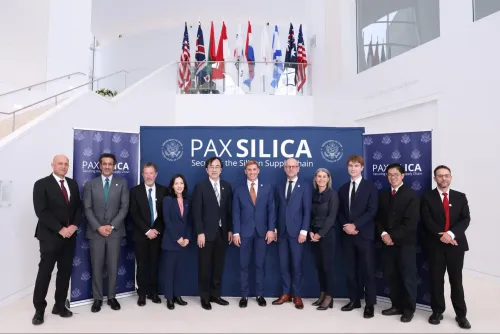
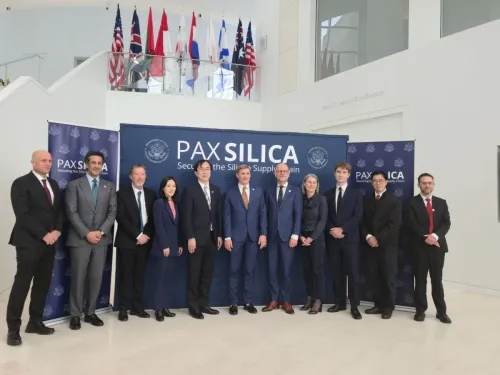
The United States on Thursday, 25 June launched a sweeping set of initiatives at the second Pax Silica Summit in Washington, aimed at deepening cooperation with trusted partners on artificial intelligence, critical minerals, and advanced manufacturing. Senior State Department officials unveiled new platforms, a workforce programme, and a landmark declaration as the initiative drew its largest membership expansion to date.
What Pax Silica Is and What It Aims to Do
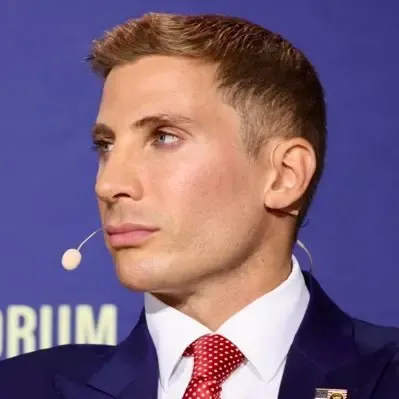
Under Secretary of State for Economic Growth, Energy, and the Environment Jacob Helberg opened the summit by framing the partnership as a practical, action-oriented alliance rather than a new layer of international bureaucracy. 'As I've said a number of times before, if the 20th century was powered by oil and steel, the 21st century will be powered by computer energy and the infrastructure that makes artificial intelligence possible,' Helberg said.
He described Pax Silica as 'an action platform, not another international bureaucracy' and 'a practical toolkit that enables trusted partners to together pilot new ideas and scale what works.' The initiative is designed to build resilient technology supply chains and accelerate AI-driven innovation across partner economies.
Key Outcomes: Declaration, Pax Pass, and Foundry School
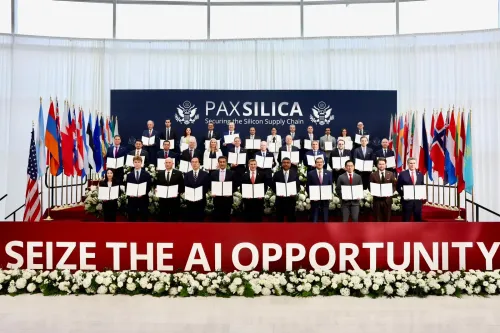
A centrepiece of the summit was the Declaration on AI Opportunity, which Helberg said reflects 'a shared commitment to pro-growth, AI policies, trusted technology ecosystems, resilience, supply chains, and investment in the infrastructure needed to power the AI economy.' He emphasised that governments should approach AI 'through the lens of opportunity,' not restriction.
Helberg also announced Pax Pass, a new logistics platform that will initially operate through Panama to facilitate the movement of high-value AI supply chain products. The system will combine cargo verification, AI-powered risk assessment, and pre-approved expedited processing for trusted shipments. The United States is committing $50 million in foreign assistance funding to support the programme's development and deployment.
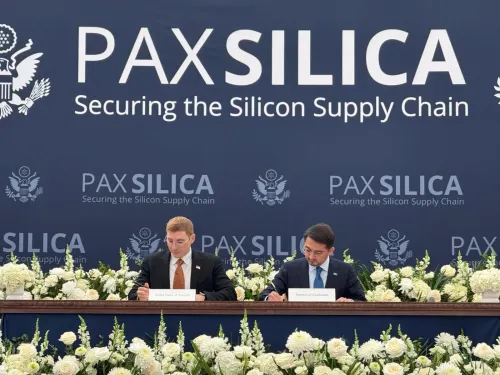
Additionally, the summit launched Foundry School, a workforce development initiative being established in partnership with Stanford University. Helberg signed a memorandum of understanding with Stanford President Jonathan Levin to develop seminars and what he described as the first curriculum of its kind for institutions across Pax Silica economies. 'Advanced manufacturing is not yet well established as a standalone field of study, yet few things matter more to national power and economic strength,' Helberg said.
New Signatories and Expanding Membership
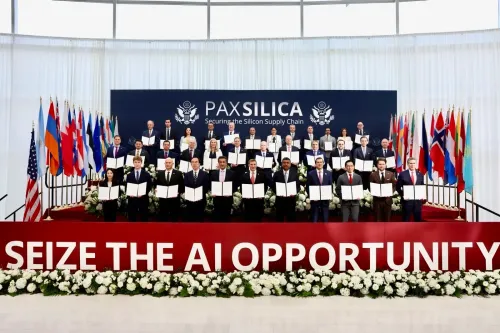
Deputy Secretary of State Christopher Landau announced that Argentina, Germany, the Netherlands, Chile, Costa Rica, Greece, Kazakhstan, Panama and the European Union had become new signatories to the Pax Silica Declaration — marking the first time economies from the Western Hemisphere had joined the initiative. More than 20 countries now support the AI Opportunity initiative.
'No single nation holds every link in these technologies' supply chains, and that is our strength, not our weakness,' Landau said. 'Our combined capabilities are something no command economy can match alone.'
Philippines Economic Security Zone and the Broader Strategy
Helberg also highlighted a recently announced economic security zone in the Philippines, describing it as the first in what the US hopes will become a broader network of trusted manufacturing and innovation hubs across Pax Silica partner countries. This comes as governments worldwide compete to secure AI computing capacity, critical minerals, and advanced manufacturing capabilities — and as Washington increasingly promotes technology alliances with allies to counter supply chain vulnerabilities.
With membership expanding and new platforms going live, the Pax Silica framework is set to become a defining pillar of US technology diplomacy in the years ahead.
Point of View
Or remains aspirational text. Foundry School is an intriguing long-term bet — if Stanford's curriculum is adopted across partner institutions, it could quietly reshape the talent pipeline for allied advanced manufacturing over the next decade.
NationPress
24 Sept 2026
Frequently Asked Questions
What is the Pax Silica partnership?
Pax Silica is a US-led international initiative aimed at building resilient AI, critical minerals, and advanced manufacturing supply chains among trusted partner nations. Launched at the second Pax Silica Summit in Washington on 25 June 2025, it now counts more than 20 countries and the European Union among its supporters.
Who are the new countries that joined Pax Silica?
Deputy Secretary of State Christopher Landau announced that Argentina, Germany, the Netherlands, Chile, Costa Rica, Greece, Kazakhstan, Panama, and the European Union signed the Pax Silica Declaration at the summit. It marked the first time Western Hemisphere economies formally joined the initiative.
What is Pax Pass and how does it work?
Pax Pass is a new logistics platform announced at the summit that will initially operate through Panama to facilitate the movement of high-value AI supply chain products. It combines cargo verification, AI-powered risk assessment, and pre-approved expedited processing for trusted shipments, backed by $50 million in US foreign assistance.
What is the Foundry School announced at the Pax Silica Summit?
Foundry School is a workforce development initiative established in partnership with Stanford University, designed to create the first curriculum of its kind for advanced manufacturing across Pax Silica economies. Under Secretary Jacob Helberg signed a memorandum of understanding with Stanford President Jonathan Levin at the summit.
What is the Declaration on AI Opportunity?
The Declaration on AI Opportunity is a joint commitment signed by Pax Silica member nations to pursue pro-growth AI policies, trusted technology ecosystems, and resilient supply chains. More than 20 countries support the declaration, which frames AI as an opportunity rather than a risk to be restricted.