Is Pax Silica Indicating a Shift from Chips to a Comprehensive AI Framework in the U.S.?
Synopsis
Discover how the U.S. is shifting gears with its Pax Silica initiative, moving from a narrow semiconductor focus to an expansive AI strategy. This change not only highlights the importance of comprehensive supply chains but also emphasizes the U.S.'s commitment to economic and national security.
Key Takeaways
Pax Silica reflects a comprehensive approach to securing the entire AI stack .
This initiative aims to enhance economic security alongside national security .
It includes collaboration with key nations involved in semiconductor production.
The focus has shifted from buyers to suppliers in the technology supply chain.
India is viewed as a strategic partner for future collaboration.
Washington, Dec 18, (NationPress) The United States has indicated a significant transition from its previous emphasis on semiconductor chips to a broader strategy focused on securing the entire artificial intelligence (AI) stack. This includes essential elements like data centres, energy, critical minerals, and global supply chains, as part of its newly initiated Pax Silica program, according to senior U.S. officials.
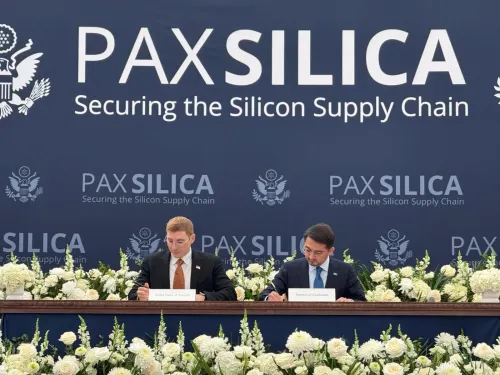
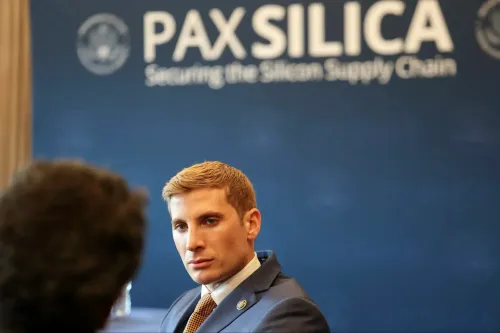
During a briefing at the Washington Foreign Press Centre, Under Secretary of State for Economic Affairs Jacob Helberg mentioned that Pax Silica extends beyond conventional chip diplomacy, signifying a new consensus in Washington that economic security is intertwined with national security.
"Through Pax Silica, we aim to collaborate on economic security practices and open new avenues for co-investments in fabs, data centres, and refining projects within an allied framework," Helberg stated.
He elaborated that this initiative serves as a long-term strategy to reconstruct the global economy, stating the need to build the physical infrastructure necessary for the 21st century.
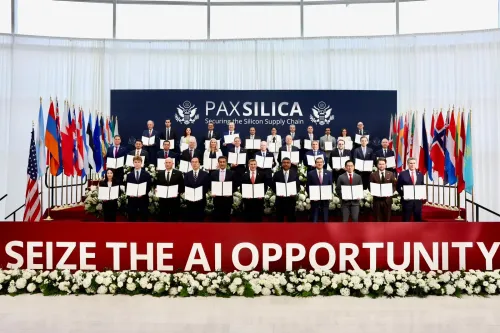
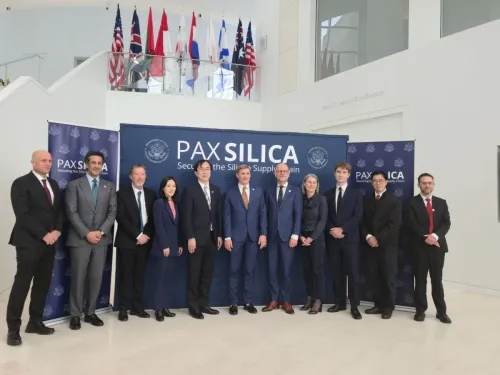
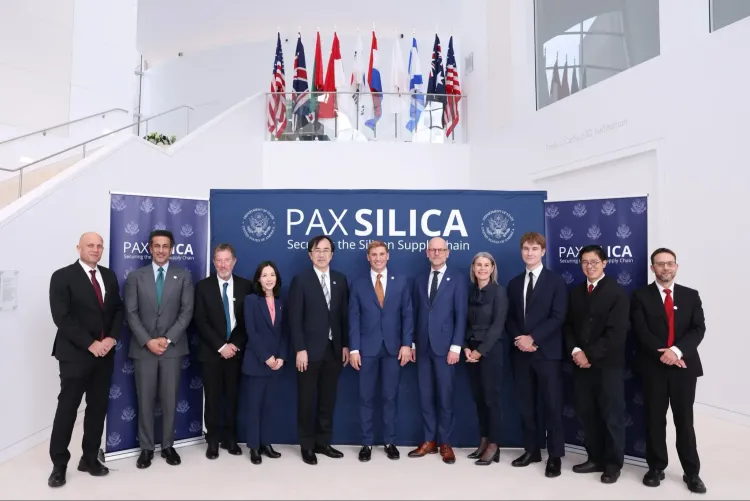
Pax Silica unites a group of countries closely linked to semiconductor production and advanced technology supply chains, which includes Singapore, Israel, Japan, South Korea, Australia, and the United Kingdom.
This initiative aims to tackle vulnerabilities that have surfaced due to overly concentrated supply chains, which affect everything from consumer electronics to advanced AI systems.
Helberg emphasized that Pax Silica is foundational to a broader U.S. economic security strategy, which revolves around four key pillars: rebalancing trade, stabilizing conflict zones, reindustrializing the U.S., and securing supply chains. He pointed out that silicon is central to this effort as it is vital for modern technologies.
"The silicon supply chain is crucial for advanced technologies, ranging from vehicles to smartphones and artificial intelligence," Helberg added.
Unlike prior frameworks, such as the Mineral Security Partnership established during the previous Biden administration, Pax Silica has a clear supply-side focus. "This isn't about the buyers; it starts with the suppliers," Helberg noted, highlighting the need for direct communication with companies that design, manufacture, and run global supply chains.
Helberg explained that the goal is to decentralize production, mitigate single points of failure, and create a more transparent and accessible ecosystem for AI infrastructure.
"We aspire to establish a vibrant ecosystem of vendors and suppliers for a robust supply chain system among Pax Silica nations," he responded to a question at the Foreign Press Centre.
According to the U.S. official, this shift towards a full-stack approach also mirrors Washington's heightened awareness that leading in AI depends not only on advanced chips but also on access to computing power, energy, data centres, and dependable logistics.
In response to inquiries about export controls and AI competition, Helberg affirmed that the United States is fully aware of the risks associated with technology diffusion, even as it seeks to strengthen partnerships with trusted allies.
"The U.S. Government's official stance is to do everything necessary to secure victory in the AI race," he stated, adding that innovation and diffusion must be balanced carefully to maintain a competitive edge.
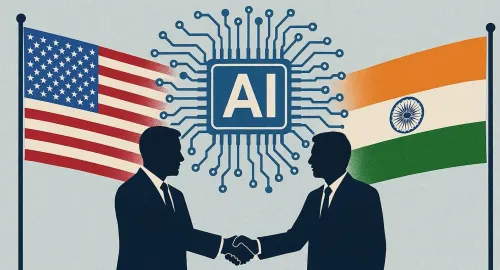
For India, this briefing is particularly noteworthy. Helberg indicated that New Delhi is seen as a highly strategic potential partner in supply chain security and advanced technologies, despite not being included in the initial Pax Silica group. He dismissed claims that trade tensions were behind India's omission.
"We are not merging those two issues," he clarified, referring to trade relations and supply chain security, and mentioned that Washington is in "almost daily communication" with Indian officials while actively looking for ways to enhance collaboration.
Helberg also mentioned his plans to participate in the India AI Impact Summit in February, viewing it as a chance to identify tangible milestones in bilateral cooperation on economic and technology security.
He stated that the Pax Silica declaration signifies a pivotal moment in how the U.S. and its allies perceive the global technology competition. "We believe that economic security is not merely a line item; it is now a prerequisite for our national survival," he asserted.
The Pax Silica initiative arrives as nations worldwide strive to position themselves within the AI economy, where control over computing power, energy resources, and infrastructure is increasingly regarded as critical.
For India, which is working to enhance its domestic semiconductor capabilities while expanding its role in data centres and AI development, the U.S. shift toward securing the complete AI stack highlights both the scale of the challenge and the strategic opportunities ahead.
Point of View
I view the Pax Silica initiative as a critical step towards fortifying the U.S. position in the global technology landscape. This strategic shift not only aims to enhance supply chain security but also reflects an understanding of the interconnectedness of economic and national security in today's world.
NationPress
2 Oct 2026
Frequently Asked Questions
What is the Pax Silica initiative?
The Pax Silica initiative is a U.S. program aimed at securing the entire artificial intelligence stack, including data centers, energy, critical minerals, and global supply chains, moving beyond a focus on semiconductor chips.
Which countries are part of the Pax Silica initiative?
Countries involved in the Pax Silica initiative include Singapore, Israel, Japan, South Korea, Australia, and the United Kingdom.
What are the main goals of Pax Silica?
The main goals of Pax Silica include enhancing economic security, decentralizing production, building a transparent ecosystem for AI infrastructure, and fostering collaboration among allied nations.
How does Pax Silica address supply chain vulnerabilities?
Pax Silica aims to mitigate vulnerabilities revealed by concentrated supply chains by fostering direct communication with suppliers and encouraging a diverse ecosystem of vendors.
What role does India play in Pax Silica?
While not part of the initial Pax Silica group, India is regarded as a strategic partner in supply chain security and advanced technologies, with ongoing discussions to deepen collaboration.