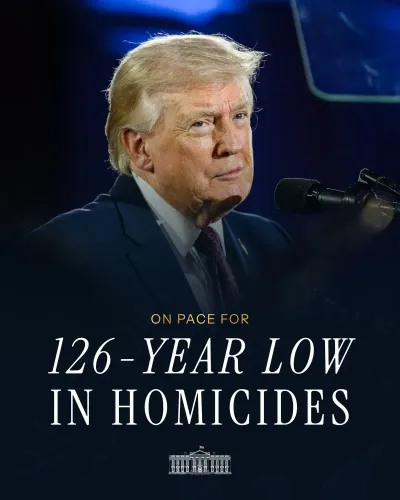
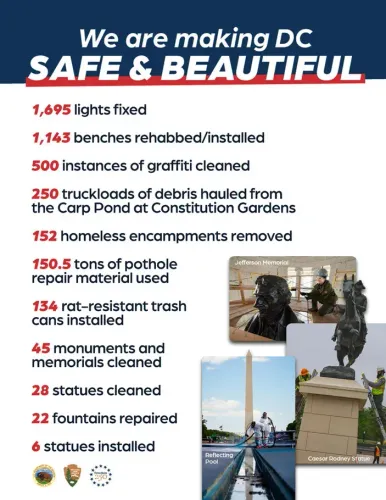
White House Claims Murder Rates Plunging in US Cities
Synopsis
The White House declared on November 16, 2026, that murders are plunging in US cities, invoking its 'Making America Safe Again' message. The claim echoes a recurring US political playbook on violent crime following the documented 2020 homicide spike, though city-level 2025-2026 data awaits independent federal verification.
Key Takeaways
The White House posted on November 16, 2026 , claiming murders are 'plunging' in US cities under the 'Making America Safe Again' banner.
The FBI documented a sharp national homicide spike in 2020 , which became the political baseline all subsequent administrations have measured themselves against.
The post cites no specific cities, statistics, or named policies — limiting independent fact-checking in real time.
Updated FBI Uniform Crime Reports and Bureau of Justice Statistics data covering 2025–2026 are needed for independent verification of the claim.
Both Democratic and Republican administrations have historically issued similar public-safety messaging following the 2020 crime surge.
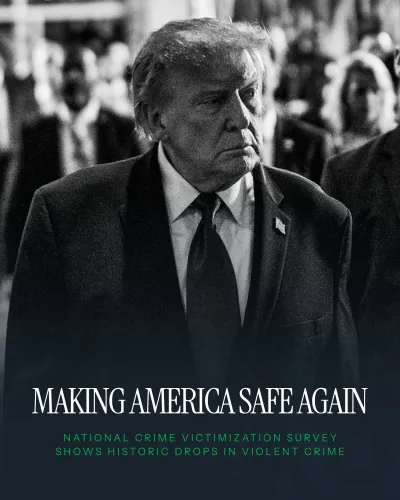
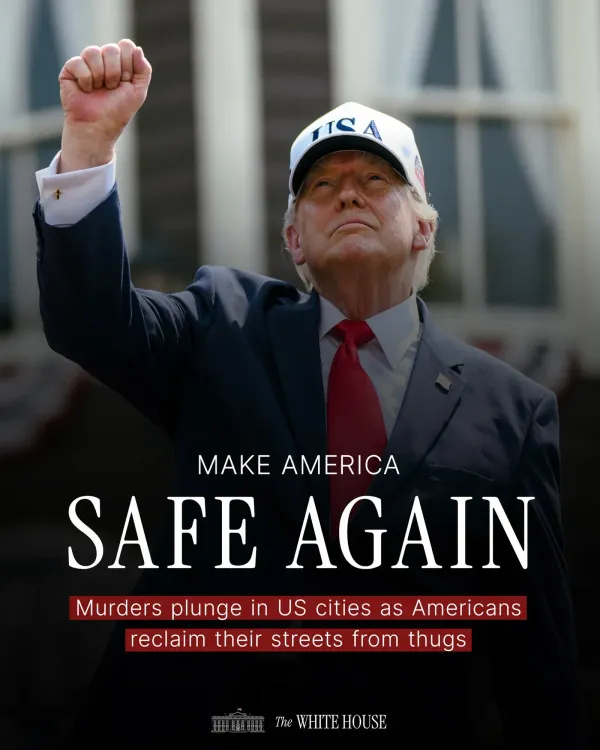
The White House turned up the volume on its public-safety messaging on Monday, November 16, 2026, posting a bold declaration under the banner 'MAKING AMERICA SAFE AGAIN' — asserting that murders are plunging in US cities as residents reclaim their streets.
The post, shared on X by the official White House account, carried a quoted line reading: 'Murders plunge in US cities as Americans reclaim their streets from thugs.' The language was deliberate and combative — a rhetorical choice that reflects the current administration's consistent framing of violent crime as a law-and-order crisis that it claims to be solving.
The 2020 Spike That Set the Stage
To understand why this claim carries political weight, you have to go back to 2020. FBI Uniform Crime Reporting data documented one of the sharpest single-year rises in US homicides on record that year — a surge linked to pandemic-era disruptions, strained police-community relations, and widespread civil unrest. Major metropolitan areas across the country posted double-digit percentage increases in killings.
That spike became a defining political flashpoint. Every administration since has measured itself against it — either claiming credit for the reversal or assigning blame for the original rise. The White House's November 2026 post follows that well-worn playbook, framing falling homicide numbers as proof that its public-safety agenda is delivering results.
What the Data Trail Actually Looks Like
The FBI's Uniform Crime Reports and Bureau of Justice Statistics remain the authoritative sources for city-level homicide trends. Nationally, available data through the mid-2020s showed a partial — though uneven — reversal of the 2020 spike, with some large cities recording significant declines while others lagged. Independent verification of figures specifically covering 2025–2026, the period the White House appears to be referencing, is pending release of updated federal crime reports.
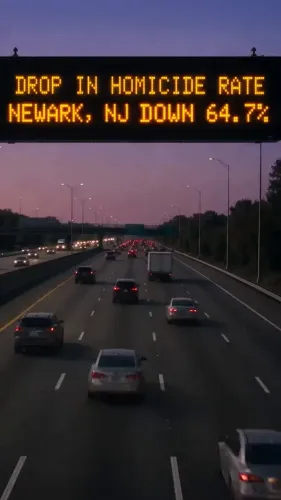
The post names no specific cities, cites no particular statistics, and credits no specific policy. That absence of granularity is notable — it allows the message to travel without being anchored to numbers that could be contested in real time.
A Recurring Playbook for Public-Safety Messaging
US administrations of both parties have periodically issued high-profile statements on violent crime to signal command and competence on an issue that consistently ranks among voters' top concerns. The 'reclaiming streets' framing is not new — it echoes language used in federal crime initiatives stretching back decades. What shifts is the specific policy lever each White House points to as the driver.
For urban residents and law enforcement agencies, the politics of homicide data are deeply personal — every percentage point represents real lives. Whether the numbers the White House is pointing to hold up under independent scrutiny will become clear when updated federal crime statistics are formally released.
Point of View
The administration maximises the message's reach while minimising the attack surface for fact-checkers. Historically, US administrations that have successfully tied falling crime rates to their own policy choices — rather than broader social trends — have reaped durable electoral rewards. The real test arrives when the FBI's 2025–2026 Uniform Crime Reports land: if city-level homicide data confirm a broad, sustained decline, the claim becomes a governing accomplishment; if the picture is mixed or concentrated in select metros, the framing risks unravelling under scrutiny.
NationPress
16 Nov 2026
Frequently Asked Questions
What did the White House say about murder rates in November 2026?
The White House posted on November 16, 2026, asserting that 'murders plunge in US cities as Americans reclaim their streets,' framing it as evidence that its public-safety agenda is working.
Are murder rates actually falling in the United States in 2026?
Independent verification of 2025–2026 city-level homicide data depends on the release of updated FBI Uniform Crime Reports and Bureau of Justice Statistics figures, which had not been publicly confirmed at the time of the post.
Why did US murder rates spike in the first place?
The FBI documented a sharp national rise in homicides in 2020, linked to pandemic-era disruptions, strained police-community relations, and widespread civil unrest — making it one of the largest single-year increases in decades.
What is the FBI Uniform Crime Report and why does it matter here?
The FBI's Uniform Crime Reporting programme aggregates violent crime statistics from local law enforcement agencies nationwide and is the primary independent benchmark used to assess homicide trends claimed by any US administration.
Is 'Making America Safe Again' a new policy initiative?
The phrase is a campaign and communications slogan used by the current administration to signal its public-safety priorities; the White House post does not announce a specific new policy or programme under that name.