CM Dhami Reaffirms Uttarakhand's Push for Tribal Welfare
Synopsis
Uttarakhand CM Pushkar Singh Dhami reaffirmed his government's commitment to tribal welfare on 16 November 2026, citing PM Modi's national policy direction and pledging continued work on education, health, employment, and cultural preservation for Scheduled Tribes.
Key Takeaways
CM Pushkar Singh Dhami posted on 16 November 2026 reaffirming Uttarakhand's tribal welfare agenda.
He credited PM Narendra Modi 's leadership for giving tribal dignity, rights, and development a new national direction since 2014 .
The state government is working to preserve tribal cultural heritage alongside expanding education, health, employment and self-employment access.
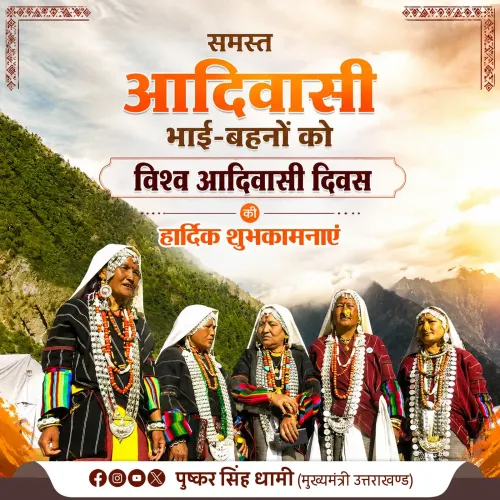
Uttarakhand is home to tribal groups including the Bhotia and the Tharu , requiring area-specific welfare approaches.
Central schemes like the Vanbandhu Kalyan Yojana and Eklavya Model Residential Schools form the backbone of the national tribal welfare framework Dhami's remarks align with.
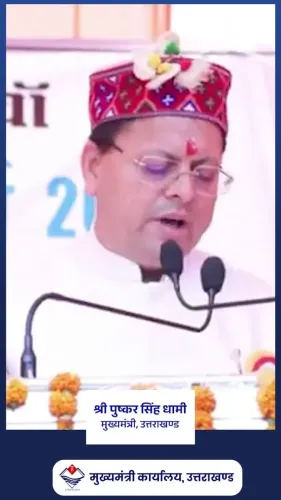
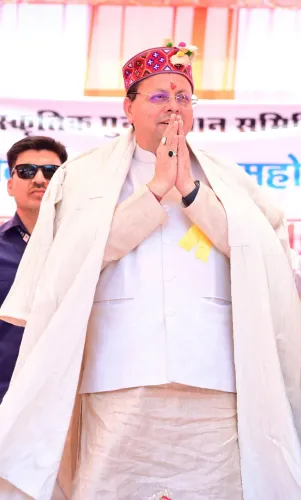
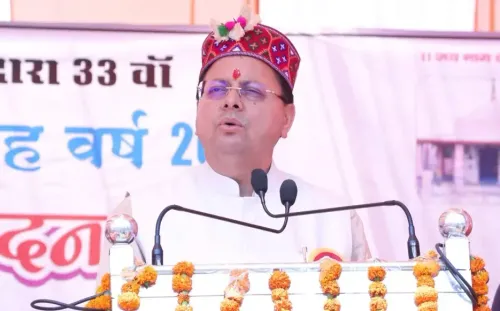
Tribal dignity, cultural heritage, and livelihoods — Uttarakhand Chief Minister Pushkar Singh Dhami made clear on Monday, 16 November 2026 that his government sees all three as inseparable, reaffirming the state's commitment to expanding education, health, employment, and self-employment opportunities for tribal communities.
Posting on X, Dhami credited Prime Minister Narendra Modi's leadership for giving tribal welfare a fresh direction at the national level, writing: 'janjatiya samaj ke samman, adhikaron evam sarvangin vikas ko nayi disha mili hai' ('the tribal community has received a new direction in terms of dignity, rights, and all-round development'). He added that Uttarakhand's own government is continuously working to preserve and promote the rich cultural heritage of tribal communities while widening access to economic opportunity.
A National Framework, a State Mandate
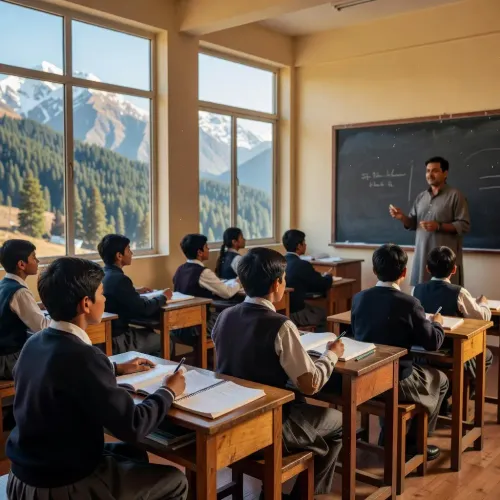
The statement lands within a well-established policy lineage. Since 2014, the central government has channelled tribal welfare through flagship instruments including the Vanbandhu Kalyan Yojana — aimed at improving living standards and infrastructure in tribal belts — and the expanded Eklavya Model Residential Schools network, which has drawn increased funding to bring quality education to Scheduled Tribe students across remote districts.
Uttarakhand is home to distinct tribal groups including the Bhotia and the Tharu, communities whose cultural traditions and livelihood patterns differ sharply from the state's plains populations. Any meaningful welfare push must therefore thread together linguistic preservation, land rights, healthcare access in high-altitude zones, and credible job pathways — a complex brief that Dhami's post signals his administration intends to keep front and centre.
Culture and Livelihood as a Single Agenda
What gives Dhami's remarks their policy texture is the deliberate pairing of cultural preservation with economic empowerment. The post does not treat heritage as a soft add-on to development — it frames both as co-equal priorities. That framing mirrors the Ministry of Tribal Affairs' national approach, which increasingly links identity recognition with tangible scheme delivery.
The practical test, as always, lies in state budget allocations and on-the-ground rollout in Uttarakhand's tribal districts — the numbers that will eventually tell whether the intent expressed on 16 November translates into measurable change for the communities the post is about.
Point of View
Then layer in economic scheme delivery. By explicitly invoking Modi's leadership, Dhami positions Uttarakhand's state-level efforts as a faithful extension of the national agenda rather than an independent initiative — a framing that serves both political alignment and policy coherence. The absence of specific figures or new announcements keeps this in the realm of intent-signalling, but with state budget season approaching, the statement may also be a soft signal of where allocations are headed. Watch for concrete scheme updates from Uttarakhand's tribal districts in the coming months.
NationPress
16 Nov 2026
Frequently Asked Questions
What did CM Pushkar Singh Dhami say about tribal welfare?
On 16 November 2026 , CM Dhami reaffirmed that his government is working continuously to preserve tribal cultural heritage and expand education, health, employment, and self-employment opportunities for tribal communities in Uttarakhand .
Which tribal communities live in Uttarakhand?
Uttarakhand is home to several tribal groups including the Bhotia , who inhabit high-altitude Himalayan zones, and the Tharu , who are concentrated in the Terai belt. Both communities have distinct cultural traditions and livelihood needs.
What is the Vanbandhu Kalyan Yojana?
The Vanbandhu Kalyan Yojana is a central government scheme launched in 2014 to improve living standards and infrastructure in tribal areas across India, forming part of the BJP-led government's broader tribal welfare framework.
What are Eklavya Model Residential Schools?
Eklavya Model Residential Schools are centrally funded residential institutions designed to provide quality education to Scheduled Tribe students in remote areas. Their funding and reach have expanded significantly since 2014 .
How does the BJP approach tribal welfare at state and central levels?
The BJP's tribal welfare approach combines cultural preservation — recognising heritage and identity — with tangible scheme delivery in education, health, and livelihood. State governments like Uttarakhand align their local programs with the national framework set by the Ministry of Tribal Affairs .