CM Sai Flags Education, Health Push in Bastar
Synopsis
Chief Minister Vishnu Deo Sai invoked Janjatiya Gaurav Diwas to spotlight a development push in Bastar — schools, Education City, and the Mukhya Mantri Swasth Bastar Abhiyan — pledging better education and health access for the region's tribal communities.
Key Takeaways
CM Vishnu Deo Sai addressed the Janjatiya Gaurav Diwas event at Lal Bahadur Shastri SEGES School, Bilaspur on 16 November 2026 .
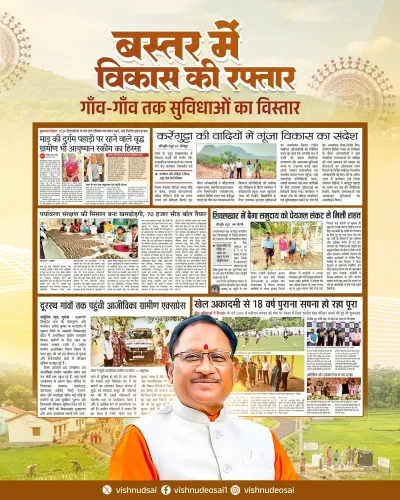
He announced that Bastar is experiencing rapid expansion of education, health, and basic infrastructure.
Key initiatives cited: school network expansion, Education City , and the Mukhya Mantri Swasth Bastar Abhiyan health campaign.
Bastar has historically suffered from poor public service delivery due to decades of left-wing extremism.
Janjatiya Gaurav Diwas , held annually on 15 November , commemorates tribal icon Birsa Munda's birth anniversary.
Sai, who took office in December 2023 , is the first tribal Chief Minister of Chhattisgarh from the BJP.
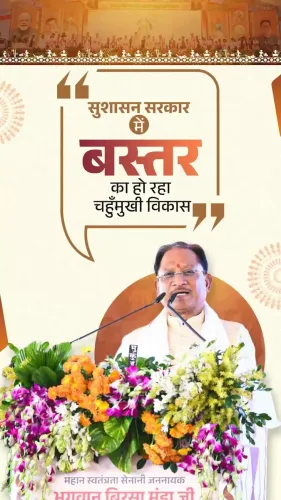
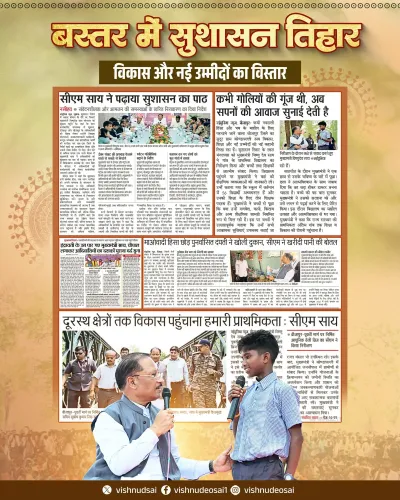
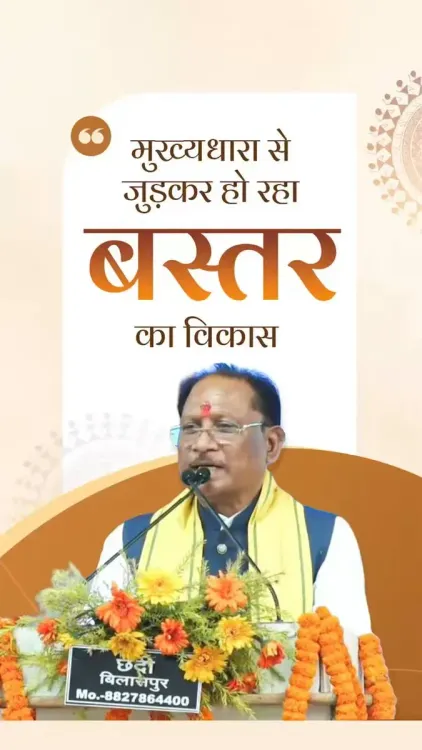
A region long defined by conflict is now being written into a different story. Speaking at the Janjatiya Gaurav Diwas celebrations held at Lal Bahadur Shastri SEGES School, Bilaspur on 16 November 2026, Chief Minister Vishnu Deo Sai declared that a new tide of development is flowing through Bastar — and that schools, an Education City, and a dedicated health campaign are carrying it forward.
The Chief Minister's Office of Chhattisgarh shared his remarks verbatim: 'अब बस्तर में विकास की नई धारा बह रही है' — 'A new current of development is now flowing through Bastar.' He cited the expansion of schools, the Education City initiative, and the Mukhya Mantri Swasth Bastar Abhiyan as the instruments of that change, promising better facilities for tribal communities across the region.
Why Bastar — and Why Now
Bastar, a cluster of densely forested districts in southern Chhattisgarh, carries a heavy history. Decades of left-wing extremism depressed public investment, hollowed out government service delivery, and left tribal communities — the region's dominant demographic — without reliable schools or health centres. That backdrop makes any credible infrastructure push politically significant and, for residents, deeply personal.
The timing is deliberate. Janjatiya Gaurav Diwas, observed every year on 15 November to mark the birth anniversary of tribal icon Birsa Munda, has become a national focal point for tribal welfare messaging since the Centre institutionalised the commemoration. Anchoring a development address to this occasion signals that the Sai government wants Bastar's tribal story heard on a stage larger than the state.
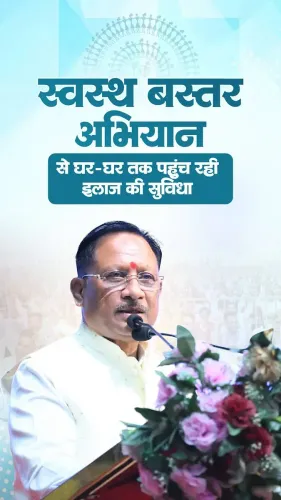
Mukhya Mantri Swasth Bastar Abhiyan and Education City
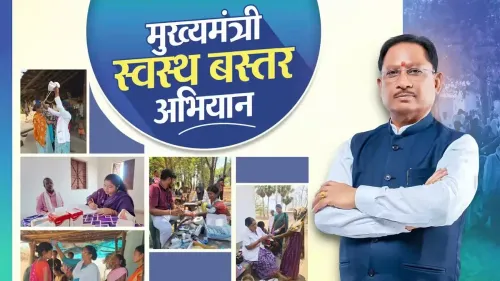
The Mukhya Mantri Swasth Bastar Abhiyan is the state's flagship health campaign designed to extend medical infrastructure into Bastar's most underserved pockets — a direct response to chronic doctor shortages and limited diagnostic access in the region's tribal blocks. Alongside it, the Education City concept envisions a consolidated, modern academic campus meant to anchor quality schooling in an area where government school enrolment has historically lagged state averages.
Both initiatives sit within a longer arc: every Chhattisgarh administration since the state's formation in 2000 has launched area-specific schemes for Bastar, acknowledging that standard statewide programmes rarely reached its most remote villages. The question successive governments have struggled to answer is implementation — physical infrastructure reaching the last mile, and trained staff willing to stay.
What Rolls Out Next
The real test will be in measurable outcomes — school enrolment numbers, health centre utilisation rates, and whether the Education City's facilities actually open to students on schedule. CM Sai, who took office in December 2023 as the first tribal Chief Minister of Chhattisgarh from the BJP, has staked a portion of his political identity on Bastar's transformation. For tribal families waiting on a doctor or a functioning classroom, the promises made at Bilaspur will be judged district by district, village by village.
Bastar's new current is running. Whether it reaches every bank is the story still being written.
Point of View
CM Sai is threading two political imperatives at once: fulfilling the BJP's national tribal outreach narrative and delivering a regional governance signal ahead of future electoral cycles in Chhattisgarh. The Mukhya Mantri Swasth Bastar Abhiyan and Education City, if implemented at scale, would represent the most concentrated state investment in Bastar's social infrastructure in years — but Chhattisgarh governments have promised similar interventions before. The credibility of this push will ultimately rest on enrolment and health utilisation data, not platform addresses.
NationPress
16 Nov 2026
Frequently Asked Questions
What is the Mukhya Mantri Swasth Bastar Abhiyan?
The Mukhya Mantri Swasth Bastar Abhiyan is a Chhattisgarh state health campaign designed to expand medical facilities and healthcare access in the tribal districts of Bastar, targeting service gaps in remote and historically underserved areas.
What is Janjatiya Gaurav Diwas and why is it celebrated on 15 November?
Janjatiya Gaurav Diwas is an annual national commemoration of tribal culture and heritage, observed on 15 November to mark the birth anniversary of freedom fighter and tribal icon Birsa Munda .
Who is Vishnu Deo Sai and when did he become Chhattisgarh CM?
Vishnu Deo Sai became Chief Minister of Chhattisgarh in December 2023 after the BJP's victory in the state elections. He is the first tribal leader to serve as Chief Minister of Chhattisgarh under the BJP.
What is the Education City project in Bastar?
The Education City initiative in Bastar envisions a modern, consolidated academic campus aimed at improving quality schooling in the region. Precise timelines and coverage details have not been officially confirmed.
Why is Bastar considered a development-challenged region?
Bastar in southern Chhattisgarh has a large tribal population and has faced decades of left-wing extremist activity, which severely depressed public investment and government service delivery in education, health, and infrastructure.