CM Sai Outlines Bastar Development Vision on X
Synopsis
Chhattisgarh CM Vishnu Deo Sai reaffirmed his government's commitment to Bastar's holistic transformation on 29 July 2026, citing connectivity, education, healthcare, livelihoods and tourism as pillars of inclusive growth for the tribal-dominated region.
Key Takeaways
CM Vishnu Deo Sai posted on 29 July 2026 outlining a multi-sector development vision for Bastar .
The vision spans connectivity, education, healthcare, livelihoods and tourism — framed as confidence-building, not just infrastructure.
The post is tagged #ViksitChhattisgarh , linking state goals to the national Viksit Bharat 2047 agenda.
Bastar has historically been affected by left-wing extremism; the BJP government made the region's development a key 2023 election promise.
Road and rail links, residential schools and tourism circuits in Bastar are among the initiatives to watch over the next two fiscal years.
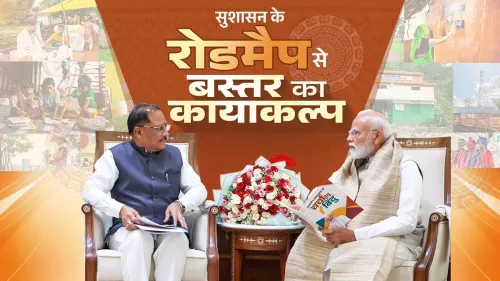
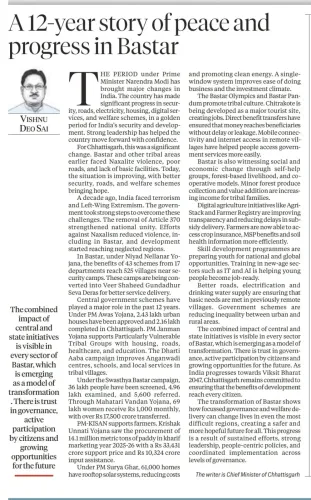
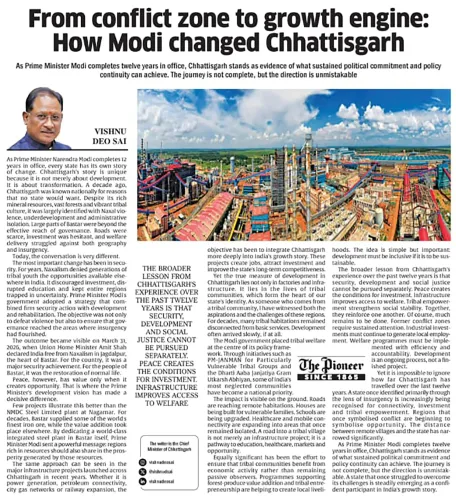
Bastar — once synonymous with insurgency and isolation — is being recast as a story of possibility. Chhattisgarh Chief Minister Vishnu Deo Sai on Wednesday, 29 July 2026, laid out his government's development vision for the tribal-dominated southern division, arguing that the region's transformation runs deeper than roads and bridges.
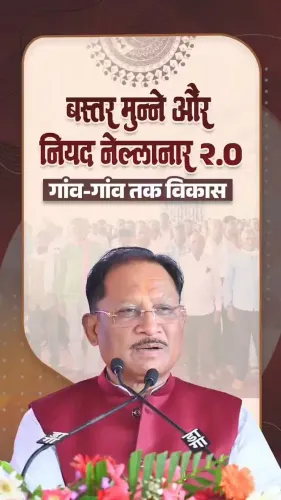
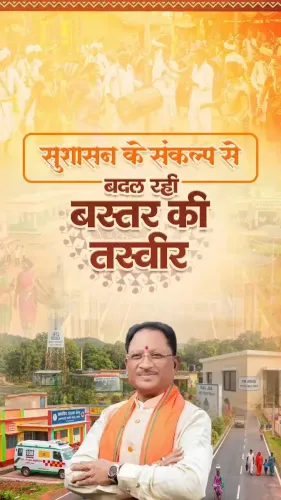
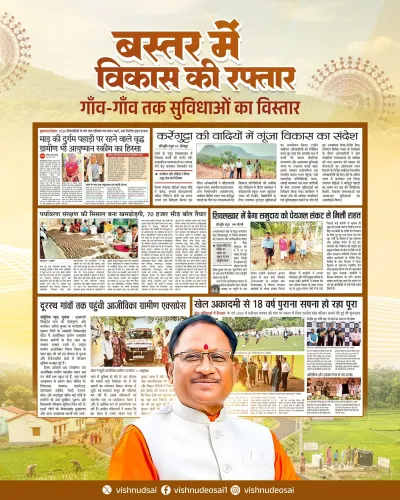
Posting on X under the hashtags #Bastar and #ViksitChhattisgarh, Sai wrote that the push is 'not merely about infrastructure' but about 'restoring confidence, creating opportunities and empowering communities.' The framing is deliberate — connectivity, education, healthcare, livelihoods and tourism are bundled together as pillars of what he called 'development, dignity and inclusive growth.'
Bastar's Long Road from Conflict to Confidence
For decades, Bastar division — spanning districts including Dantewada, Bijapur and Sukma — carried the weight of left-wing extremism and chronic underdevelopment. State and central governments since the mid-2000s have run parallel tracks: security operations on one hand, welfare and infrastructure schemes on the other. The bet has always been that visible development erodes the grievances insurgents exploit.
Sai's BJP government, swept into power after the 2023 Chhattisgarh assembly elections, made Bastar a centrepiece of its campaign — pledging to accelerate precisely the connectivity, schooling and economic opportunity the region has long been denied. The current messaging is the governing follow-through on that promise.
Viksit Chhattisgarh and the National Frame
The post carries the #ViksitChhattisgarh tag, tying state ambitions to the national Viksit Bharat 2047 vision — the long-horizon goal of a developed India by the centenary of independence. For tribal regions like Bastar, that framing matters: it positions local development not as catch-up, but as a contribution to a national project. Tourism circuits, residential schools and road and rail links are among the initiatives being watched as the next two fiscal years unfold.
The emphasis on 'dignity' alongside development signals an awareness that infrastructure alone has not historically been enough to shift ground realities for Bastar's tribal communities. Whether the execution matches the ambition is the question Bastar's residents will answer — not in posts, but in lived experience.
Point of View
Aspirational benchmark. The real test, however, is execution in districts like Dantewada and Bijapur, where earlier development pushes produced uneven results. If road, rail and school projects materialise on schedule, the messaging becomes a record; if they stall, it becomes a liability.
NationPress
13 Sept 2026
Frequently Asked Questions
What is Vishnu Deo Sai's development plan for Bastar?
CM Vishnu Deo Sai has outlined a multi-sector plan for Bastar focused on connectivity, education, healthcare, livelihoods and tourism, framing it as a confidence-building exercise for tribal communities rather than purely an infrastructure drive.
What is the Viksit Chhattisgarh scheme?
Viksit Chhattisgarh is a state-level development campaign aligned with the national Viksit Bharat 2047 vision, aimed at accelerating growth and welfare across Chhattisgarh, with Bastar as a key focus area.
Why is Bastar considered underdeveloped?
Bastar division in southern Chhattisgarh has historically suffered from left-wing extremism, poor connectivity and limited access to education and healthcare, leaving its largely tribal population among the most marginalised in central India.
What projects are planned for Bastar under the BJP government?
Road and rail connectivity upgrades, new residential schools and tourism circuits are among the initiatives being tracked for Bastar over the next two fiscal years, though specific project names and budgets have not been officially confirmed.
How does Bastar's development connect to national policy?
The Chhattisgarh government has linked Bastar's growth agenda to the central government's Viksit Bharat 2047 vision, positioning tribal development in the region as part of India's broader goal of becoming a developed nation by 2047.