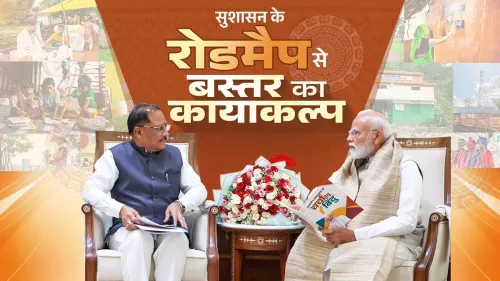
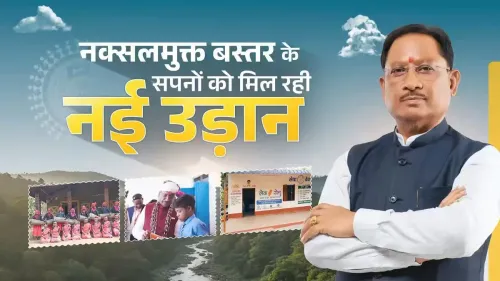
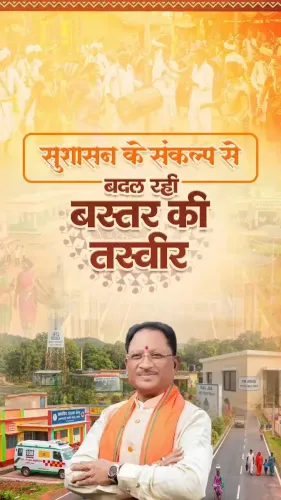
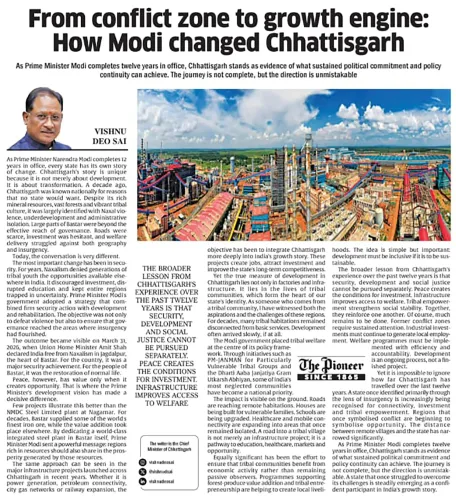
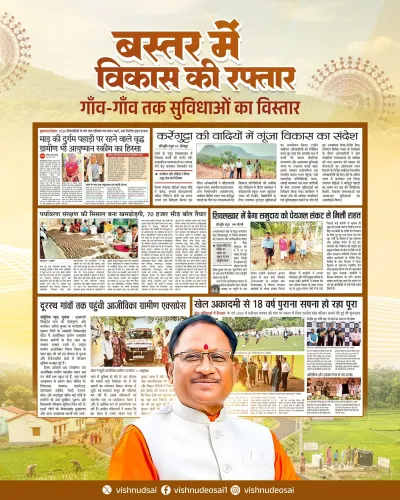
CM Sai Highlights Bastar's 12-Year Development Arc
Synopsis
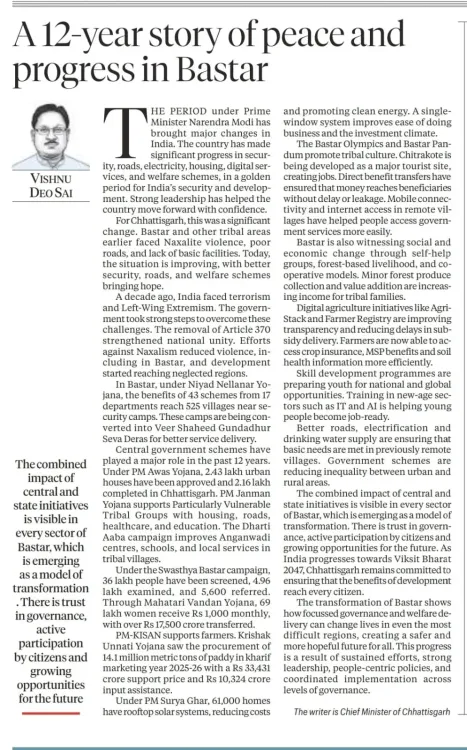
The Chhattisgarh CMO has shared Chief Minister Vishnu Deo Sai's account of Bastar's 12-year transformation — from a Maoist-conflict zone to a region of growing connectivity, welfare access, and opportunity — crediting the leadership of Prime Minister Narendra Modi for accelerating the change.
Key Takeaways
The Chhattisgarh Chief Minister's Office posted on June 16, 2026 , sharing CM Vishnu Deo Sai 's perspective on Bastar 's development over the past 12 years .
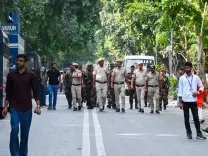
Bastar , a seven-district division in southern Chhattisgarh with a predominantly tribal population, was historically a core area of Maoist influence.
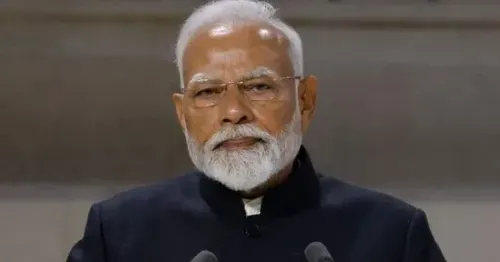
The CMO credited 'the visionary leadership of Prime Minister Narendra Modi ' for accelerating development, strengthening connectivity, and expanding welfare access in the region.
Chhattisgarh was created in November 2000 partly to address development deficits in tribal areas; from 2014 , targeted road and telecom projects were expanded in left-wing extremism-affected districts.
CM Sai , in office since December 2023 , has framed peace and good governance as drivers — not just outcomes — of inclusive development in tribal regions.
Upcoming rail and highway projects linking Bastar to Raipur and neighbouring states are being tracked as the next phase of the region's integration.
The Chief Minister's Office of Chhattisgarh on Tuesday, June 16, 2026, shared Chief Minister Vishnu Deo Sai's perspective on Bastar's transformation over the past 12 years, describing the southern Chhattisgarh division as having evolved from a region defined by decades of challenges into a symbol of progress, hope, and opportunity.
Context
The post, shared by the official Chhattisgarh Chief Minister's Office account, quotes CM Sai as attributing the region's change to 'the visionary leadership of Prime Minister Narendra Modi,' with focused efforts said to have accelerated development, strengthened connectivity, expanded access to welfare schemes, and empowered local communities. The 12-year window referenced aligns with the period beginning around 2014, when the Modi government took office at the Centre.
Bastar is an administrative division in southern Chhattisgarh comprising seven districts — Bastar, Bijapur, Dantewada, Kanker, Kondagaon, Narayanpur, and Sukma — and has a predominantly tribal population. For decades, the region was among the most severely affected by left-wing extremism in the country.
Policy Backdrop
Chhattisgarh was carved out of Madhya Pradesh in November 2000, partly to address persistent development deficits in tribal belts including Bastar. From 2014 onward, the Union government expanded the Security Related Expenditure scheme and launched targeted road and telecom infrastructure projects in districts classified as left-wing extremism-affected.
The broader national strategy — combining intensified security operations with parallel investments in roads, electrification, and welfare delivery — has been applied across central and eastern India. In Bastar, this dual approach is credited with producing measurable declines in violence alongside gradual improvements in access to government services over the period in question.
CM Vishnu Deo Sai, who took office in December 2023 representing the BJP, has made governance reforms in tribal regions a stated priority of his administration. His remarks, as shared by the CMO, frame peace and good governance as prerequisites for inclusive development rather than outcomes that follow it.
Stakeholders and Impact
The primary beneficiaries cited in the post are Bastar's tribal communities and the broader resident population of the seven-district division. Welfare scheme expansion, improved connectivity, and community empowerment are the specific areas highlighted by the CMO's communication.
Successive central and state governments have treated development investment in Bastar as a tool for conflict resolution — a model that has drawn attention as a replicable template for other left-wing extremism-affected regions in states such as Jharkhand, Odisha, and Andhra Pradesh.
What's Next
Policy watchers are tracking the rollout of additional rail and highway projects intended to connect Bastar to the state capital Raipur and to neighbouring states, which would further reduce the region's geographic isolation. District-level convergence of central welfare schemes is also being monitored as a measure of whether the development gains cited by CM Sai deepen in the coming years.
The CMO's communication signals that Bastar's transformation will remain a centrepiece of the Sai government's political and governance narrative, with the 12-year arc likely to feature prominently in the BJP's outreach to tribal voters ahead of future electoral cycles in Chhattisgarh.
Point of View
Good governance, and inclusive development' as an integrated triad reflects the BJP's broader attempt to redefine Bastar from a security problem into a governance success story. With tribal voter mobilisation increasingly central to electoral outcomes in Chhattisgarh, the timing and tone of such communications carry clear political weight. Whether the narrative holds will depend on the pace at which infrastructure and welfare gains become tangible at the village level across the division's more remote districts.
NationPress
19 Sept 2026
Frequently Asked Questions
What is the Bastar development story CM Sai is talking about?
CM Vishnu Deo Sai is referring to a 12-year period of development in the Bastar division of southern Chhattisgarh , during which the region has seen improved connectivity, expanded welfare scheme access, and a decline in left-wing extremism-related violence, attributed in large part to central government policies since 2014 .
Why is Bastar historically significant in Chhattisgarh?
Bastar is a seven-district division with a predominantly tribal population that was for decades one of the most severely Maoist-affected regions in India. Its development has been a longstanding challenge for both state and central governments since Chhattisgarh 's formation in 2000 .
Who is Vishnu Deo Sai and when did he become Chief Minister?
Vishnu Deo Sai is the Chief Minister of Chhattisgarh , representing the BJP . He assumed office in December 2023 following the party's victory in the state assembly elections, with a stated focus on governance reforms in tribal regions.
What central government schemes have helped Bastar's development?
The Union government expanded the Security Related Expenditure scheme from 2014 and launched targeted road and telecom infrastructure projects in districts classified as left-wing extremism-affected, including those in Bastar , as part of a dual security-and-development strategy.
What infrastructure projects are planned next for Bastar?
Policy observers are tracking the rollout of rail and highway projects aimed at connecting Bastar to the state capital Raipur and to neighbouring states, which would significantly reduce the region's geographic isolation and support further economic integration.