CM Sai Hails Bastar's Shift from Fear to Development
Synopsis
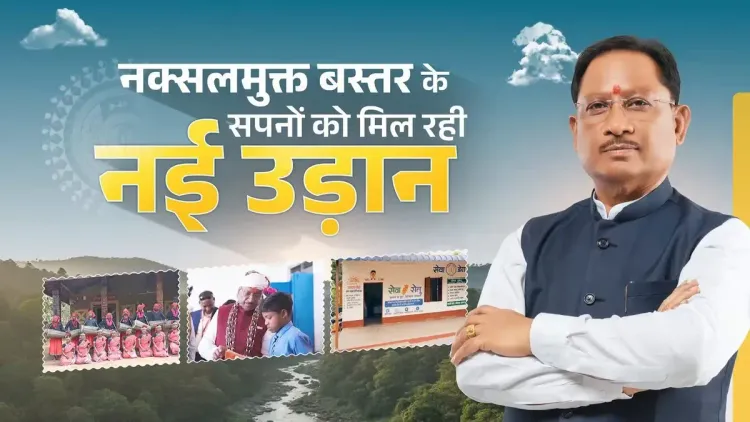
Chhattisgarh Chief Minister Vishnu Deo Sai on 17 July 2026 declared Bastar is forging a new identity — free of Naxal violence — and is advancing toward peace and development under the BJP's double engine government led by PM Modi and Home Minister Amit Shah.
Key Takeaways
CM Vishnu Deo Sai declared on 17 July 2026 that Bastar has transitioned from a conflict zone to a region of peace and development.
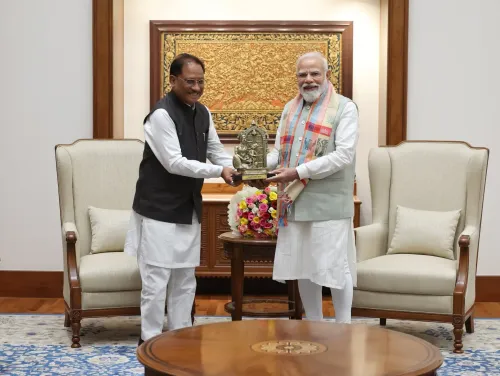
He credited Prime Minister Narendra Modi and Union Home Minister Amit Shah for the security and governance gains in the region.
Bastar comprises multiple districts in southern Chhattisgarh that were historically at the heart of Maoist insurgency in India.
The central government's integrated approach since 2014 has combined kinetic security operations with infrastructure and welfare delivery in LWE-affected areas.
The Aspirational Districts Programme (2018) targeted several Bastar -region districts for accelerated development alongside security measures.
Upcoming Ministry of Home Affairs data releases and road, rail and telecom project rollouts in southern Chhattisgarh will be key indicators of sustained progress.
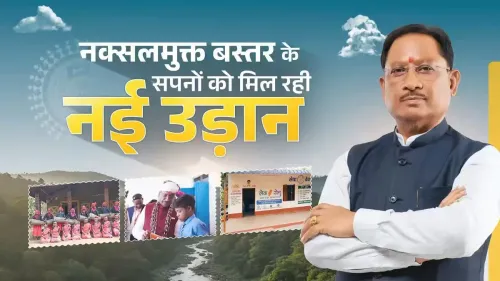
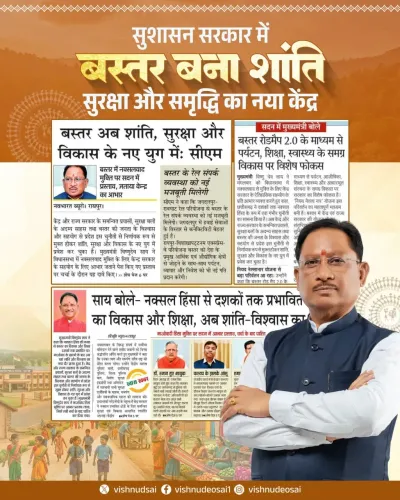
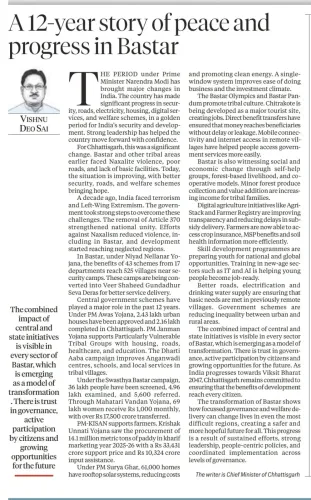
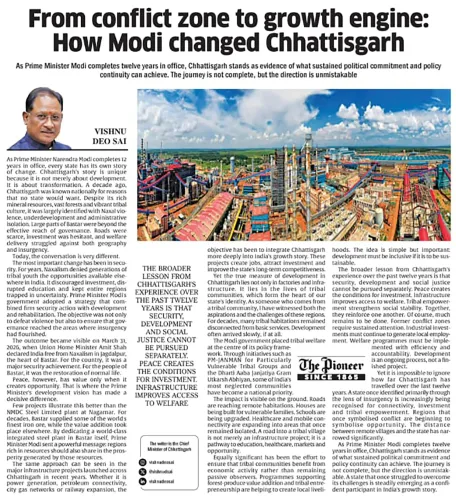
Chhattisgarh Chief Minister Vishnu Deo Sai on Friday, 17 July 2026, declared that Bastar — long synonymous with Maoist insurgency — has entered a new era of peace, security and development, crediting the leadership of Prime Minister Narendra Modi and Union Home Minister Amit Shah for the region's transformation.
Posting on X alongside a video, CM Sai wrote: 'डर से विश्वास तक... संघर्ष से विकास तक... अपनी नई पहचान गढ़ रहा बदलता बस्तर' — translating to 'From fear to trust... from struggle to development... a changing Bastar forging its new identity.' He added that a Naxal-free Bastar is now advancing towards a new age under the 'double engine government.'
Context
Bastar, a cluster of districts in southern Chhattisgarh, has been the epicentre of left-wing extremism in India for decades. The region's dense forests, tribal populations and mineral wealth made it a long-standing operational base for Maoist cadres, and security forces have fought a protracted counter-insurgency campaign across multiple governments.
CM Sai, who took office in December 2023 after the BJP's victory in the Chhattisgarh assembly elections, has consistently framed the state's security gains as a product of coordinated central-state action — what he and his party describe as the 'double engine government' model.
Policy Backdrop
Since 2014, the central government has pursued an integrated approach to left-wing extremism, combining security operations with infrastructure investment and welfare delivery in affected districts. Union Home Ministry reports over successive years have tracked reductions in both the number of LWE-affected districts and the frequency of violent incidents.
The Aspirational Districts Programme, launched in 2018, included several Bastar-region districts, targeting accelerated delivery of health, education and connectivity services alongside security efforts. Road construction, mobile network expansion and banking penetration have been official metrics of consolidating state presence in formerly insurgency-hit areas.
Following the 2023 state election, the BJP government in Raipur aligned its surrender and rehabilitation policies for Naxal cadres with central directives, aiming to convert security gains into durable civilian normalcy.
Stakeholders and Impact
The primary beneficiaries of any sustained peace in Bastar are its tribal communities, who have borne the heaviest cost of decades of conflict — caught between Maoist coercion and counter-insurgency operations. Improved security conditions are a prerequisite for the delivery of welfare entitlements, market access and educational opportunities to these populations.
Security forces, including the Central Reserve Police Force and state police, have sustained significant casualties over the years; a genuine reduction in hostilities would alter their operational posture. Local administration and elected bodies in districts such as Sukma, Bijapur and Dantewada stand to gain greater functional space as the security environment stabilises.
What's Next
The Ministry of Home Affairs periodically releases data on LWE-related incidents and formally notifies districts that have been removed from the affected list — such notifications carry administrative and funding implications for state governments. Any formal declaration covering additional Bastar districts would represent a significant policy milestone.
Announced road, rail and telecom projects in southern Chhattisgarh are expected to be the next visible markers of the developmental push the government has linked to the security transition. The pace of their execution will be closely watched by both the administration and tribal rights groups monitoring whether peace translates into equitable growth.
Point of View
Timed to reinforce the BJP's central campaign narrative that coordinated central-state governance — the 'double engine' model — delivers where earlier administrations failed. By invoking both Modi and Shah by name, the statement positions the Bastar transformation as a Union-driven achievement, lending it national resonance beyond Chhattisgarh's borders. The framing of Bastar's shift 'from fear to trust' echoes the language used in official Home Ministry communications and mirrors similar rhetoric from BJP-governed states in the LWE belt, suggesting a coordinated messaging exercise. The open question remains whether the security gains will be consolidated by measurable improvements in tribal welfare — the metric by which critics and civil society groups are most likely to judge the claim.
NationPress
16 Oct 2026
Frequently Asked Questions
Is Bastar fully Naxal free in 2026?
Chhattisgarh Chief Minister Vishnu Deo Sai declared on 17 July 2026 that Bastar has become Naxal-free, though a formal official notification from the Ministry of Home Affairs designating all Bastar districts as LWE-free has not yet been publicly confirmed as of the date of this report.
What is the double engine government referred to in Bastar?
The 'double engine government' is a BJP phrase describing the alignment of a BJP state government with the BJP-led central government, implying coordinated and faster delivery of security and development policies — as invoked by CM Sai regarding Bastar's progress.
What is Vishnu Deo Sai's role in Bastar development?
Vishnu Deo Sai has served as Chief Minister of Chhattisgarh since December 2023 and has prioritised post-insurgency reconstruction in Bastar, aligning state policies on surrender, rehabilitation and infrastructure with central government directives.
What schemes are running for development in Bastar?
Several Bastar-region districts were included in the central government's Aspirational Districts Programme launched in 2018, which targets accelerated delivery of health, education, connectivity and banking services alongside security operations in LWE-affected areas.
What is Amit Shah's role in Naxal operations in Chhattisgarh?
As Union Home Minister, Amit Shah oversees national internal security policy, including coordination with state governments on anti-Naxal operations, surrender and rehabilitation programmes, and the broader strategy of integrating security with development in left-wing extremism-affected regions.