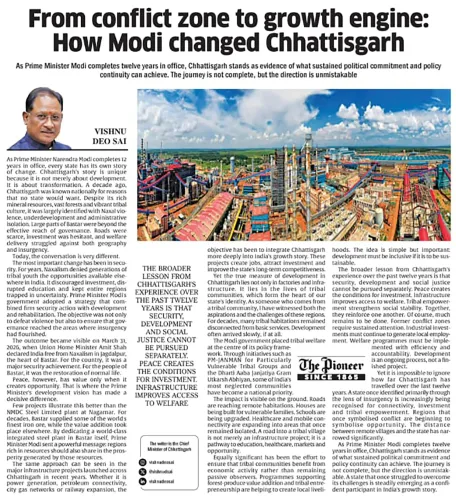
Chhattisgarh's CM Unveils Ambitious Bastar 2.0 Development Strategy Following Meeting with PM Modi

Synopsis
Chhattisgarh's Chief Minister Vishnu Deo Sai has recently emphasized the state's progress in combating Naxalism during his visit to Delhi. He discussed the Bastar 2.0 development initiative with Prime Minister Modi, aiming to transform the region into a hub of development after decades of marginalization.
Key Takeaways
Significant progress in eradicating Naxalism in Chhattisgarh.
Bastar 2.0 development plan aims for inclusive growth.
Focus on modernizing agriculture and enhancing forest produce value.
Tourism initiatives to generate employment.
Central support sought for major infrastructure projects.
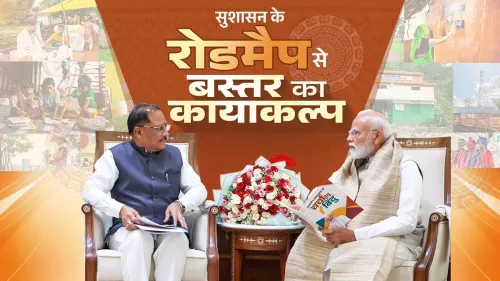
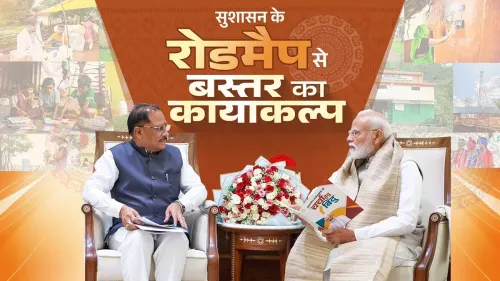
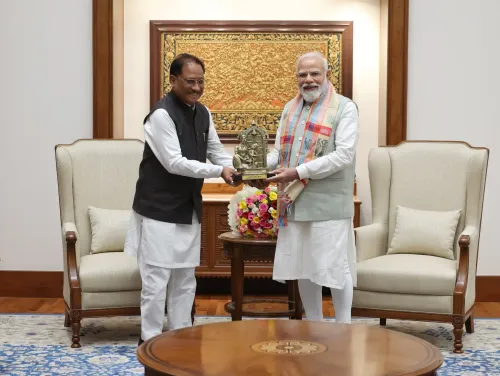
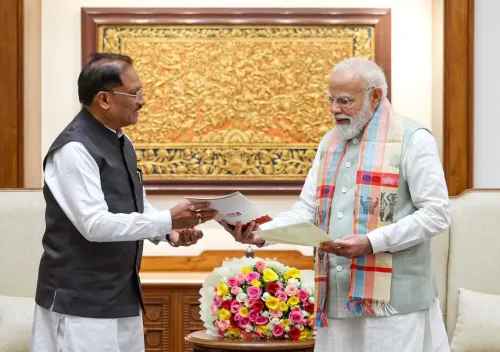
Raipur, April 9 (NationPress) Chhattisgarh's Chief Minister Vishnu Deo Sai has underscored the notable advancements in the fight against Naxalism during his recent three-day trip to Delhi, where he engaged in discussions with Prime Minister Narendra Modi and BJP National President Nitin Nabin.
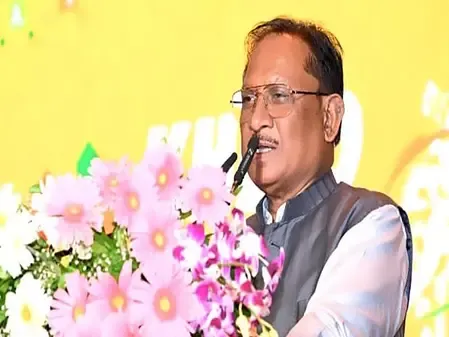
In conversations with reporters, CM Sai attributed the success in diminishing Naxalism in the area to Prime Minister Modi's leadership, the unwavering determination of Union Home Minister Amit Shah, and the valor of the security forces.
Expressing gratitude on behalf of Chhattisgarh's citizens, he acknowledged the Prime Minister for this significant success. He specifically addressed the Bastar region, which has been marginalized in terms of development for close to four decades due to left-wing extremism.
He updated the Prime Minister on the government's ambitions to expedite progress in Bastar through the Bastar 2.0 development initiative. “While in Delhi, I discussed the Bastar 2.0 development initiative with Prime Minister Modi. With his support, our goal is to advance development in Bastar, improve agriculture, enhance the value of forest produce, and foster growth in animal husbandry, fish farming, tourism, and homestay projects. I am thankful to the Prime Minister and the people of Chhattisgarh, especially those from Bastar, who have long awaited development,” stated the Chief Minister.
The Bastar 2.0 plan aims to introduce infrastructure, job opportunities, and essential services to the tribal-majority area now that tranquility has been restored.
The Chief Minister’s visit to Delhi is regarded as a crucial move to secure central backing for transforming Bastar into an exemplar of inclusive growth.
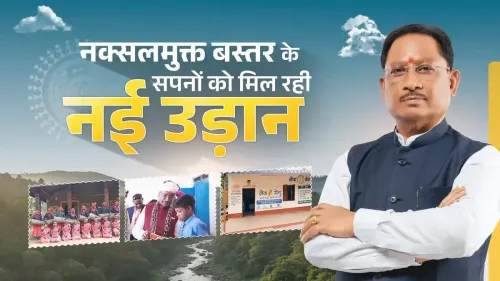
Bastar, once heavily impacted by left-wing extremism, has shown remarkable improvements in its security landscape in recent years. With the near-total eradication of Naxal influence, the state government is now shifting its focus from security measures to expansive socio-economic advancements.
The Bastar 2.0 plan embodies the subsequent phase of this evolution, targeting the region to become a center for infrastructure, innovation, startups, tourism, and sustainable livelihoods for its largely tribal populace.
This initiative places a significant emphasis on modernizing agriculture through enhanced irrigation and progressive farming methods. Additionally, it aims to substantially increase the value of minor forest products such as tendu leaves and mahua by improving processing, packaging, and market access, thus raising income for local tribal families.
Moreover, the expansion of animal husbandry and fish farming is set to create more sustainable livelihood options in remote areas, according to the Chief Minister.
Tourism and homestay initiatives are pivotal components of the plan, with efforts directed towards showcasing Bastar’s natural beauty, cultural heritage, traditional arts, and festivals. This is anticipated to generate employment opportunities for local youth while providing economic benefits to villages.
The development strategy is guided by a fundamental plan to saturate basic services, enhance connectivity, facilitate growth, empower communities, and involve local residents in the developmental process.
During his meeting, the Chief Minister also covered major infrastructure initiatives, including the expansion of Jagdalpur airport, the progress of the Raoghat-Jagdalpur Railway Line, and the establishment of a super-specialty hospital and medical college in the region.
He has formally invited Prime Minister Modi to visit Bastar after the monsoon season to lay the foundation stones for several key projects.
Point of View
The recent discussions surrounding the Bastar 2.0 development plan illustrate a significant shift in Chhattisgarh's approach to socio-economic development. The focus on inclusivity and community involvement in development, especially in historically marginalized areas, is commendable and can set a precedent for other regions.
NationPress
16 Sept 2026
Frequently Asked Questions
What is the Bastar 2.0 development initiative?
The Bastar 2.0 development initiative is a comprehensive plan aimed at accelerating progress in the Bastar region of Chhattisgarh, focusing on infrastructure, job creation, and enhancing basic services.
Why is Bastar significant in this context?
Bastar is significant as it has faced decades of underdevelopment due to left-wing extremism, and the new initiative aims to promote peace and growth in the region.
How does the initiative plan to improve agriculture?
The initiative aims to modernize agriculture through improved irrigation and advanced farming techniques while increasing the value of forest produce.
What role will tourism play in the Bastar 2.0 plan?
Tourism will be a key pillar, promoting Bastar's natural beauty and cultural heritage, which is expected to create jobs and boost local economies.
Who were the key figures involved in the discussions?
Key figures included Chhattisgarh Chief Minister Vishnu Deo Sai, Prime Minister Narendra Modi, and BJP National President Nitin Nabin.